
RV Hookups Explained: Electric, Water, and Sewer for Long Stays
October 8, 2025 · By Magnolia RV Park
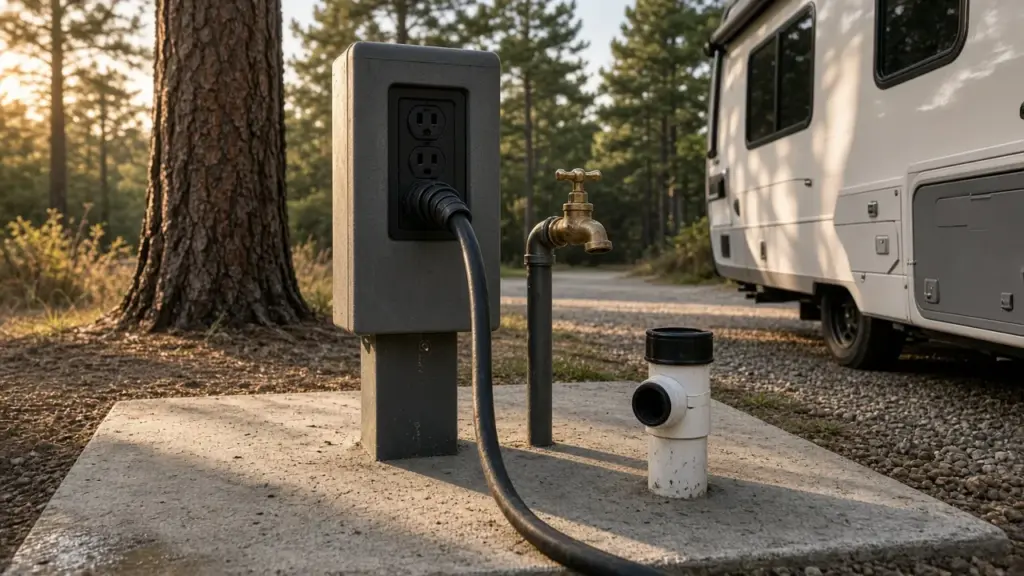
When you stay in an RV for a weekend, hookups are something you connect on arrival and forget about. When you live in an RV for months, they become part of daily life. How much power you can draw decides whether you can run the AC and the microwave at the same time. How you set up your water decides whether you deal with leaks and low pressure. How you manage your tanks decides whether your RV smells fresh or not.
This guide explains RV hookups in plain language for long-term residents. It covers electric, water, sewer, propane, and internet, plus the questions to ask a park before you move in.
One important note up front: hookups vary from park to park and sometimes from site to site. At our park, we confirm utilities for the specific site when you inquire rather than listing details we have not verified. Every park should do the same.
Full Hookups vs. Partial Hookups
A full hookup site usually provides electric, water, and sewer connections at the site. A partial hookup site may provide only electric and water, meaning you would need to dump tanks elsewhere.
For long stays, a full hookup is typically the practical choice, because hauling tanks to a dump station every few days gets old quickly. Always confirm exactly what is provided at the site you are considering.
Electric Hookups
30-amp vs. 50-amp service
Most RVs are built for either 30-amp or 50-amp service, and the difference is significant.
- 30-amp service provides a single 120-volt line. It supports roughly 3,600 watts, which is enough for a single air conditioner and modest appliance use, but you will need to manage what runs at the same time.
- 50-amp service provides two 120-volt lines. It supports roughly 12,000 watts, which is enough for multiple air conditioners and more appliances running together.
Know which your RV uses, and confirm what the site provides. Adapters exist to connect between the two, but they do not create extra capacity. A 50-amp RV plugged into 30-amp service is limited to 30-amp capacity.
Managing your electrical load
On any service, it helps to know what draws the most power: air conditioners, electric water heaters, microwaves, hair dryers, electric fireplaces, and electric cooktops. Running several at once can trip a breaker. Simple habits help:
- Do not run the microwave and a hair dryer while the AC is running on 30-amp service
- Switch the water heater to propane when you need more electric capacity, if your RV allows it
- Stagger high-draw appliances
Surge protection
Power problems can damage an RV’s electrical system and appliances. A quality surge protector, or an energy management system that also guards against low or high voltage, is one of the best investments a full-time RVer can make.
Rules around electric hookups
Parks have strict rules about electrical safety. At our park, residents may not tamper with electric hookups, remove breakers, alter boxes, run extension cords from another site, or pull more electrical load than the RV is designed for. These rules protect you, your neighbors, and the park’s system. Our park rules list them in full.
Water Hookups
Use a drinking-water hose
Use a hose rated for drinking water, not a garden hose. Keep it clean, cap the ends when disconnected, and store it off the ground.
Use a pressure regulator
Water pressure at a park can be higher than your RV’s plumbing is designed to handle. A pressure regulator at the spigot protects your lines, fittings, and fixtures. Many full-timers use an adjustable regulator with a gauge.
Consider a filter
An inline or canister filter can improve taste and reduce sediment. Replace cartridges on schedule.
Protect against freezing
Southeast Texas winters are usually mild, but hard freezes happen. When one is forecast, use a heated hose or disconnect and drain your hose, and rely on your fresh tank and pump until it warms up. Our Texas weather guide covers freeze prep in more detail.
Conserve and inspect
Even with a hookup, check for drips under sinks and around the toilet regularly. Small leaks can cause major damage in an RV.
Sewer Hookups
Set up your sewer hose properly
A good long-term sewer setup uses a sturdy hose, secure fittings at both ends, and a support that gives the hose a gentle downhill slope. A tidy setup is more sanitary and easier on your neighbors.
Keep the black valve closed
This is one of the most important long-term habits. Leaving the black tank valve open lets liquids drain away while solids stay behind and build up. Keep it closed, let the tank fill, then dump it with plenty of water.
Manage the gray tank
Many residents leave the gray valve open for convenience, but closing it periodically lets you use gray water to rinse the sewer hose after dumping black. Watch for grease buildup from kitchen sinks.
Know what can go down the drain
Some parks run on a septic system, which makes what you flush especially important. At our park, nothing goes into the septic except septic-safe waste. No wipes, grease, diapers, paper towels, or similar items. Use septic-safe toilet paper and cleaning products.
Propane
Many RVs use propane for the furnace, water heater, stovetop, and refrigerator. Even with electric hookups, you will likely use some propane, especially in winter.
- Know how to read your tank levels
- Plan refills before cold snaps
- Test your propane detector regularly
- If you smell propane, turn off the supply, get out, and get help
Ask management where they recommend refilling propane locally.
Internet and TV
Internet is one of the most common questions from long-term residents, and it is one where honest answers matter. Many small parks do not provide Wi-Fi, and even parks that do may not support heavy streaming or video calls. Common options include:
- Cellular hotspots, using your phone plan or a dedicated device
- Satellite internet, which can work well with a clear view of the sky
- Park Wi-Fi, where available
We do not list internet at our park unless management has confirmed it for a site, so ask directly. For TV, many residents rely on streaming over their internet connection, and some use an antenna for local channels.
If you work remotely, test your connection plan early. Our guide to RV living for workers and contractors has more on working from an RV.
Move-In Day Utility Checklist
- Confirm the site’s electric service and check your RV’s needs
- Plug in your surge protector first and check its readings
- Connect power to the RV
- Attach a pressure regulator and drinking-water hose
- Set up your sewer hose with secure fittings and support
- Check for leaks at every connection
- Confirm your propane level
- Test your internet setup
Our long-term RV living checklist is a helpful companion for move-in week.
Maintaining Your Hookup Gear
Hookup gear wears out. Inspect your power cord for damage, replace cracked sewer hoses, and keep your water hose clean. Our full-time RV maintenance schedule includes hookup checks.
Questions to Ask Before You Move In
- What electric service does this site provide?
- How is electricity billed, if separately?
- Is water and sewer provided at the site?
- Is the park on a septic system, and are there rules about it?
- Is internet available, and what are the options?
- Where do residents refill propane?
More Hookups & Utilities Guides
- 30-Amp vs. 50-Amp RV Service: What It Means Day to Day
- Using a Surge Protector at a Long-Term RV Site
- Managing Electrical Load in an RV
- Why Running Cords Between RV Sites Is a Bad Idea
- RV Electrical Adapters: Dogbones and Safe Use
- Drinking Water Hoses and Filters for RVs
- Water Pressure Regulators for RV Hookups
- Full Hookup vs. Partial Hookup RV Sites
- Sewer Hose Setup for a Long-Term RV Site
- What Not to Flush in an RV on a Septic System
- Keeping RV Black Tank Odors Under Control
- Gray Tank Management When You’re Connected Full-Time
- Septic-Safe Toilet Paper and Cleaning Products for RVs
- Cellular Hotspots, Satellite, and Park Wi-Fi: RV Internet Compared
- Boosting Cell Signal in an RV
- TV Options for RV Living: Antenna, Streaming, and Satellite
- Propane Basics for RV Living
- Propane Tank Safety and Leak Checks
- Electric Heat vs. Propane Furnace in an RV
- Electric Metering at RV Parks: Questions to Ask
- Conserving Water in an RV
- Sanitizing Your RV Fresh Water Lines and Tank
- Generator Etiquette at RV Parks
- Solar Panels for a Parked RV: Are They Worth It?
- RV Breakers and GFCIs: Troubleshooting Tripped Circuits
- Water Softeners for RVs
- Utility Setup Checklist for RV Move-In Day
- Asking About Utilities Before You Move Into an RV Park
- Space Heaters and Window Units: Why RV Parks Often Ban Them
Frequently Asked Questions
What is the difference between 30-amp and 50-amp RV service?
30-amp service provides one 120-volt line, roughly 3,600 watts. 50-amp service provides two 120-volt lines, roughly 12,000 watts. Your RV is built for one or the other.
Should I use a surge protector at an RV park?
Yes. A surge protector or energy management system helps protect your RV’s electrical system and appliances from power problems.
Should I leave my black tank valve open?
No. Keep it closed so solids and liquids leave together when you dump. Leaving it open can cause buildup and clogs.
What can I flush in an RV on septic?
Only septic-safe waste and toilet paper. Avoid wipes, grease, diapers, paper towels, and similar items.
Do long-term RV parks include internet?
It varies. Many small parks do not provide Wi-Fi. Ask the park directly and have a backup plan, such as a hotspot or satellite service.
Ask About Utilities for Your Site
At Magnolia’s Finest, we confirm hookups and site details with you for the specific pad before anything is reserved. See our FAQ for common questions, then tell us about your RV and your dates. You can also read our complete guide to monthly RV living.
Check Availability or call or text (281) 205-1959
Magnolia’s Finest RV Park · 32020 Old Hempstead Rd, Magnolia, TX 77355 · Contact us