Gray Tank Management When You’re Connected Full-Time
March 6, 2026 · By Magnolia RV Park
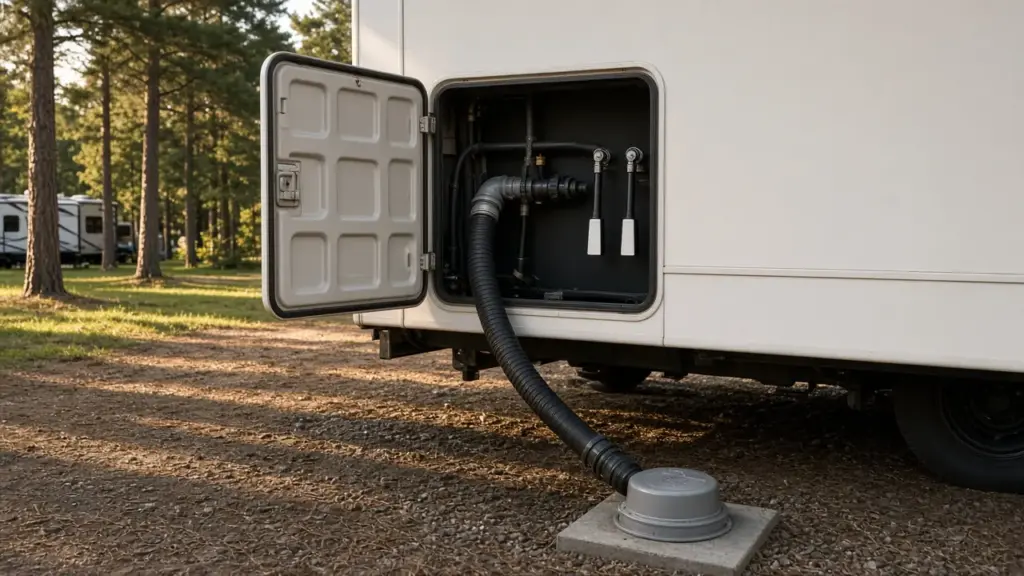
Your gray tank collects water from sinks and showers. When you are connected to sewer full-time, it is tempting to leave the gray valve open and forget about it. That works for some residents, but it can lead to odors, clogs, and a sewer hose that never gets properly rinsed. A little attention to gray tank habits keeps your plumbing running smoothly throughout a long stay.
This guide explains how to manage your gray tank when you are connected full-time. For the bigger picture on hookups, see our pillar on RV hookups explained for long stays.
What Goes Into the Gray Tank
Your gray tank collects:
- Kitchen sink water, including food particles and grease
- Bathroom sink water, including toothpaste, soap, and hair
- Shower water, including soap and shampoo
- In some RVs, washing machine water
Kitchen water is the biggest source of problems because of food and grease.
Open or Closed Valve?
There are two common approaches:
Valve open: Water drains continuously to the sewer. This prevents the tank from filling but means the sewer hose only gets small flows of water. Food and grease can build up in the hose and tank, and sewer gases may travel back up if traps are dry.
Valve closed, dumped periodically: The tank fills, then you dump it all at once. The large flow of water rinses your sewer hose, especially after dumping the black tank.
Many residents keep the gray valve closed most of the time and dump every few days, especially right after dumping the black tank. This helps rinse the hose.
Always Dump Black First
When dumping, empty the black tank first, then the gray tank. The gray water rinses the hose after the black tank. Our post on keeping RV black tank odors under control covers black tank habits.
Control Grease and Food
Grease hardens in pipes, tanks, and hoses. Food particles create odors and clogs. Habits that help:
- Wipe greasy pans with a paper towel before washing
- Use a sink strainer
- Scrape plates into the trash
- Never pour cooking oil down the drain
Our post on what not to flush in an RV on a septic system explains why grease is especially harmful to septic systems.
Septic-Safe Products
At Magnolia’s Finest, the park is on a septic system. Use septic-safe soaps and cleaners. Avoid harsh drain cleaners, which can damage your tank, seals, and the septic system.
Gray Tank Odors
Gray tanks can smell, especially in heat. Causes include food particles, soap scum, and bacteria. To reduce odors:
- Dump and rinse regularly
- Use septic-safe gray tank treatments
- Keep P-traps filled with water
- Clean sink drains periodically
Clean the Tank Periodically
Some RVs have a gray tank rinse. If not, fill the tank partway with water and a septic-safe cleaner, then dump. Doing this every month or two helps prevent buildup.
Water Conservation
Conserving water helps septic systems and reduces how often you dump. Take shorter showers, turn off water while brushing teeth, and run full loads if you have a washer. Fix leaky faucets promptly.
Freeze Protection
During hard freezes, gray tanks, valves, and hoses can freeze. Keep valves closed during freezes to avoid water sitting in the hose, dump before a cold snap if possible, and follow freeze prep guidance. Fall is a good time to prepare; our post on fall in Southeast Texas as the best season for RV projects includes freeze prep.
Hose Slope and Support
A properly sloped hose helps gray water drain completely. Use a hose support and make sure there are no dips where water and debris can collect.
Electrical Safety Near Hookups
Water and electricity do not mix. Keep power cords away from sewer and water connections. Never run cords from other sites; our post on why running cords between RV sites is a bad idea explains the dangers. At our park, tampering with hookups and running cords from other sites are not allowed.
Washing Machines and Gray Tanks
If your RV has a washer, it may drain into the gray tank. Washers use a lot of water, so dump more often. Many residents use the park laundry instead. At our park, the laundry room has two washers and two dryers in an air-conditioned, cedar-paneled room.
Signs of a Problem
Watch for:
- Slow drains
- Gurgling sounds
- Odors from sinks or showers
- Water backing up into the shower
If you suspect a clog, try hot water and a septic-safe enzyme treatment. If problems persist, contact a technician. Report problems with the park’s sewer connection to management.
Hair and Soap Scum
Bathroom and shower drains collect hair and soap scum, which build up over time and slow drainage. Use drain covers that catch hair in the shower and bathroom sink, and clean them regularly. Choose liquid soaps over bar soaps if soap scum is a problem, since some bar soaps leave more residue. Periodically pour a kettle of hot, not boiling, water down drains to help loosen buildup. These small habits keep water flowing and reduce the chance of a clog that backs up into your shower.
Tank Sensors
Gray tank sensors can become coated with grease and soap, giving false readings. Regular rinsing and cleaning help. Learn how long your tank takes to fill under normal use so you do not rely only on sensors.
A Gray Tank Routine
- Keep the valve closed and dump every few days
- Dump black first, then gray
- Use sink strainers and wipe grease
- Use septic-safe products
- Clean the tank every month or two
- Close valves during freezes
Kitchen Habits That Protect Your Tank
The kitchen sink sends the most troublesome material to your gray tank. Beyond wiping grease, a few habits make a real difference. Rinse dishes in a basin and dump the basin water in larger batches rather than letting water run continuously. Keep a small container by the stove for used cooking oil and throw it in the trash when full. Avoid garbage disposals and grinding food into the drain. Coffee grounds, rice, and pasta can clump in tanks and hoses, so scrape them into the trash. These habits save water, reduce odors, and help keep your tank sensors reading accurately.
Checking the Termination Valves
Gray and black tank valves wear over time. If a valve becomes hard to pull or leaks when closed, lubricate or replace it. A leaking gray valve defeats the purpose of keeping it closed and can cause messes at the hose connection.
Frequently Asked Questions
Should I leave my gray tank valve open on a full hookup?
Some residents do, but keeping it closed and dumping every few days helps rinse the sewer hose and reduce buildup.
What causes gray tank odors?
Food particles, grease, soap scum, and bacteria. Regular dumping and rinsing help.
Can I use drain cleaner in my RV?
Avoid harsh drain cleaners. Use septic-safe products, since our park is on a septic system.
Does the park have laundry?
Yes. Our laundry room has two washers and two dryers in an air-conditioned, cedar-paneled room.
Smooth Living in Magnolia
Magnolia’s Finest RV Park is a small, gated long-term community. Explore our amenities, read the FAQ, or check availability.
Check Availability or call or text (281) 205-1959
Magnolia’s Finest RV Park · 32020 Old Hempstead Rd, Magnolia, TX 77355 · Contact us