
Propane Basics for RV Living
May 10, 2026 · By Magnolia RV Park
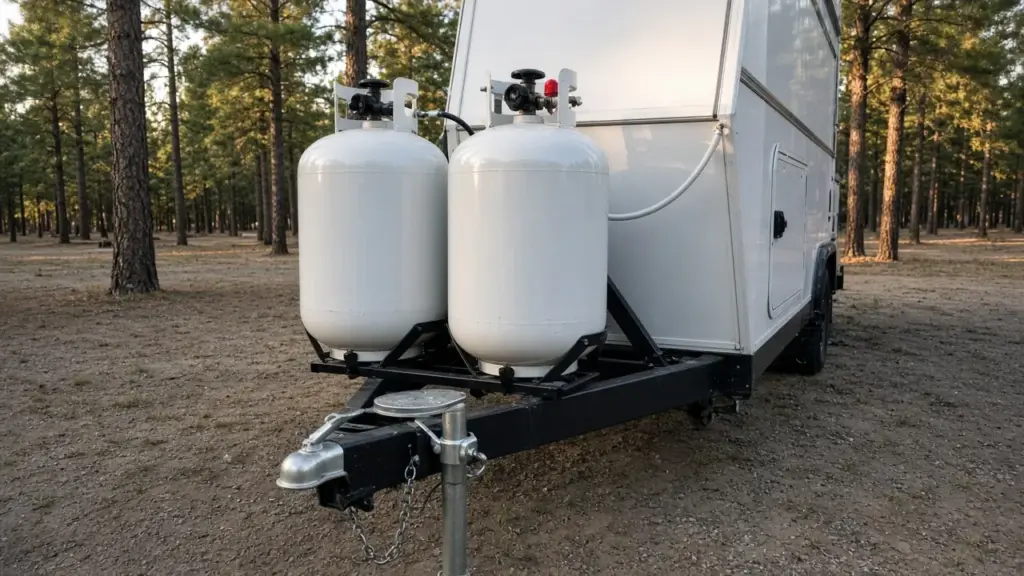
Propane is a quiet workhorse in most RVs. It often powers the furnace, water heater, stove, oven, and sometimes the refrigerator. For full-time residents, understanding how propane works, how to manage your supply, and how to use it safely is essential.
This guide covers propane basics for RV living, from tank types and refills to safety checks and seasonal planning. For a broader look at how RV utilities work on a long stay, start with our pillar, RV Hookups Explained: Electric, Water, and Sewer for Long Stays.
What Runs on Propane in an RV
Depending on your RV, propane may power:
- The furnace. Most RV furnaces burn propane and use a 12-volt blower.
- The water heater. Many water heaters can run on propane, electric, or both.
- The stove and oven. Most RV cooktops use propane.
- The refrigerator. Absorption refrigerators often run on propane or electric.
Knowing which appliances use propane helps you estimate how quickly you will use your supply. In Southeast Texas, propane use is usually lowest in summer and highest during winter cold snaps when the furnace runs.
Types of Propane Tanks
RVs typically use one of two tank setups:
Portable Cylinders
Travel trailers and fifth wheels often use portable cylinders mounted on the tongue or in a compartment. These tanks can be removed and taken to a refill station or exchanged. Many rigs have two cylinders with a changeover valve, so you can switch to the full tank when one runs out.
Permanently Mounted Tanks
Motorhomes usually have a permanently mounted tank built into the frame. These must be filled in place, which means driving the RV to a refill location or arranging a mobile service if available.
Checking Your Propane Level
Running out of propane on a cold night is uncomfortable. Ways to check your level include:
- Built-in gauges on motorhomes and some trailers
- Weighing portable cylinders. Subtract the tare weight stamped on the collar from the total weight.
- Tank gauges or sensors that attach to cylinders
- Paying attention to usage. Track how long a tank lasts in different seasons.
Keeping a second full tank, or refilling before a tank is empty, gives you a buffer.
Refilling Propane
Propane refills are available at many locations in the area. Some residents prefer refilling cylinders, since you pay only for the propane you need. Others prefer exchange services for convenience. For motorhomes, plan trips to a refill location, keeping in mind your site setup.
When transporting portable cylinders, keep them upright, secure, and ventilated. Never leave cylinders in a hot, closed vehicle.
Propane Safety Basics
Propane is safe when handled properly, but it is flammable and must be respected.
Know the Smell
Propane has an odor added to it, often described as rotten eggs, so you can detect leaks. If you smell propane:
- Turn off the propane supply at the tank.
- Put out any flames and avoid creating sparks. Do not flip switches or use appliances.
- Leave the RV and move away.
- Contact a qualified technician or emergency services if needed.
Maintain Detectors
Every RV should have working propane and carbon monoxide detectors. Test them monthly and replace them according to the manufacturer’s guidelines. Propane is heavier than air, so propane detectors are usually mounted low.
Inspect Connections
Regularly check hoses, regulators, and connections for cracks, wear, or damage. A soapy water solution applied to connections can reveal leaks as bubbles. Have a professional handle repairs.
Ventilate When Cooking
Run the range hood fan and open a vent or window when cooking on a propane stove. This helps remove moisture and combustion byproducts.
Never Use Propane Appliances for Unintended Purposes
Never use your stove or oven to heat your RV. It is not designed for that and can create carbon monoxide and fire hazards. Space heaters are not allowed at our park, so rely on your RV’s furnace for heat.
Propane and the Furnace
The furnace is typically the biggest propane user. Before cold weather, check your furnace vent, clean return air grilles, and test the system. Our post on RV furnace maintenance before cold weather covers this in detail.
During extended cold snaps, monitor propane levels closely. Insulated window coverings, vent insulators, and sealing drafts reduce how hard the furnace works.
Electric vs. Propane
Many RVs can run some appliances on either electricity or propane. When you have electric hookups, using electric for the water heater or refrigerator can save propane. Electric service is confirmed per site at our park, so ask about your site.
Be mindful of electrical load, especially when running the air conditioner. Never run cords from other sites, which is not allowed at our park. Our post on why running cords between sites is a bad idea explains why.
Storing Propane Safely
Propane cylinders should be stored upright, outdoors, in a ventilated area, and away from heat sources. Never store propane cylinders inside the RV. At our park, items cannot be stored on or under the site, so keep spare cylinders in your RV’s designated propane compartment or mounting area.
Propane During Storms and Outages
Propane can be a valuable backup during power outages, since many RV furnaces, water heaters, and stoves run on propane with only minimal 12-volt power. Before hurricane season, which runs from June 1 to November 30, and before winter, make sure your tanks are full and your battery is charged. If a storm knocks out power, you may still be able to cook and heat water.
During an outage, stay informed about weather and road conditions. An antenna can pick up local broadcast news even when internet service is down; our post on TV options for RV living explains how. A charged phone matters too, and our guide to boosting cell signal in an RV can help you stay connected.
If you evacuate, turn off propane at the tank before leaving, and follow official guidance about when it is safe to return.
Budgeting for Propane
Propane is a variable cost for RV residents. Your usage depends on the season, how often you cook, whether your water heater runs on propane, and how much you use the furnace. Track your refills for a few months to understand your typical use, then build that into your monthly budget. Refilling before prices rise in peak demand periods can also help.
Seasonal Planning
- Spring and summer: Propane use is usually low. Inspect connections and detectors.
- Fall: Refill tanks, test the furnace, and check detectors before cold weather.
- Winter: Monitor levels closely during cold snaps and keep a spare tank if possible.
Frequently Asked Questions
What runs on propane in an RV?
Commonly the furnace, water heater, stove, oven, and sometimes the refrigerator.
What should I do if I smell propane?
Turn off the propane supply, put out flames, avoid sparks, leave the RV, and contact a qualified technician.
How often should I test my propane detector?
Test it monthly and replace it according to the manufacturer’s guidelines.
Can I use my stove to heat my RV?
No. Stoves and ovens are not designed for heating and can create carbon monoxide and fire hazards.
Does the park provide propane?
Utilities are confirmed per site. Call or text (281) 205-1959 to ask.
Stay Comfortable at Magnolia’s Finest
Magnolia’s Finest RV Park is a small, gated long-term community with covered sites on cement pads. Read our FAQ, see our amenities, or check availability.
Check Availability or call or text (281) 205-1959
Magnolia’s Finest RV Park · 32020 Old Hempstead Rd, Magnolia, TX 77355 · Contact us