
Water Softeners for RVs
August 24, 2026 · By Magnolia RV Park
Water quality varies from place to place. In some areas, water contains high levels of minerals like calcium and magnesium, known as hard water. Over time, hard water can leave scale on fixtures, reduce the efficiency of your water heater, and make soap less effective. Some RVers use portable water softeners to reduce these effects.
This guide explains what water softeners do, whether you might need one, and what to consider for long-term RV living. For an overview of park hookups, see our pillar, RV Hookups Explained: Electric, Water, and Sewer for Long Stays.
What Is Hard Water?
Hard water contains dissolved minerals, mainly calcium and magnesium. It is safe to drink in most cases, but it can cause problems for plumbing and appliances.
Signs of Hard Water
- White or chalky residue on faucets and showerheads
- Spots on dishes and glassware
- Soap that does not lather well
- Dry skin or hair after bathing
- Reduced water flow from clogged fixtures
- Scale buildup in the water heater
If you notice these signs, you may have hard water.
Testing Your Water
Before buying a softener, test your water. Inexpensive test strips can measure water hardness. Testing helps you decide whether a softener is worth it and how often you would need to regenerate it.
We do not make claims about water hardness at our park. Test your water or ask management if you have questions.
How RV Water Softeners Work
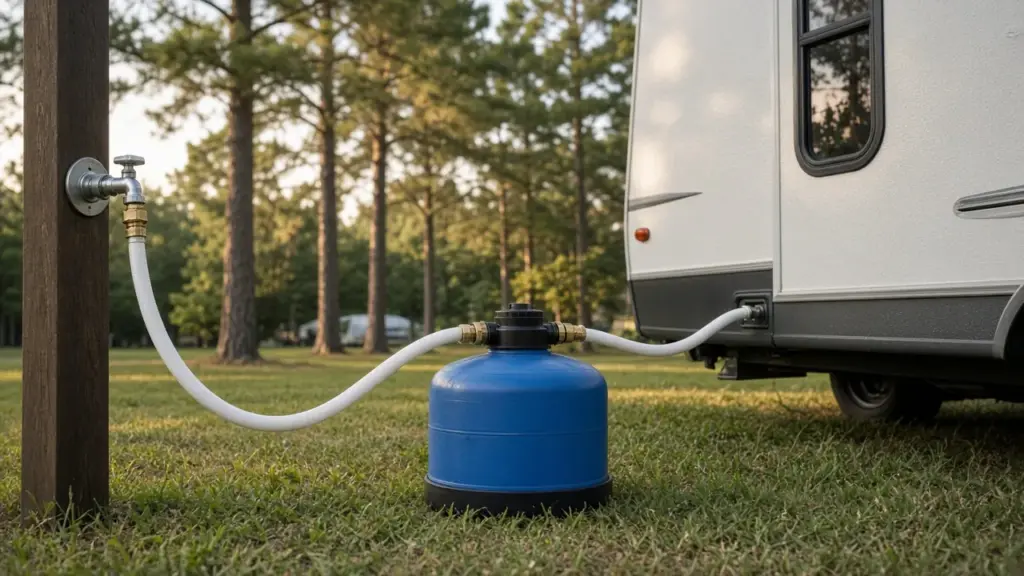
Most portable RV water softeners use an ion exchange process. Water flows through a tank filled with resin beads that capture calcium and magnesium and release sodium in their place. Over time, the resin becomes saturated and must be regenerated, usually by flushing it with salt water.
Portable softeners are designed to connect between the water source and your RV.
Benefits of a Water Softener
- Less scale on fixtures and in the water heater
- Better soap lather
- Cleaner dishes
- Potentially longer life for plumbing components
- Softer feel for skin and hair
Drawbacks and Considerations
Cost
Portable softeners have an upfront cost, and you will need salt for regeneration.
Maintenance
You must regenerate the softener regularly, which takes time and uses water.
Sodium
Softened water contains some added sodium. People on low-sodium diets may want to use a separate drinking water source or ask their doctor.
Space and Placement
Softeners take up space and usually sit near the water connection. At our park, items cannot be stored on or under the site, so ask management before placing any equipment outside your RV.
Septic Systems
Regenerating a softener produces salty wastewater. Our park uses a septic system, and brine discharge can affect septic systems. Ask management before regenerating a softener so it is done in a way that protects the system.
Alternatives to a Softener
If you decide a softener is not right for you, there are other ways to manage hard water:
- Use a good water filter
- Clean fixtures regularly with vinegar
- Flush your water heater periodically
- Use detergents designed for hard water
Our post on drinking water hoses and filters for RVs covers filtration options.
Protecting Your Water Heater
Scale buildup reduces water heater efficiency. Regular draining and flushing helps. Follow your RV manufacturer’s instructions, and let the water heater cool before draining.
Softeners and Other Utilities
Water systems are one part of your RV’s utilities. Electrical systems matter too. If you use electric appliances with your water system, such as an electric water heater, understanding your electrical system helps. Our post on RV breakers and GFCIs covers troubleshooting. And if you are exploring other upgrades, our post on solar panels for a parked RV discusses whether solar makes sense.
Outdoor Equipment and Weather
Any equipment connected to your water line is exposed to weather. In winter, protect hoses and softeners from freezing. In storms, secure anything that could be affected by wind or water. Retract your awning and check connections before severe weather; our post on awning care and when to roll it in offers tips.
Making a Decision
A softener may be worth it if you have confirmed hard water and notice significant scale or soap problems. If your water is only moderately hard, simple filtration and regular cleaning may be enough. Consider cost, maintenance, space, and park rules before buying.
Talking With Neighbors
Other residents may already have experience with the water at your park. Ask neighbors whether they use a softener or filter and what results they have seen. Their experience can help you decide whether a softener is worth the investment and how often maintenance is needed. Keep in mind that water needs vary with personal preferences, household size, and RV plumbing.
Keeping Records
If you do use a softener, note regeneration dates in your maintenance log. Tracking how often you regenerate helps you plan salt purchases and spot changes in water quality over time.
Choosing a Portable Softener
If you decide to buy a softener, consider capacity, size, and ease of regeneration. Softeners are often rated by how many gallons they can treat before regeneration is needed, which depends on your water hardness. A larger capacity means less frequent regeneration but takes up more space and weighs more. For long-term residents who stay in one place, a moderate-capacity unit often strikes a good balance.
Look for models with standard hose connections, a built-in way to add salt, and clear instructions. Read reviews from other RVers and check what replacement parts are available. Make sure any softener you buy is rated for drinking water use and connect it with a drinking-water-safe hose.
Using Softened Water Wisely
Softened water is great for showers, dishes, and laundry, but some people prefer unsoftened water for drinking and cooking because of the added sodium or taste. Some RVers install a separate drinking water filter at the kitchen sink or keep a pitcher filter for drinking water. Others simply buy drinking water. Choose the approach that fits your health needs and preferences.
Laundry and Hard Water
Hard water affects laundry too, leaving clothes feeling stiff and dull. If you use the park’s laundry room, detergents designed for hard water may help your clothes come out cleaner and softer.
Starting Simple
If you are unsure, start with testing and a good filter. You can always add a softener later if hard water problems persist.
Cleaning Fixtures Regularly
Even with a softener or filter, clean faucets and showerheads regularly. Soaking a showerhead in vinegar dissolves mineral buildup and restores water flow. A few minutes of cleaning each month keeps fixtures working well.
Frequently Asked Questions
How do I know if I have hard water?
Look for scale on fixtures, spots on dishes, and poor soap lather, and test with water hardness strips.
Can I regenerate a softener at the park?
Ask management first, since brine discharge can affect the park’s septic system.
Can I place a softener outside my RV?
Ask management before placing any equipment outside, since items cannot be stored on or under the site.
Is softened water safe to drink?
Softened water contains some added sodium. People on low-sodium diets may want a separate drinking water source.
Learn More About Our Sites
Explore our amenities, read our FAQ, or check availability.
Check Availability or call or text (281) 205-1959
Magnolia’s Finest RV Park · 32020 Old Hempstead Rd, Magnolia, TX 77355 · Contact us