Drinking Water Hoses and Filters for RVs
December 22, 2025 · By Magnolia RV Park
Your fresh water connection is one of the most-used parts of your RV setup. On a long-term site, water flows through your hose every day for drinking, cooking, showering, and cleaning. The hose, filter, and fittings you choose, and how you care for them, affect water taste, safety, and the health of your RV’s plumbing.
This guide explains how to choose and maintain drinking water hoses, filters, and pressure regulators for long stays. It is general information. Follow manufacturer instructions for your equipment. For an overview of site connections, see our pillar on RV hookups for long stays.
Why Drinking-Water-Safe Hoses Matter
Not all hoses are designed for drinking water. Garden hoses may contain materials that are not intended for potable water and can affect taste. RV drinking water hoses are made with materials intended for drinking water use and are often white or blue for easy identification.
For long-term living, choose a hose labeled as safe for drinking water. Keep it separate from hoses used for other purposes, such as rinsing sewer equipment. Never use your drinking water hose for sewer tasks.
Choosing the Right Hose
When selecting a drinking water hose, consider:
- Length: long enough to reach comfortably without stretching, but not so long that excess hose coils in the sun
- Diameter: affects water flow
- Durability: reinforced hoses resist kinking and bursting
- Fittings: sturdy fittings reduce leaks
- Flexibility: some hoses stay flexible in cold weather
A hose that is too long can heat water in the sun and create kinks. A hose that is too short strains connections.
Pressure Regulators
Water pressure at parks varies. High pressure can damage RV plumbing, fittings, and appliances. A pressure regulator between the spigot and your hose helps protect your system. Options include:
- Inline regulators, which are simple and inexpensive
- Adjustable regulators with gauges, which let you see and set pressure
Follow your RV manufacturer’s recommendations for water pressure.
Water Filters
A water filter can improve taste and reduce sediment reaching your RV’s plumbing. Common types include:
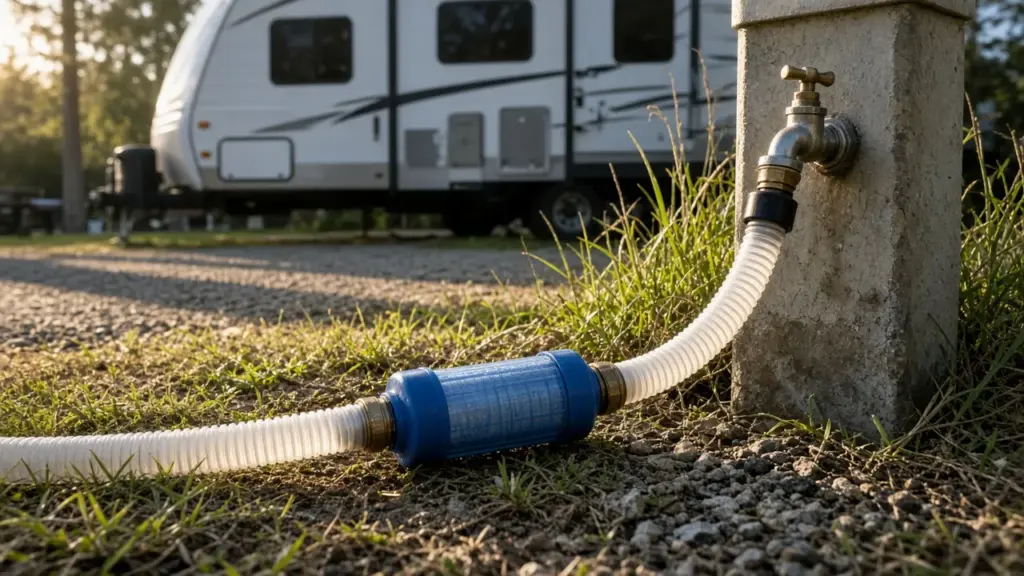
- Inline filters that attach between the spigot and hose
- Canister filters with replaceable cartridges
- Multi-stage systems that combine sediment and carbon filtration
- Point-of-use filters under the kitchen sink or in pitchers
Filters vary in what they reduce. Read product information carefully and choose a system that meets your goals. Replace cartridges according to the manufacturer’s schedule, or sooner if flow drops noticeably.
Setting Up Your Water Connection
A typical long-term setup looks like this:
- Flush the spigot briefly before connecting.
- Attach the pressure regulator to the spigot.
- Attach the filter, if using an inline or canister filter.
- Connect the drinking water hose.
- Connect to the RV’s city water inlet.
- Turn on water slowly and check for leaks.
Route the hose neatly so it will not be driven over, tripped on, or mowed. At our park, the park handles lawn care, so tidy connections help everyone.
Protecting Hoses From Texas Heat
Texas sun can heat water sitting in hoses and degrade hose materials over time. To help:
- Use a hose length that minimizes excess
- Route the hose in shaded areas when possible
- Run water briefly before drinking after the hose has sat in the sun
- Replace hoses that become cracked, stiff, or discolored
Covered sites can help reduce sun exposure on your RV; eight of our ten sites are covered.
Protecting Hoses From Freezing
Southeast Texas has occasional winter freezes. During a freeze:
- Consider disconnecting the hose and using your fresh water tank temporarily
- Use heated hoses designed for RVs if you stay connected
- Insulate the spigot and connections as allowed by park rules
- Keep the RV interior warm to protect internal plumbing, using your RV’s built-in heating
At our park, space heaters are not permitted, so rely on your RV’s own heating system.
Sanitizing Your Fresh Water System
Periodically sanitizing your fresh water tank and lines helps keep water fresh. Follow your RV manufacturer’s instructions for sanitizing, including recommended products, concentrations, and flushing steps. Sanitize hoses as well. Many owners sanitize when they first move in, after long periods of non-use, and periodically during long stays.
Storing Hoses Properly
When you disconnect a hose, drain it, cap the ends, and store it in a clean bag or bin. Capping ends keeps insects and dirt out.
Water Heater and Water Quality
Sediment in water can build up in your water heater over time. A filter at the spigot helps reduce sediment. Our post on RV water heater maintenance explains how to flush sediment and check anode rods.
Keeping Water and Electricity Separate
Water and electrical connections often sit close together at the pedestal. Keep water connections from dripping onto electrical cords and plugs. Check for leaks regularly. Our posts on RV electrical adapters and dogbones and managing electrical load explain how to keep electrical connections safe.
Respecting Park Utility Rules
The spigot and plumbing belong to the park. Do not modify park utility connections. If you notice a leaking spigot or other issue, report it through the park’s maintenance process. At our park, the Residents page includes a maintenance request form. Similarly, never run hoses or cords from other sites; our post on why running cords between RV sites is a bad idea explains why shared connections cause problems.
Water and Storms
During heavy rain and flooding, water systems can be affected. Follow any official boil-water notices. Our post on flash flooding around Houston covers storm preparation.
Building a Water Maintenance Routine
- Daily: glance at connections for leaks
- Monthly: inspect hose, regulator, and filter; check pressure
- As recommended: replace filter cartridges
- Periodically: sanitize the fresh water system
- Seasonally: prepare for heat or freezes
Signs It Is Time to Replace a Hose
Hoses do not last forever, especially in Texas sun. Replace your drinking water hose if you notice cracks, stiffness, bulges, leaks at the fittings that tightening does not fix, discoloration, or an off taste in the water. Many full-timers keep a spare drinking water hose so they can swap immediately if one fails. When replacing, take the opportunity to check your regulator and filter housing, since they age alongside the hose. A fresh hose is an inexpensive way to protect water quality and your RV’s plumbing.
Drinking Water Habits That Help
Beyond equipment, a few daily habits keep water pleasant. Run the kitchen tap for a few seconds in the morning to clear water that sat in the lines overnight. Keep a pitcher of filtered water in the refrigerator for cold drinking water in summer. Clean faucet aerators occasionally, since sediment can collect there.
Frequently Asked Questions
Can I use a garden hose for RV drinking water?
It is best to use a hose labeled safe for drinking water and keep it separate from other hoses.
Do I need a water pressure regulator?
A regulator helps protect RV plumbing from high pressure. Follow your RV manufacturer’s recommendations.
How often should I change my RV water filter?
Follow the manufacturer’s schedule, or replace it sooner if water flow drops.
How do I protect my water hose during a freeze?
Disconnect and use your fresh tank, or use a heated RV hose, and keep the RV interior warm with built-in heating.
Ask About Utilities at Your Site
Utilities at Magnolia’s Finest are confirmed per site. Ask us about your needs, and explore our amenities and FAQ page.
Check Availability or call or text (281) 205-1959
Magnolia’s Finest RV Park · 32020 Old Hempstead Rd, Magnolia, TX 77355 · Contact us