
RV Water Heater Maintenance: Flushing and Anode Rods
December 10, 2025 · By Magnolia RV Park
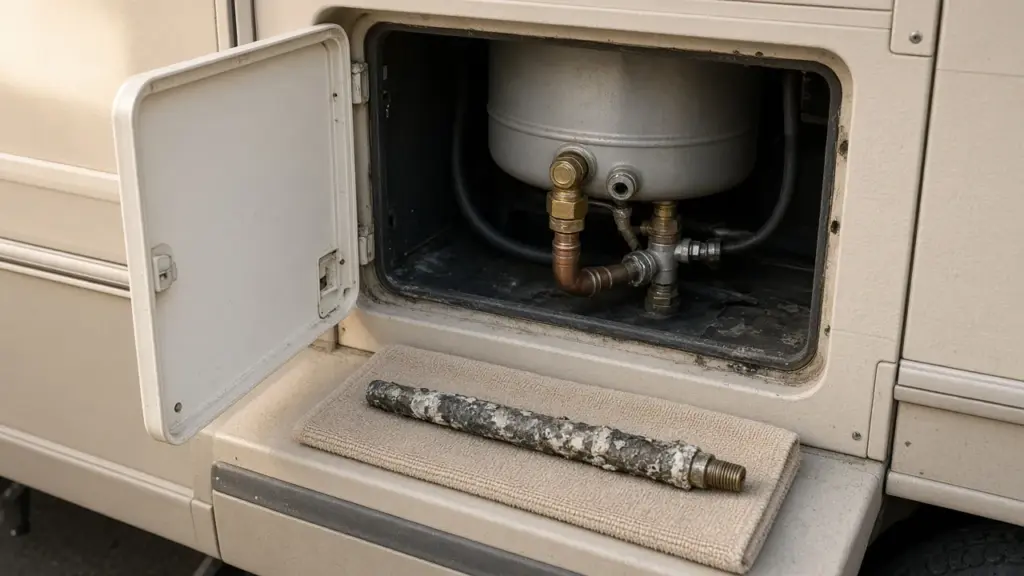
Hot water is one of those comforts you do not think about until it stops working. For full-time RV residents, the water heater runs every day for showers, dishes, and cleaning. Regular maintenance keeps it working efficiently, extends its life, and helps prevent unpleasant surprises like smelly water or leaks.
This guide explains two of the most important water heater maintenance tasks, flushing and checking anode rods, along with safety steps and signs that you need a professional. It is general information. Always follow your water heater manufacturer’s instructions, and consult a qualified RV technician if you are unsure. For a full maintenance calendar, see our pillar on RV maintenance for full-time residents.
Know Your Water Heater Type
RV water heaters come in several types:
- Tank water heaters, which heat and store a set amount of water. These may run on propane, electricity, or both.
- Tankless water heaters, which heat water on demand.
Tank water heaters are further divided by tank material. Some use steel tanks with an anode rod to protect against corrosion. Others use aluminum tanks that typically do not use a replaceable anode rod. Check your owner’s manual to understand what you have.
Why Maintenance Matters
Water contains minerals that settle as sediment in the tank over time. Sediment can:
- Reduce heating efficiency
- Cause popping or rumbling noises
- Reduce available hot water
- Contribute to corrosion
In steel tanks, the anode rod corrodes instead of the tank, protecting it. Once the rod is used up, the tank itself can start to corrode.
Safety First
Before any water heater maintenance:
- Turn off the water heater, both propane and electric modes, at the switches and breaker as applicable.
- Let the water cool completely. Water in the tank can be scalding hot for hours.
- Turn off the water supply from the park spigot, and turn off the water pump.
- Relieve pressure by opening a hot water faucet inside the RV and briefly opening the pressure relief valve on the water heater, following manufacturer instructions.
Never drain a hot tank, and never turn on the heating element when the tank is empty; doing so can damage the element.
Flushing the Tank
Flushing removes sediment from the tank. A general process:
- Complete the safety steps above.
- Remove the drain plug or anode rod from the outside access panel, according to your manual.
- Let the tank drain completely.
- Use a tank rinser wand or flushing tool to spray water into the tank to loosen sediment, if recommended for your model.
- Continue until water runs clear.
- Reinstall the drain plug or anode rod, using thread sealant if the manufacturer recommends it.
- Refill the tank by turning on the water supply and opening a hot water faucet until water flows steadily without air.
- Only then turn the water heater back on.
Many full-timers flush their water heater periodically. Frequency depends on water quality and usage. Areas with hard water may need more frequent flushing.
Checking and Replacing the Anode Rod
If your water heater uses an anode rod:
- Complete the safety steps and drain the tank.
- Remove the anode rod with the correct socket.
- Inspect it. A new rod is thick and solid. A used rod will look pitted and thinner.
- Replace it if it is heavily worn, according to manufacturer guidance.
- Wrap the threads with the recommended sealant and reinstall.
Using the correct anode rod for your model is important. The wrong type or size can cause leaks or fail to protect the tank.
Smelly Water
A “rotten egg” smell from hot water can occur when bacteria in the tank react with the anode rod. Flushing the tank and, in some cases, following manufacturer-recommended sanitizing procedures may help. Some owners switch anode types to address odor, but check with the manufacturer or a technician first.
Checking the Pressure Relief Valve
The pressure relief valve is a safety device that releases pressure if it gets too high. Periodically inspect it for leaks, and test it according to manufacturer instructions. A small amount of dripping can occur during heavy heating; persistent leaking may indicate a problem. Never plug or cap the valve.
Inspecting the Burner and Vents
For propane water heaters, periodically inspect the burner area and exterior vent for debris, insect nests, and soot. Insects are attracted to some propane equipment, and nests can block airflow. Screens designed for your model can help keep pests out. If you see soot or yellow flames, or smell gas, turn off the water heater and propane supply and contact a qualified technician.
Tankless Water Heater Maintenance
Tankless units have their own maintenance needs, often including descaling to remove mineral buildup. Follow your manufacturer’s instructions closely.
Water Quality and Filters
A water filter at the spigot can reduce sediment entering your system. A pressure regulator protects plumbing from high pressure. Both help your water heater and your whole plumbing system.
Water Heater Maintenance at a Long-Term Park
Water heater care is routine RV maintenance, but keep the work tidy and considerate of neighbors and the grounds. Drained water can carry sediment; direct it away from walkways and neighboring sites. At our park, extensive mechanic work is not permitted, and residents should not tamper with park utility connections. The park uses a septic system, so only septic-safe products should go down drains. Our park rules cover what is allowed.
Energy Use and Your Electrical Load
Electric water heater elements draw significant power. If breakers trip when the water heater runs alongside other appliances, stagger loads or use propane mode if available. Our post on managing electrical load explains more.
Building a Water Heater Routine
Add water heater tasks to your maintenance schedule:
- Periodically: flush the tank based on water quality and use
- At each flush: inspect the anode rod if applicable
- Seasonally: inspect the burner area, vents, and pressure relief valve
- As needed: call a technician for performance issues
Keep notes in your maintenance log alongside other tasks like AC filter and coil cleaning, tire care, and your roof inspection checklist.
Signs You Need a Technician
- No hot water after basic troubleshooting
- Leaks from the tank
- Gas smells
- Soot or unusual flames
- Repeated breaker trips when the electric element runs
Water Heaters and Insurance
Water heater leaks can damage floors and cabinets. Keeping maintenance records helps show you cared for your RV if you ever need to file a claim. Our post on RV insurance for full-time residents explains coverage types worth asking about.
Frequently Asked Questions
How often should I flush my RV water heater?
It depends on water quality and use. Many full-timers flush periodically, and more often with hard water.
Does every RV water heater have an anode rod?
No. Steel tanks typically use anode rods, while many aluminum tanks do not. Check your owner’s manual.
Why does my RV hot water smell like rotten eggs?
Bacteria reacting with the anode rod is a common cause. Flushing and manufacturer-recommended sanitizing may help.
Is it safe to drain my water heater while it is hot?
No. Turn it off and let the water cool completely before draining.
Comfortable Long-Term Living
Magnolia’s Finest is a small, gated long-term park in Magnolia, TX, with covered sites, cement pads, and on-site laundry. Explore our amenities to learn more.
Check Availability or call or text (281) 205-1959
Magnolia’s Finest RV Park · 32020 Old Hempstead Rd, Magnolia, TX 77355 · Contact us