
RV Air Conditioner Filter and Coil Cleaning
November 11, 2025 · By Magnolia RV Park
In Texas, an RV air conditioner is not a luxury. For much of the year, it runs for hours every day, fighting heat and humidity to keep the inside of your rig livable. Keeping it clean is one of the simplest ways to help it cool well, run efficiently, and last longer.
This guide explains how full-time RVers can approach air conditioner filter and coil cleaning. It is general information. Always follow your air conditioner manufacturer’s instructions, and call a qualified RV technician for anything beyond basic care. For a complete maintenance calendar, see our pillar on RV maintenance for full-time residents.
Why Cleaning Matters
RV air conditioners pull air across coils to remove heat and moisture. Over time, dust, pet hair, pollen, and debris build up on filters and coils. That buildup can:
- Reduce airflow
- Make the unit work harder to cool
- Increase electrical load
- Contribute to musty smells
- Lead to ice buildup on coils in some cases
- Shorten the life of components
In humid climates like Southeast Texas, a dirty system can also hold moisture that encourages mildew.
Understanding the Basic Parts
Most rooftop RV air conditioners include:
- Return air filters, usually inside the RV in the ceiling assembly or ducted returns
- Evaporator coil, which cools and dehumidifies the air entering the RV
- Condenser coil, on the rooftop unit, which releases heat outside
- Fans that move air across both coils
- A drain system that carries condensation away
Your owner’s manual will show the layout of your specific unit.
Cleaning the Filters
Filters are the easiest and most important part to maintain. Many owners check them frequently during heavy use seasons.
- Turn off the air conditioner at the thermostat.
- Remove the ceiling assembly cover or filter access as described in your manual.
- Remove the filters.
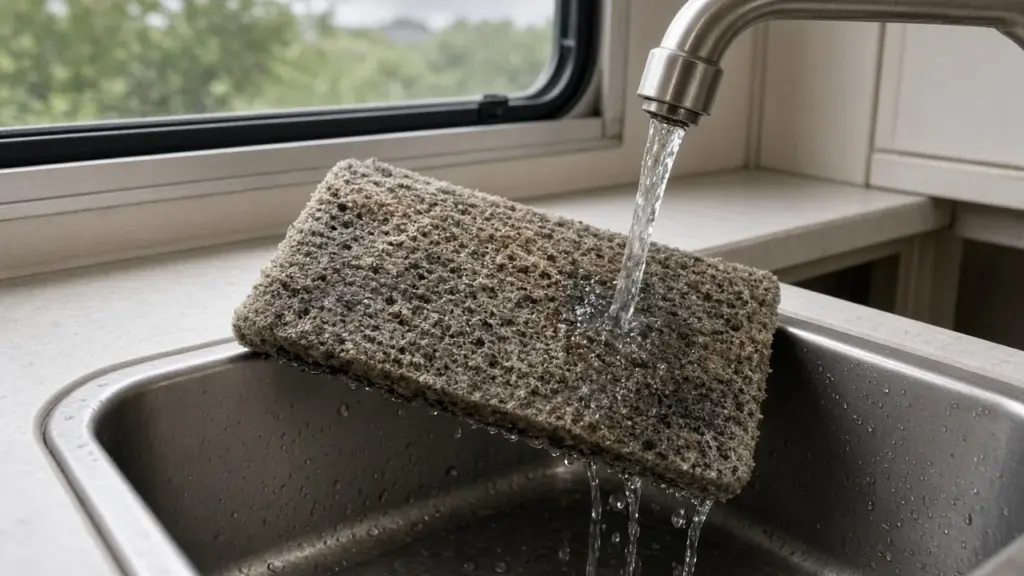
- Clean them according to the manufacturer. Many RV filters are washable foam or mesh that can be rinsed with mild soapy water.
- Let them dry completely before reinstalling.
- Reinstall and replace the cover.
If your filters are disposable, replace them with the correct size. Keep spares on hand so you can swap immediately.
How Often to Check Filters
Filter checks depend on your environment:
- Pets add hair and dander, so check more often
- Dusty or pollen-heavy seasons clog filters faster
- Heavy summer use means more air moving through the system
Many full-timers in Texas check filters every few weeks during summer. Set a phone reminder so it becomes routine.
Cleaning the Evaporator Coil
The evaporator coil sits behind the filters inside the ceiling assembly. With filters removed, you may be able to see its surface.
- Use a soft brush or vacuum with a brush attachment to gently remove surface dust
- Use a coil cleaner approved for your unit if recommended by the manufacturer
- Be gentle, because coil fins bend easily
- Avoid getting water into electrical components
If the coil is heavily dirty or you cannot reach it safely, a technician can do a deeper cleaning.
Cleaning the Condenser Coil
The condenser coil is on the roof, inside the shroud of the air conditioner. Cleaning it usually means going on the roof and removing the shroud.
Before climbing up:
- Confirm your roof can be walked on
- Turn off power to the air conditioner at the breaker
- Use a sturdy ladder and work with a helper
- Avoid wet roofs, windy days, and midday heat
Once the shroud is off, you can gently remove leaves and debris, brush the coil fins, and clean with an approved coil cleaner. Use a gentle spray of water if the manufacturer allows it, never a pressure washer, which can flatten fins.
Our RV roof inspection checklist includes checking the air conditioner shroud and seals, and our guide to resealing RV roof seams and edges covers the seal around the unit.
Straightening Bent Fins
Bent fins restrict airflow. A fin comb, sized to your coil’s fin spacing, can straighten them gently. Work slowly and carefully. If a large area is damaged, consult a technician.
Checking the Drain
Condensation needs to drain properly. Signs of a drainage problem include water dripping inside, water stains around the ceiling assembly, or musty smells. Clear visible debris from drain paths during cleaning, and call a technician if leaks continue.
Signs You Need a Professional
Call a qualified RV technician if you notice:
- Warm air even with clean filters
- Ice on coils
- Unusual noises from fans or the compressor
- Breakers tripping when the AC starts
- Burning smells
- Persistent leaks
Working Within Park Rules
Air conditioner maintenance is part of normal RV care, but keep the work tidy. At our park, window air conditioning units are not permitted, so your rooftop or ducted system matters even more. Extensive mechanic work is not allowed on site, and debris should be cleaned up promptly. Our park rules explain what is allowed.
Reducing AC Strain Year-Round
Cleaning is one part of keeping your AC healthy. Other habits help too:
- Use interior window shades, noting that foil on windows is prohibited at our park
- Choose a covered site if available, which can reduce direct sun on the roof
- Close blinds on sunny sides during the day
- Avoid running heat-producing appliances during peak heat
- Stagger major electrical loads
Storm Season Considerations
During hurricane season, power outages and surges can stress air conditioners. Our post on making an RV hurricane plan covers how to prepare your RV and systems before storms.
Building a Simple AC Maintenance Routine
Put AC care on a calendar:
- Every few weeks in summer: check and clean filters
- Seasonally: inspect the evaporator coil and drain
- Once or twice a year: clean the condenser coil and inspect the shroud and seal
- As needed: call a technician for performance issues
Keep a small log of what you did and when. Patterns, like filters clogging faster during certain months, help you plan.
Keeping the Interior Air Healthy
Clean filters and coils help with more than cooling. In a small space, the air conditioner also plays a big role in indoor air quality and humidity. A few habits support both:
- Vacuum floors and upholstery regularly, especially with pets, to reduce what reaches the filters
- Run the bathroom and kitchen vent fans when showering or cooking to remove moisture
- Wipe condensation from windows in the mornings during humid months
- Watch for musty smells, which can signal moisture problems worth investigating
When you finish a filter cleaning, take a moment to look around the ceiling assembly for signs of moisture or staining. Catching a small drainage issue early is much easier than dealing with water damage later.
Frequently Asked Questions
How often should I clean my RV AC filters?
Many full-timers in Texas check them every few weeks in summer, and more often with pets or dusty conditions.
Can I clean my RV AC coils myself?
Many owners do basic coil cleaning, but it requires care. Call a technician for heavy buildup or anything you are unsure about.
Can I use a window AC unit at a long-term RV park?
It depends on the park. At our park, window AC units are not permitted.
What are signs my RV AC needs professional service?
Warm air despite clean filters, ice on coils, unusual noises, tripping breakers, burning smells, or persistent leaks.
Covered Sites Help in the Texas Heat
Magnolia’s Finest offers eight covered sites on cement pads in a small gated park in Magnolia, TX. Explore our amenities and see if a long-term site fits your plans.
Check Availability or call or text (281) 205-1959
Magnolia’s Finest RV Park · 32020 Old Hempstead Rd, Magnolia, TX 77355 · Contact us