
Flash Flooding Around Houston: What RV Residents Should Know
December 20, 2025 · By Magnolia RV Park
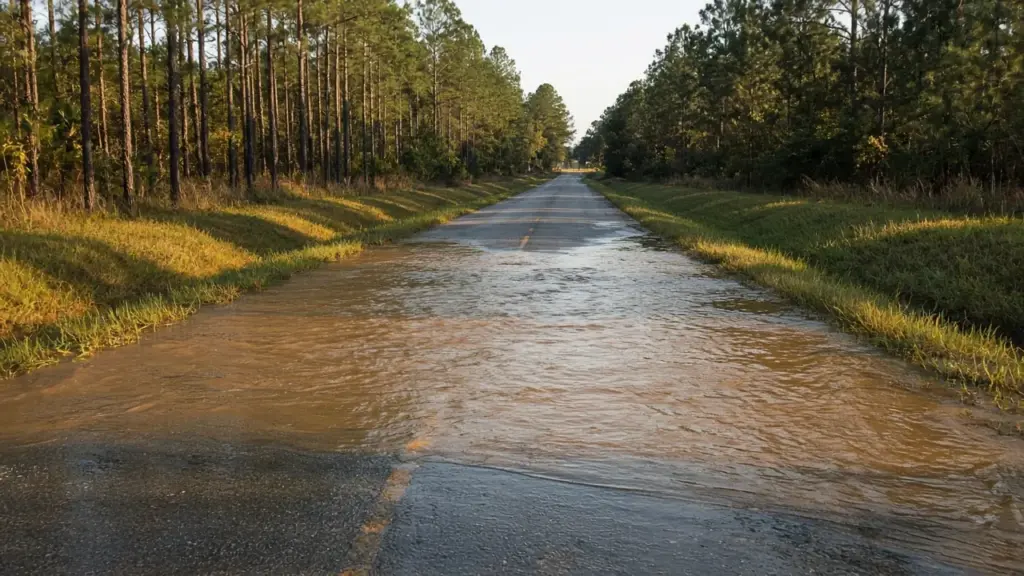
The Houston region is known for heavy rain. Slow-moving thunderstorms, tropical systems, and stalled weather fronts can drop large amounts of rain in a short time, and flat terrain combined with developed land means water can rise quickly on roads and in low areas. For RV residents north of Houston, understanding flash flooding is an important part of staying safe.
This guide explains why flash flooding happens around Houston, how to stay informed, how to drive safely, and how to protect your RV and yourself. It is general information. Always follow guidance from the National Weather Service and local officials. For weather across the year, see our pillar on Texas weather and your RV.
Why Flash Flooding Happens Here
Several factors contribute to flash flooding in the Houston region:
- Intense rainfall. Thunderstorms can produce very heavy rain in a short time, and tropical systems can bring days of rain.
- Flat terrain. Water drains slowly across much of the region.
- Clay soils. Many soils in Southeast Texas absorb water slowly.
- Development. Pavement and rooftops increase runoff.
- Creeks and bayous. Waterways can rise quickly and overflow.
Flooding can happen even when the rain has stopped, as water moves downstream.
Flash Flood Alerts
Know the key alerts:
- Flash Flood Watch: Conditions are favorable for flash flooding. Stay alert and review plans.
- Flash Flood Warning: Flash flooding is occurring or imminent. Move to higher ground if you are in a flood-prone area, and avoid travel.
- Flash Flood Emergency: A rare, severe situation with an imminent threat to life. Follow official instructions immediately.
Enable Wireless Emergency Alerts on your phone and use a weather app with location-based warnings. A weather radio with battery backup provides alerts during power outages.
Turn Around, Don’t Drown
The single most important flood safety rule is simple: never drive or walk through flooded roads. The National Weather Service promotes the phrase “Turn Around, Don’t Drown” for good reason.
- Just a small amount of moving water can knock a person down
- A modest depth of moving water can float or sweep away many vehicles
- Roads beneath floodwater may be washed out
- Water may be deeper than it looks, especially at night
If you encounter a flooded road, turn around and find another route. If your vehicle stalls in rising water, follow official safety guidance.
Commuting During Heavy Rain
Many residents commute on roads like FM 1488, FM 1774, and Texas 249. During heavy rain:
- Check live traffic and road conditions before leaving
- Consider delaying travel until water recedes
- Talk with your employer about weather policies
- Know alternate routes that avoid low areas
Our post on commuting from Magnolia to The Woodlands covers daily commuting tips that also apply during severe weather.
Protecting Your RV
While an RV park’s grounds and drainage are managed by the park, you can take steps to protect your RV:
- Inspect roof seals so heavy rain does not cause leaks
- Keep awnings retracted during storms to prevent water pooling and wind damage
- Close windows and vents when storms approach
- Keep sewer and water connections secure
- Keep important documents in a waterproof folder
At our park, all sites have cement pads, and items are not allowed on or under the site, which reduces debris that could be washed around during heavy rain.
Know When to Leave
If officials advise evacuation or if water is rising in your area, leave early. Moving an RV in heavy rain and wind is difficult, and roads can become impassable quickly. Have a plan for where you would go and how you would get there. Our post on tornado safety for RV residents includes go-bag advice that applies to flood emergencies too.
Pets During Floods
Keep pets inside during heavy rain. Floodwater can carry debris, chemicals, and wildlife, including snakes and fire ants. Our post on why pets can’t be left outside unattended explains why supervision matters even more during storms.
Power Outages and Heat
Heavy rain often comes with power outages. After storms, heat and humidity can return quickly. Plan for how you will stay cool and keep food safe. Our post on reducing RV air conditioner strain offers tips for when power returns.
After Heavy Rain
When rain has passed:
- Avoid floodwater, which may be contaminated or hide hazards
- Watch for downed power lines
- Inspect your RV for leaks and water intrusion
- Check utility connections before using them; report problems to management
- Photograph any damage for insurance
- Watch for mold in areas that got wet
Our park’s Residents page includes a maintenance request form for site issues.
Insurance and Flooding
Flood damage may be covered differently than other weather damage. Ask your insurance agent whether your RV policy covers flood damage and what exclusions apply. Review coverage well before the stormy seasons.
Seasonal Awareness
Heavy rain can happen any time of year around Houston, but some periods bring higher risk:
- Spring and early summer thunderstorms
- Hurricane season, June 1 through November 30
- Fall fronts that stall over the region
Stay aware of forecasts, especially when multiple days of rain are expected.
Building a Flood-Ready Routine
- Check the forecast daily during stormy periods
- Keep your phone charged and alerts enabled
- Keep a flashlight, water, snacks, and first aid kit ready
- Keep a full tank of fuel when storms are forecast
- Know at least two routes out of your area
Understanding Flood Risk in Your Area
Flood risk is not the same everywhere. Some roads and neighborhoods flood more often than others, often near creeks, bayous, and low spots. When you move to a new area, learn which roads in your commute tend to flood during heavy rain. Local news, county resources, and neighbors who have lived in the area for years are good sources of information. Montgomery County and neighboring counties provide flood information and alerts through their official channels. Knowing your local risk helps you decide when to delay a trip, which routes to avoid, and how quickly you might need to act when heavy rain is forecast.
Keeping Your Vehicle Ready
During stormy periods, your vehicle is your lifeline if you need to leave. Keep the fuel tank at least half full when heavy rain is forecast, since gas stations may lose power or close. Check your tires and wipers regularly, and keep an emergency kit in the vehicle with water, snacks, a flashlight, a phone charger, and a blanket. If you have pets, keep a leash and a small bag of food in the car. Park your vehicle where it can leave easily, following park rules on parking. Being ready to go in minutes makes it much easier to act early if conditions worsen.
Frequently Asked Questions
Why does Houston flood so easily?
Intense rainfall, flat terrain, slow-draining soils, development, and creeks and bayous all contribute to flash flooding.
Is it safe to drive through a little water on the road?
No. Water can be deeper than it looks and roads may be damaged. Turn around and find another route.
What should I do with my RV during heavy rain?
Retract awnings, close windows and vents, secure connections, and be ready to leave if officials advise.
Does RV insurance cover flood damage?
It depends on the policy. Ask your agent about flood coverage and exclusions.
Plan Ahead in Montgomery County
Magnolia’s Finest is a small, gated long-term park with covered sites on cement pads. Our FAQ page and amenities share more about living here.
Check Availability or call or text (281) 205-1959
Magnolia’s Finest RV Park · 32020 Old Hempstead Rd, Magnolia, TX 77355 · Contact us