
Full Hookup vs. Partial Hookup RV Sites
January 14, 2026 · By Magnolia RV Park
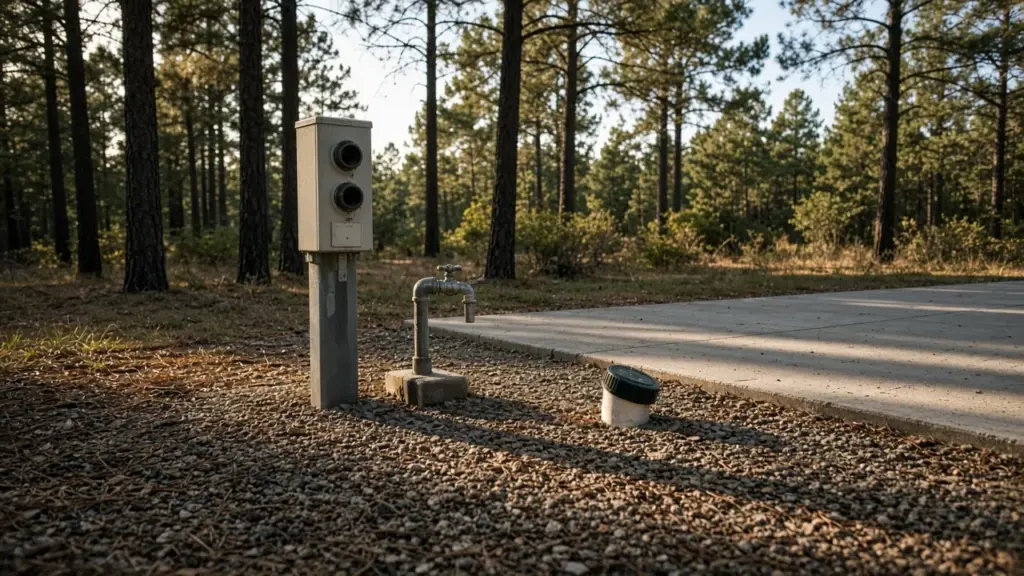
When you search for RV sites, you will see terms like “full hookup,” “partial hookup,” and “water and electric.” For a weekend trip, the difference might not matter much. For a long-term stay, it can change your daily routine, your costs, and how comfortable life feels.
This guide explains the difference between full hookup and partial hookup sites, how each affects long-term living, and what to ask before choosing a site. For an overview of site connections, see our pillar on RV hookups for long stays.
What “Full Hookup” Usually Means
A full hookup site typically includes three connections:
- Electric at a pedestal
- Water from a spigot
- Sewer connection for dumping tanks directly at your site
With full hookups, you can use your RV much like a house: run water freely, shower as long as you want, and dump tanks at your site on your schedule.
What “Partial Hookup” Usually Means
A partial hookup site includes some, but not all, of those connections. Common versions include:
- Water and electric only, with no sewer at the site
- Electric only
Without a sewer connection, you rely on your holding tanks and need to move your RV or use a portable tank to dump at a dump station. Without water, you fill your fresh tank periodically.
Why It Matters for Long Stays
For long-term living, sewer access is usually the biggest factor:
- Tank capacity limits how long you can go between dumps
- Moving the RV to dump tanks is inconvenient when you are set up for months
- Portable waste tanks can help but require handling and transport
Most long-term residents prefer full hookups for convenience. Always confirm exactly what a site includes.
Utilities at Our Park
At Magnolia’s Finest, utilities are confirmed per site. When you contact us, ask about the specific site and your RV’s needs. Our park uses a septic system, so only septic-safe waste should go down drains.
Questions to Ask About Hookups
Before choosing a site, ask:
- Which utilities are available at this site?
- What electrical service is provided?
- Is water included in rent?
- Is there a sewer connection at the site?
- What sewer system does the park use, and are there special rules?
- Are utilities included, metered, or billed separately?
Clear answers prevent surprises after you move in.
Managing Tanks on a Full Hookup Site
Even with full hookups, tank management matters:
- Keep the black tank valve closed until it is time to dump, so liquids help flush solids
- Dump black first, then gray, so gray water rinses the hose
- Use septic-safe toilet paper and products
- Flush the black tank periodically if your RV has a flush system
Leaving the black tank valve open can cause solids to build up in the tank.
Water Setup
Full-time water setups benefit from:
- A drinking-water-safe hose
- A pressure regulator
- A water filter
Our posts on drinking water hoses and filters for RVs and water pressure regulators for RV hookups explain these in detail.
Electrical Setup
Protect your RV with a surge protector or electrical management system at the pedestal, and manage loads to avoid tripped breakers. Never run cords from another site; our post on why running cords between RV sites is a bad idea explains the risks. At our park, tampering with electrical hookups and running cords from other sites are not allowed.
Costs and Value
Full hookup sites may cost more than partial hookup sites, but they save time and hassle for long-term living. When comparing parks, include:
- Utility costs
- Time and fuel spent moving to dump stations on partial sites
- Portable tank costs
A site with the right hookups for your lifestyle often provides the best value over a long stay.
Sewer Etiquette at Long-Term Parks
- Use a quality sewer hose and fittings
- Make sure connections are tight to prevent leaks and odors
- Support the hose so it slopes toward the connection
- Clean up any spills immediately
- Follow park rules about what goes into the system
At parks with septic systems, flushing wipes, grease, or harsh chemicals can cause problems for everyone.
Maintaining Your Connections
Inspect hoses, fittings, and cords regularly. Replace worn sewer hoses before they leak. Keep water connections tight. Check electrical plugs for heat or discoloration. Report any problems with park equipment to management; our Residents page includes a maintenance request form.
Slide-Outs and Hookup Placement
When setting up, make sure slides and awnings have clearance and that hookups are accessible with slides extended. Our post on slide-out maintenance covers slide care for long stays.
Choosing the Right Site for You
Think about:
- How long you plan to stay
- Your RV’s tank capacities
- How often you want to handle tanks
- Your electrical needs
- Your budget
For most long-term residents, confirming full utility access before moving in avoids a lot of inconvenience.
Seasonal Considerations
Hookups need attention with the seasons. In summer, Texas heat can warm water in hoses and increase electrical demand from air conditioners. In winter, occasional freezes can threaten water hoses, regulators, and sewer hoses. Planning for both extremes, such as shading hoses in summer and disconnecting or protecting them during freezes, keeps your connections working year-round. Checking all connections at the start of each season is a simple habit that prevents problems.
Living Without a Sewer Connection
If you ever stay at a site without sewer, a few strategies stretch your tank capacity. Take shorter showers, use a dishpan to catch dishwater and dispose of it appropriately, and use paper plates occasionally. Monitor tank levels closely, since tank sensors can be inaccurate. A portable waste tank can help you empty tanks without moving the RV, but it takes effort and must be emptied at an approved dump station. Many people find that these routines work for a short stay but become tiresome over months, which is why sewer access is so valued for long-term living.
Hookups and Your RV’s Design
Your RV’s design affects how you use hookups. Check where your utility connections are located on the RV and plan your site positioning accordingly. Some RVs have connections on the rear or opposite side from what a site expects, which may require longer hoses or cords. Know the length of your sewer hose, water hose, and power cord before arrival, and carry extensions rated for their purpose. Our posts on arrival and setup cover positioning your RV so every connection reaches comfortably.
Keep Spare Parts Handy
Keep a spare sewer hose seal, hose washers, and a backup fitting in a storage bay. Small parts fail at inconvenient times, and spares let you fix leaks right away.
Frequently Asked Questions
What is a full hookup RV site?
A site with electric, water, and sewer connections at the site.
What is a partial hookup site?
A site with only some connections, commonly water and electric without sewer, or electric only.
Are full hookups better for long stays?
Most long-term residents prefer them because they avoid moving the RV to dump tanks.
What utilities are available at Magnolia’s Finest?
Utilities are confirmed per site. Contact us about the specific site and your RV’s needs.
Ask About Your Site
Magnolia’s Finest is a small, gated long-term park in Magnolia, TX, with covered sites and cement pads. Explore our amenities and FAQ page, and contact us about site details.
Check Availability or call or text (281) 205-1959
Magnolia’s Finest RV Park · 32020 Old Hempstead Rd, Magnolia, TX 77355 · Contact us