
Water Pressure Regulators for RV Hookups
January 3, 2026 · By Magnolia RV Park
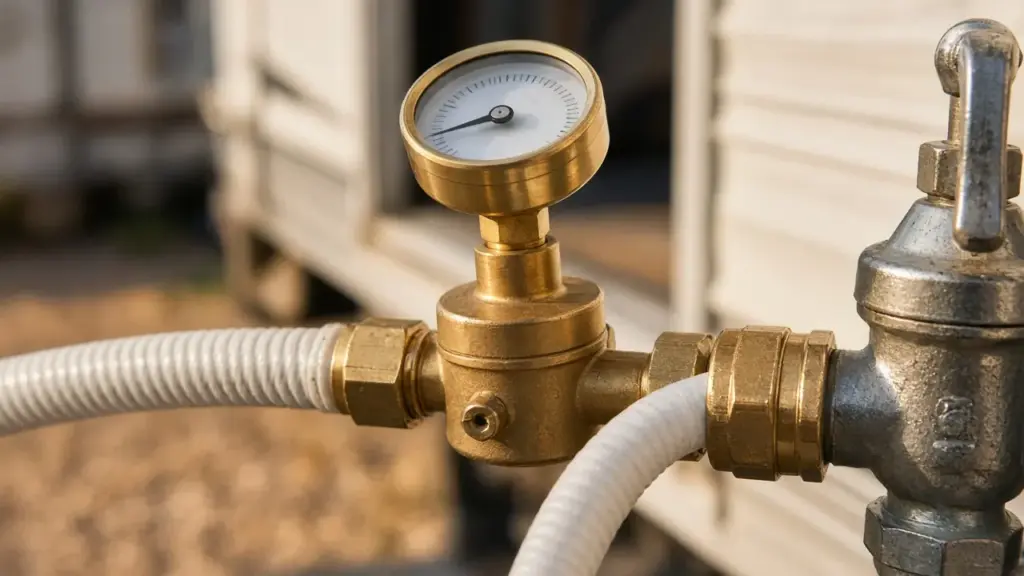
Water pressure is one of those things you rarely think about until something goes wrong. A burst fitting, a leaking faucet, or a damaged water heater can all result from pressure that is too high for your RV’s plumbing. That is why many full-time RVers treat a water pressure regulator as essential equipment for every hookup.
This guide explains what water pressure regulators do, the main types, how to install one, and how to spot pressure problems during a long stay. It is general information. Follow your RV manufacturer’s recommendations for water pressure. For an overview of site connections, see our pillar on RV hookups for long stays.
Why Pressure Matters
RV plumbing systems are designed to handle a certain range of water pressure. Pressure at park spigots can vary depending on the water system, time of day, and location. If pressure is too high, it can stress:
- Plastic fittings and connectors
- Faucets and valves
- Toilet valves
- Water heaters
- Hoses and filters
High pressure can cause immediate leaks or gradual wear that leads to failures later. Low pressure is less damaging but can make showers and dishwashing frustrating.
What a Regulator Does
A water pressure regulator reduces incoming water pressure to a safer level before it enters your hose and RV. It sits between the spigot and your hose, protecting everything downstream.
Types of Regulators
Inline Regulators
Inline regulators are small, inexpensive, and simple. They reduce pressure to a preset level and have no adjustments or gauges. Many RVers start with one.
Pros: affordable, compact, easy to use
Cons: fixed pressure, no way to see actual pressure, can restrict flow
Adjustable Regulators With Gauges
Adjustable regulators let you set the pressure and see it on a gauge. They often allow better flow than basic inline models.
Pros: adjustable, visible pressure, often better flow
Cons: more expensive, bulkier
For long-term living, many full-timers prefer adjustable regulators because they let you fine-tune pressure and monitor changes.
Choosing a Pressure Setting
Follow your RV manufacturer’s recommended water pressure range, usually listed in your owner’s manual. Setting pressure within that range protects plumbing while providing comfortable flow.
Where to Install the Regulator
Install the regulator at the spigot, before your hose and filter. This protects the hose, filter, and all RV plumbing from high pressure. A typical order is:
- Spigot
- Pressure regulator
- Filter, if using an inline or canister filter
- Drinking water hose
- RV city water inlet
Our post on drinking water hoses and filters for RVs explains hose and filter selection.
Installation Tips
- Flush the spigot briefly before connecting
- Hand-tighten fittings, avoiding over-tightening that can damage threads
- Use new washers in fittings to prevent leaks
- Turn water on slowly
- Check for leaks at every connection
Watching for Pressure Problems
Signs of pressure trouble include:
- Leaks at fittings or under sinks
- Dripping faucets that start suddenly
- Toilet valves that run or leak
- Water heater pressure relief valve releasing water frequently
- Low flow despite an open faucet, which may indicate a clogged regulator or filter
If you notice problems, check your regulator gauge, if you have one, and inspect filters and connections.
Maintaining Your Regulator
- Inspect regularly for leaks and damage
- Clean inlet screens if your model has them
- Replace regulators that no longer hold steady pressure
- Store regulators properly when disconnected
- Protect regulators from freezing during winter cold snaps
Regulators in Winter
During freezes, water inside regulators can freeze and crack the housing. If you disconnect your hose during a freeze, disconnect and drain the regulator too. Our post on winter freezes in Southeast Texas covers freeze preparation.
Regulators and Your Water Heater
High pressure can cause frequent pressure relief valve discharges from your water heater. A regulator helps protect the water heater and its components. Our post on RV water heater maintenance explains how to inspect the pressure relief valve.
Water and Electrical Safety
Water connections often sit close to electrical pedestals. Leaks can drip onto cords and plugs. Keep water connections tight and routed away from electrical connections. Our posts on RV electrical adapters and dogbones and using a surge protector at a long-term site explain how to keep electrical connections safe.
Respecting Park Utilities
The spigot and park plumbing belong to the park. Do not modify park connections. If a spigot leaks or you notice pressure problems at the source, report it to management. At our park, the Residents page includes a maintenance request form.
Building a Water System Routine
- At setup: install the regulator and check for leaks
- Weekly: glance at connections and the gauge
- Monthly: inspect the regulator, filter, and hose
- Seasonally: prepare for freezes and heat
Choosing Quality Equipment
Because your regulator protects your whole plumbing system, quality matters. Look for regulators made with materials intended for drinking water, sturdy brass or stainless fittings, and clear, easy-to-read gauges on adjustable models. Read product information to confirm the regulator is designed for RV use and for drinking water. A slightly more expensive regulator that holds steady pressure and resists corrosion can save you from costly plumbing repairs later.
Keep a Spare Washer Kit
Many water leaks at the spigot or regulator come from worn or missing hose washers. Keep a small bag of replacement washers in your water kit. Replacing a flattened or cracked washer takes seconds and often solves drips that tightening alone cannot fix. Check washers each time you reconnect your water system.
Commuters and Busy Schedules
If you commute or work long hours, you may be away when a leak starts. A quick check of your water connections before leaving and after returning home helps catch problems early. Our post on commuting from Magnolia to Cypress and northwest Houston offers other routines for busy working residents.
Understanding Low Pressure
Sometimes the problem is not high pressure but low pressure. Weak flow can come from a clogged filter, a kinked hose, a dirty regulator screen, a partially closed spigot, or simply low supply pressure at certain times of day. Start troubleshooting at the spigot and work toward the RV: check the spigot is fully open, inspect the regulator screen, replace an old filter cartridge, and straighten or replace kinked hoses. If flow is still weak with everything clean and open, you can switch to your fresh water tank and pump for better pressure while you contact management. Keeping notes on when low pressure occurs can help identify whether the issue is your equipment or the supply.
Frequently Asked Questions
Do I really need a water pressure regulator for my RV?
Many RVers consider it essential because park water pressure varies, and high pressure can damage RV plumbing.
Should I choose an inline or adjustable regulator?
Inline regulators are affordable and simple; adjustable regulators with gauges allow fine-tuning and monitoring. Many full-timers prefer adjustable models.
Where do I install the regulator?
At the spigot, before your filter and hose, to protect everything downstream.
What pressure should I set?
Follow your RV manufacturer’s recommended range, usually in your owner’s manual.
Ask About Utilities at Your Site
Utilities at Magnolia’s Finest are confirmed per site. Ask us about your needs, and explore our amenities and FAQ page.
Check Availability or call or text (281) 205-1959
Magnolia’s Finest RV Park · 32020 Old Hempstead Rd, Magnolia, TX 77355 · Contact us