
Small RV Parks vs. Big RV Resorts: Which Fits a Long Stay?
October 2, 2025 · By Magnolia RV Park
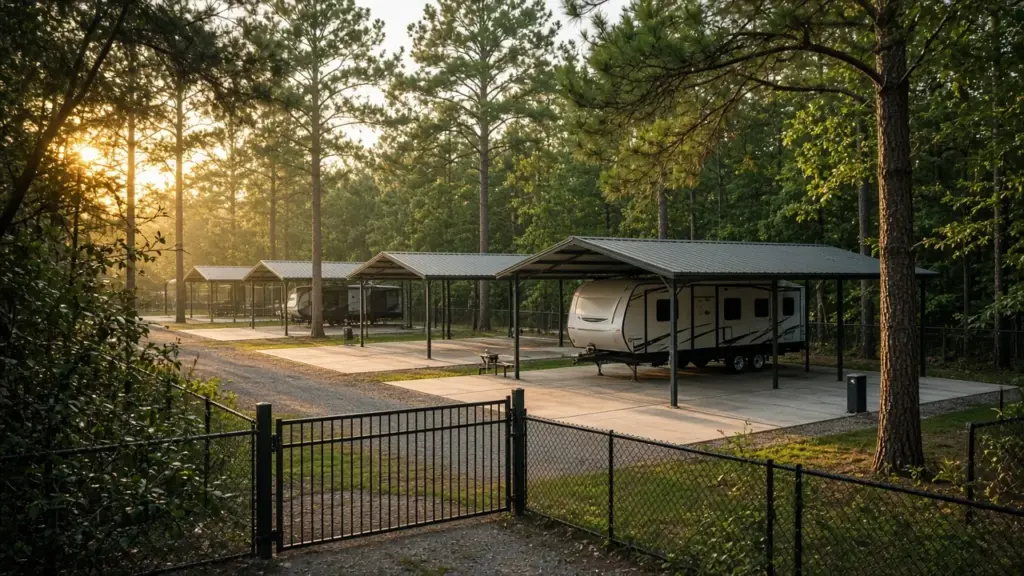
If you search for a place to park an RV for a few months, you will find two very different kinds of options. On one end are large RV resorts with hundreds of sites, pools, clubhouses, and activity calendars. On the other are small parks with a handful of sites, a gate, and not much else besides quiet. Both can be good places to live. They are just good at different things.
This guide compares the two honestly so you can decide which fits your stay. We are a small park ourselves, so we will be upfront about where small parks fall short, too.
What Counts as a Small RV Park?
There is no official definition, but in practice a small park is one where you can see most of the sites from your own and where management knows every resident by name. Magnolia’s Finest has ten sites in total. A large resort might have dozens or hundreds, often with separate sections for overnight, weekly, and monthly guests.
Size is not just a number. It changes traffic, noise, how fast problems get noticed, and how the place feels at 9 p.m. on a Friday.
Turnover: The Difference You Feel Every Day
The single biggest difference between a small long-term park and a big resort is turnover.
Large resorts usually depend on a steady flow of short-term guests. That means rigs pulling in at night, people setting up and breaking down, and a weekend surge when campers arrive. For vacationers that energy is part of the fun. For someone who has to be at work at 6 a.m., it can be exhausting.
A small park focused on long stays sees far fewer arrivals and departures. Some, like ours, do not accept overnight guests at all. The result is a more predictable routine: the same neighbors, the same traffic patterns, and quieter evenings. If you are new to long stays, our complete guide to monthly RV living explains why that consistency matters so much over time.
Amenities: What You Actually Use
Resorts win on amenities, no question. Pools, fitness rooms, dog parks, game rooms, organized events, and on-site stores can be genuinely enjoyable. If those things will get regular use in your household, they are worth weighing.
But it is worth being honest about what you will use in week six. Many long-term residents find that their daily needs come down to a short list:
- A level, solid site that is easy to live on
- Reliable utilities for the specific site
- A place to do laundry
- A sense of security
- Quiet at night
Small parks tend to focus on that short list. At our park, that means eight covered sites, cement pads on all ten, a gated entrance, and a laundry room with two washers and two dryers. You can see the full list on our amenities page. We do not claim a pool or clubhouse we do not have, and we would rather be clear about that than oversell.
Noise and Privacy
Large resorts can be quiet in some sections and lively in others, and you may not get to choose where you land. Common areas draw crowds, and more sites simply means more people, pets, and vehicles moving around.
A small park has fewer people by definition. That does not guarantee silence, but it improves the odds, especially when the park enforces quiet hours. Ours runs quiet hours from 8 p.m. to 8 a.m. with no loud parties, radios, idling vehicles, or other unnecessary noise.
Privacy in a small park is a little different. You will know your neighbors, and they will know you. For most long-term residents that is a benefit: people notice if something looks wrong, and minor issues get sorted out with a conversation.
Management and Responsiveness
At a large resort, you may deal with a front desk, a maintenance team, and a corporate office. That structure can mean longer hours and more staff, but it can also mean slower answers for anything outside the routine.
At a small park, you usually deal directly with the people who run it. Questions get answered by text or phone, and decisions are made on the spot. The tradeoff is that a small operation does not staff a 24-hour desk, so good communication habits matter. We prefer text for the fastest response.
Rules and Screening
Resorts that serve travelers often keep rules light for short stays, though many have stricter policies for monthly sections. Small long-term parks tend to have more detailed rules and a real screening process, because every resident has a big effect on everyone else.
Expect a small long-term park to ask about occupants, vehicles, pets, the age and condition of your RV, and insurance, and to require a background check. Our guide to applying to a long-term RV park walks through what that looks like. Some people find this intimidating at first. Most end up appreciating it, because the same screening that applies to them applies to their neighbors.
Site Quality: Cover, Pads, and Space
This is where small parks can quietly outperform resorts. Because a small park has fewer sites, each site can get more attention. Features like concrete pads and overhead cover make a real difference in daily life, especially in Texas heat and rain.
If you are weighing covered and uncovered options, our post on covered vs. uncovered RV sites in Texas explains the practical differences.
At the same time, ask about site dimensions, maximum RV length, and hookups for the specific pad you are considering. A good park confirms these details with you rather than guessing.
Cost: Comparing Fairly
It is tempting to compare parks by the monthly rate alone, but that rarely tells the whole story. When you compare a small park and a resort, line up:
- The monthly site rate for the specific site type
- Deposits, screening fees, and any move-in costs
- Which utilities are included and which are billed separately
- Whether amenities carry extra fees
- The cost of commuting from each location
Many small parks quote current pricing directly rather than posting it, because it can vary by site. That is normal. Just ask for the full picture before you decide. You can view our site types on Sites & Rates.
Location: Small Towns vs. Resort Corridors
Big resorts often cluster near highways, lakes, and tourist areas, which is great for convenience and recreation. Small parks are more likely to sit in older neighborhoods or on local roads.
Our park is in the older part of Magnolia on Old Hempstead Road, in Montgomery County northwest of Houston. Daily life runs on local roads, with Tomball, The Woodlands, and the wider Houston area within driving range. Our Magnolia area guide covers the practical side of getting around.
When a Big Resort Is the Better Choice
We would rather you end up in the right place than in our park for the wrong reasons. A large resort may suit you better if:
- You want organized activities and social events
- A pool, gym, or clubhouse will get regular use
- You need flexibility for short or uncertain stays
- You want to arrive after hours with no advance arrangement
- You have more people, pets, or vehicles than a small park’s limits allow
When a Small Park Is the Better Choice
A small long-term park is often the better fit if:
- Quiet evenings and consistent neighbors matter most
- You are working and need reliable rest
- You want direct contact with management
- You value a gated, screened community
- You care more about the site itself than about extras
Our post on what to look for in a monthly RV park has a quick checklist you can use during tours.
More Choosing an RV Park Guides
- Questions to Ask Before Signing Up for a Monthly RV Site
- How to Tour an RV Park Before You Commit
- Park Rules as a Preview: What a Rulebook Tells You About Daily Life
- Why Some RV Parks Don’t Take Overnight Guests
- Gated RV Parks: What a Security Gate Does and Doesn’t Do
- How to Compare Monthly RV Park Costs Fairly
- “What ‘Call for Current Pricing’ Means at a Small RV Park”
- How Park Size Changes Everything About RV Living
- Red Flags When Choosing a Long-Term RV Park
- Pull-Through vs. Back-In RV Sites for Long Stays
- Concrete, Gravel, or Grass: RV Site Surfaces Compared
- RV Park vs. Mobile Home Park: Key Differences
- RV Park vs. Apartment: Comparing Monthly Living Options
- Choosing an RV Park Near Houston Without the City Noise
- Finding a Pet-Friendly Long-Term RV Park
- RV Park Waitlists: How They Work and How to Get on One
- Why Management Style Matters More Than Amenities
- Checking an RV Park’s Location Before You Move In
- Checking Availability: Why an Inquiry Isn’t a Reservation
- What ‘Self-Contained RV’ Means and Why Parks Require It
- RV Park Amenities That Actually Matter to Monthly Guests
- Amenities You Can Live Without at a Monthly RV Park
- Small-Town RV Parks vs. Suburban RV Parks Near Houston
- Planning Your Search Timeline for a Monthly RV Site
- What to Expect From a Small RV Park’s Management
- Signs an RV Park Is Well Maintained
- Choosing an RV Park for a Work Assignment
- Choosing a Site Within a Park: Cover, Neighbors, and Access
- How to Read RV Park Reviews Critically
Frequently Asked Questions
Are small RV parks quieter than RV resorts?
Usually, yes, because fewer sites means fewer people and less turnover. Parks that focus on long stays and enforce quiet hours tend to be the quietest.
Do small RV parks have fewer amenities?
Generally, yes. Small parks tend to focus on essentials such as a solid site, laundry, and security rather than pools or clubhouses. Ask each park for its actual amenity list.
Why do some small parks not accept overnight guests?
Parks that focus on long-term residents often skip overnight guests to reduce turnover, traffic, and noise. It helps the park feel like a neighborhood instead of a highway stop.
Is it harder to get into a small RV park?
It can be, simply because there are fewer sites and residents tend to stay longer. If a park is full, ask about its waitlist. You can join ours on the waitlist page.
Should I tour an RV park before moving in?
When possible, yes. Seeing the site, the entrance, and the overall upkeep tells you a lot. At minimum, ask detailed questions about the specific site before you apply.
See If a Small Park Fits Your Stay
Magnolia’s Finest is intentionally small: ten long-term sites, eight covered, all on cement pads, behind a gated entrance with on-site laundry. If a quiet, screened community sounds right for your next few months, tell us your dates and your RV and we will confirm what may be available.
Check Availability or call or text (281) 205-1959
Magnolia’s Finest RV Park · 32020 Old Hempstead Rd, Magnolia, TX 77355 · Contact us