
What ‘Self-Contained RV’ Means and Why Parks Require It
June 7, 2026 · By Magnolia RV Park
When you look at long-term RV park requirements, you will often see the phrase “fully self-contained.” It appears in rules, applications, and park websites. But what does it actually mean, and why do parks care so much about it?
This guide explains what a self-contained RV is, which systems are typically included, and why long-term parks, including ours, require it. For a related look at park types, see our pillar on small RV parks vs. big RV resorts.
What “Self-Contained” Means
In general, a self-contained RV has its own systems for daily living. It does not depend on shared bathhouses, showers, or restrooms. A self-contained RV typically includes:
- A toilet connected to a black water holding tank
- A shower or bathtub
- Sinks connected to a gray water holding tank
- A fresh water system, including a tank, pump, and plumbing
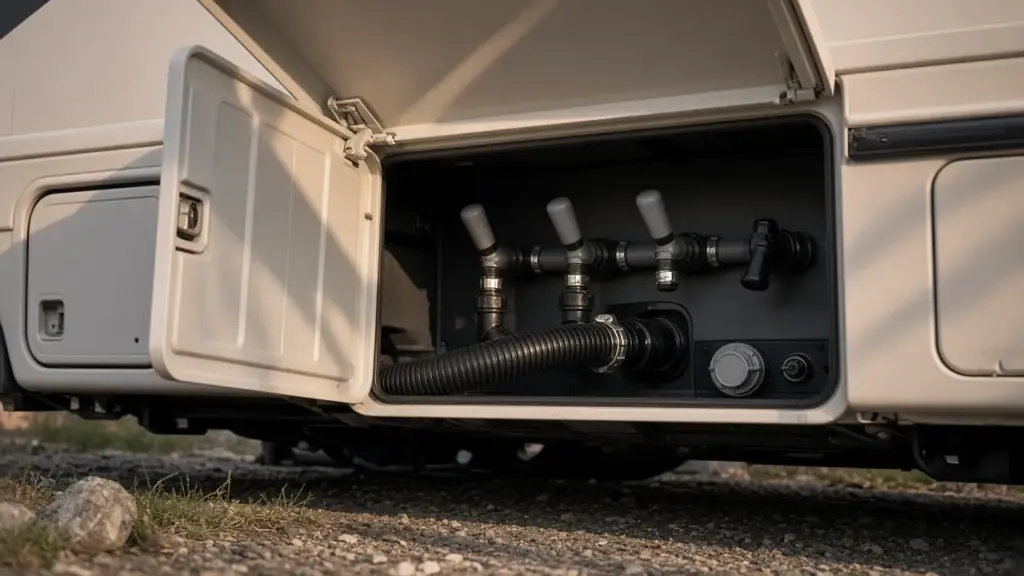
- Holding tanks for gray and black water that connect to sewer hookups
- Electrical systems for lights, outlets, and appliances
- Cooking facilities, such as a stove or cooktop
- Heating and cooling, such as a furnace and air conditioner
In short, a self-contained RV lets you live comfortably without relying on shared park facilities for bathrooms or showers.
Why Parks Require Self-Contained RVs
No Shared Bathhouses
Many small, long-term parks do not have public bathhouses or showers, and they are built around residents using their own facilities. At Magnolia’s Finest, we require fully self-contained RVs, so residents rely on their own bathrooms and showers every day. Our shared amenity is a laundry room with two washers and two dryers. A self-contained RV is essential for daily life at a park like ours.
Sanitation and Health
Self-contained RVs manage waste through holding tanks and sewer connections, keeping the park sanitary. Our park uses a septic system, so proper waste handling and septic-safe products are important. RVs with working tanks and connections help protect the system for everyone.
Consistency and Fairness
Requiring self-contained RVs sets a clear standard. Everyone knows what is expected, and the park can maintain consistent quality. It also avoids situations where residents need facilities the park does not offer.
Long-Term Livability
For long stays, residents need reliable systems. A fully self-contained RV in good condition is much more likely to handle daily living for months without problems.
Our RV Requirements
At our park, RVs must be:
- Fully self-contained
- In good condition
- 15 years old or newer
These requirements help ensure RVs are safe, reliable, and suited to long-term living. They also help the park maintain a clean, consistent appearance.
Self-Contained and In Good Condition
Being self-contained is not enough on its own. Systems need to work properly. Parks look for RVs where:
- The toilet, shower, and sinks function
- Holding tanks and valves do not leak
- Sewer connections are secure and in good condition
- Electrical systems work safely
- The exterior is in good repair, without major damage
- Windows, doors, and seals are intact
If your RV has issues, address them before applying. Our park may ask about the RV’s age and condition during the application process.
Checking Your RV Before You Apply
Before applying to a long-term park, run through your RV’s systems:
- Fill the fresh water tank and test the pump and faucets
- Flush the toilet and check for leaks
- Run the shower and sinks and confirm drains work
- Test gray and black tank valves
- Inspect sewer hoses and fittings
- Check electrical outlets, lights, and appliances
- Test the furnace and air conditioner
- Inspect the roof, seals, and exterior
Fix problems before moving in. Leaks and broken systems can create sanitation issues and damage your RV.
Why Age Requirements Exist
Many parks set age limits for RVs. Older RVs are more likely to have worn systems, leaks, and appearance issues. An age limit is a simple way to set a baseline for condition. At our park, RVs must be 15 years old or newer.
Common Questions About Self-Contained Requirements
Some applicants wonder whether certain setups qualify. For example, a camper van without a toilet or shower may not be considered fully self-contained. A tent trailer or pop-up without holding tanks typically does not qualify. If you are unsure whether your RV meets requirements, ask before applying.
Self-Contained Living Day to Day
Living in a self-contained RV full time means managing your own systems every day. You will monitor fresh water, empty gray and black tanks as needed, and keep an eye on seals, valves, and connections. None of this is difficult once it becomes routine, but it does require attention. Residents who check their systems regularly rarely run into serious problems.
Tank management is a big part of the routine. At a long-term site with sewer hookups, many residents keep the gray valve open or closed depending on their habits, while keeping the black valve closed until the tank is ready to dump. Using plenty of water, septic-safe toilet paper, and septic-safe cleaning products protects both your tanks and the park’s system.
What Self-Contained Does Not Include
Being self-contained does not mean you need to bring everything you own. Parks still set rules about what can be kept outside the RV. At our park, items cannot be stored on or under the site, including appliances, furniture, sheds, storage boxes, and tents. Window AC units, space heaters, and foil on windows are not allowed. A self-contained RV should handle heating, cooling, and daily living on its own, using its built-in systems.
Getting Ready to Apply
Once you are confident your RV meets requirements, prepare for the application. Our park requires a $49 background check through our screening partner and a $125 refundable deposit after approval. Nothing is reserved until approval and deposit.
If a park you like is full, our post on RV park waitlists explains how to get on a list. Remember that an inquiry is not a reservation; our post on checking availability explains why. Before committing, consider location as well; see our guide to checking an RV park’s location.
Budgeting for Repairs
Keeping an RV fully self-contained and in good condition costs money over time. Water pumps, valves, seals, and appliances eventually need repair or replacement. Setting aside a small amount each month for RV repairs helps you handle problems without stress, and keeps repair costs from competing with rent. Our post on avoiding late rent explains why a budget buffer matters for long-term residents.
Frequently Asked Questions
What does fully self-contained mean for an RV?
It means the RV has its own toilet, shower, sinks, fresh water system, and holding tanks, so it does not depend on shared bathhouses.
Why does Magnolia’s Finest require self-contained RVs?
Residents rely on their own bathrooms and showers, and self-contained RVs with working tanks help keep the park sanitary and protect the septic system.
How old can my RV be?
RVs must be 15 years old or newer, fully self-contained, and in good condition.
Does a camper van qualify as self-contained?
It depends on whether it has a toilet, shower, and holding tanks. Ask before applying.
See If Your RV Fits
Magnolia’s Finest RV Park is a small, gated long-term community with covered sites on cement pads. View sites and rates, explore our amenities, or check availability.
Check Availability or call or text (281) 205-1959
Magnolia’s Finest RV Park · 32020 Old Hempstead Rd, Magnolia, TX 77355 · Contact us