
How Park Size Changes Everything About RV Living
January 8, 2026 · By Magnolia RV Park
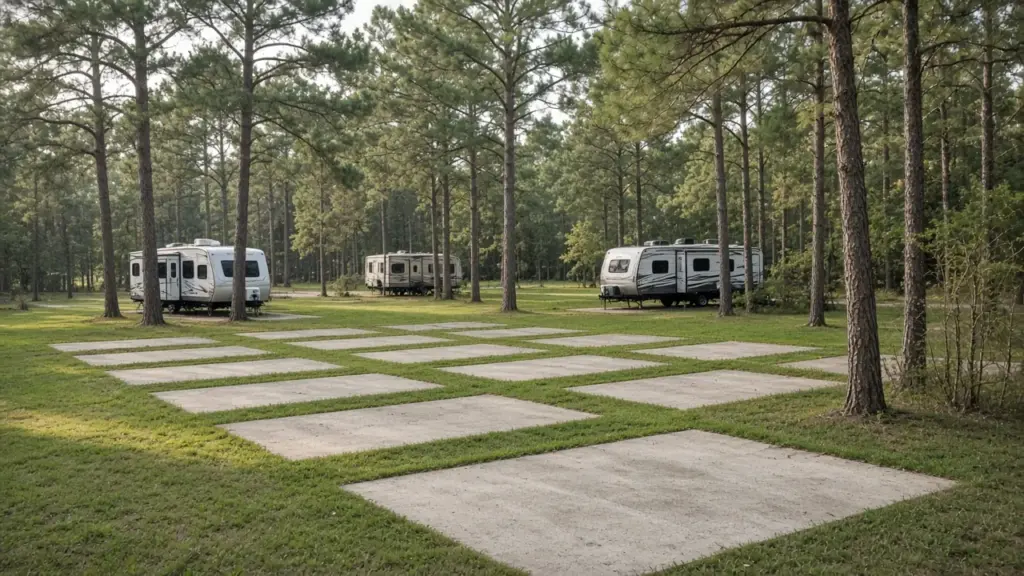
When comparing RV parks, size is easy to overlook. People focus on price, location, and amenities. But the number of sites in a park shapes nearly everything about daily life, from how quiet evenings are to how quickly management responds to how well you know your neighbors.
This guide explains how park size affects RV living and how to decide which size fits you. For a broader comparison, see our pillar on small RV parks vs. big RV resorts.
A Quick Look at Park Sizes
RV parks range widely:
- Very small parks with a handful of sites
- Small to mid-size parks with dozens of sites
- Large parks and resorts with hundreds of sites
Magnolia’s Finest is a very small park with 10 sites: 8 covered and 2 uncovered, all on cement pads.
Noise and Activity
In a small park, there are simply fewer people, vehicles, and pets. That often means:
- Quieter evenings
- Less traffic through the park
- Fewer late arrivals and departures
Large parks can be lively, with more activity, events, and turnover. Some people enjoy that energy; others prefer quiet. At our park, quiet hours run from 8 p.m. to 8 a.m., and the park is long-term only with no overnight guests.
Community and Neighbors
In a small park, you are likely to know your neighbors by name. You recognize vehicles, pets, and routines. That familiarity can create a close, neighborhood feel and a sense of security, since unusual activity is easier to notice.
In a large park, you may know only the people near your site. There is more anonymity, which some people prefer.
Management and Communication
Small parks are often run by owners or small teams. That can mean:
- Direct communication with decision-makers
- Personal attention to residents
- Clear, consistent rules
Large parks may have front desks, staff, and formal processes. They may offer longer office hours but less personal contact.
At our park, communication often happens by text, and residents can submit maintenance requests through the Residents page.
Amenities
Large parks often offer more amenities: pools, clubhouses, fitness rooms, playgrounds, and organized activities. Small parks usually focus on essentials. Our park offers covered sites, cement pads, a gated entrance, and a laundry room with two washers and two dryers in an air-conditioned, cedar-paneled room.
Think about which amenities you will actually use. Paying for amenities you never use does not add value.
Rules and Consistency
Small parks often have clear, detailed rules because each resident’s behavior has a noticeable impact. Large parks may have rules too, but enforcement can vary with size and staffing. Our post on questions to ask before signing up for a monthly RV site includes rule-related questions to ask any park.
Availability
Small parks have fewer sites, so openings can be rare. You may need to plan ahead, join a waitlist, or act quickly when a site opens. At our park, nothing is reserved until approval and deposit.
Large parks often have more availability but may also have more turnover among neighbors.
Pricing and Value
Small parks often say “call for current pricing” because sites and availability vary. Our post on what “call for current pricing” means explains why. When comparing parks of different sizes, look at total cost and value. Our post on how to compare monthly RV park costs fairly walks through a worksheet.
Maneuvering and Setup
Smaller parks may have tighter roads and fewer pull-through sites. That can make backing in more challenging. Our post on backing into your site on move-in day offers practical tips.
Security
Both small and large parks can be secure. Small parks benefit from familiarity: residents notice strangers. Features like gated entrances, screening, and long-term-only policies add layers of security regardless of size. At our park, applicants complete a $49 background check, and the entrance is gated.
Who Small Parks Suit Best
Small parks often suit:
- Workers who need quiet rest
- People who value a neighborhood feel
- Residents who prefer personal communication with management
- Anyone who does not need resort-style amenities
Who Large Parks Suit Best
Large parks often suit:
- People who enjoy social activities and events
- Families who want playgrounds or pools
- Travelers who need nightly or weekly stays
- Anyone who prefers more anonymity
Making Your Decision
Ask yourself:
- Do I prefer quiet or activity?
- How important are amenities to me?
- Do I want to know my neighbors?
- How flexible is my move-in date?
- What does my budget allow?
Visiting parks of different sizes can help you feel the difference.
Small Parks and Maintenance
In a small park, maintenance issues tend to be noticed quickly, because management sees the whole park regularly. At the same time, small parks may not have full-time maintenance staff on site, so reporting issues clearly and promptly helps. Use the park’s preferred process, describe the problem clearly, and include photos if possible. Good communication between residents and management keeps a small park running smoothly for everyone.
Living Well in a Small Park
Life in a small park works best when everyone contributes to the community. Following rules, being considerate about noise, keeping sites tidy, and communicating respectfully go a long way. In return, residents enjoy calm, familiar surroundings that feel more like home than a campground. Many long-term residents find that the benefits of a small park outweigh the lack of resort amenities.
How Size Affects Your Site
Park size also shapes the site itself. Large parks sometimes squeeze many sites into limited space, while small parks may have more room between RVs, or may simply feel more open because there are fewer neighbors. At the same time, a small park may have fewer site types to choose from. At our park, residents choose between covered and uncovered sites, all on cement pads. Before applying anywhere, ask what sites are available and how they differ, and look at photos or visit in person. The site you live on every day matters more than a list of amenities you rarely use.
Size and Pets
In a small park, every pet is noticed. Barking, off-leash dogs, or missed waste pickups affect a larger share of residents. That is one reason small parks often have clear pet rules. At our park, up to two pets are allowed, dogs must be leashed outside, and aggressive breeds are not permitted. Responsible owners usually find small parks welcoming and calm for their pets.
Try Before You Commit
If you have never lived in a small park, talk with management about daily life there, and ask what current residents appreciate most. Their answers reveal a lot.
Frequently Asked Questions
How big is Magnolia’s Finest?
Our park has 10 sites: 8 covered and 2 uncovered, all on cement pads.
Are small RV parks quieter?
Often, yes. Fewer residents and vehicles generally mean less noise and traffic, especially at long-term-only parks.
Do small parks have fewer amenities?
Usually. Small parks tend to focus on essentials rather than resort features.
Is it harder to find openings at small parks?
Often. With fewer sites, openings can be rare, so plan ahead and be ready to apply quickly.
Experience a Small-Park Community
Magnolia’s Finest is a small, gated, long-term park in Magnolia, TX. Explore our amenities and sites and rates to learn more.
Check Availability or call or text (281) 205-1959
Magnolia’s Finest RV Park · 32020 Old Hempstead Rd, Magnolia, TX 77355 · Contact us