
Backing Into Your Site on Move-In Day
January 6, 2026 · By Magnolia RV Park
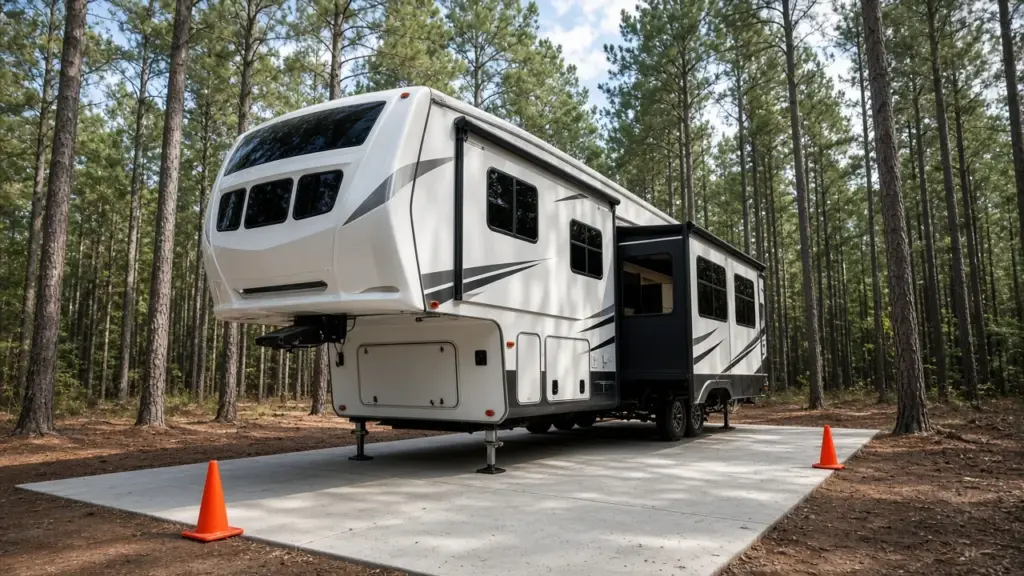
For many RVers, backing into a site is the most stressful part of arrival day. Whether you drive a motorhome or tow a travel trailer or fifth wheel, maneuvering a large vehicle into a defined space while neighbors watch can feel intimidating. Fortunately, backing in gets easier with preparation, a good spotter, and a calm approach.
This guide shares practical tips for backing into your site on move-in day at a long-term park. For the full application and move-in process, see our pillar on applying to a long-term RV park.
Arrive With Time and Daylight
Backing in is much easier in daylight. At our park, we ask new residents to arrive before 6 p.m. so setup can be finished before dark and well before quiet hours at 8 p.m. Our post on arrival day at an RV park explains why timing matters.
Walk the Site First
Before you start backing, park in a safe spot and walk the site:
- Find the pedestal and sewer connection
- Note obstacles such as trees, posts, fences, and neighboring RVs
- Check overhead for branches or structures
- Look at the pad to see where your RV should sit
- Plan where your slides and awning will extend
At our park, all sites have cement pads, which give you a clear target. Eight of our ten sites are covered, so check overhead clearance before backing under a cover.
Plan Your Approach
Think through your approach before moving:
- Which direction will you enter from?
- Where will you start your turn?
- Where should the RV end up to reach hookups comfortably?
For towables, starting with the site on the driver’s side often gives better visibility.
Use a Spotter
A spotter makes backing in far safer. Agree on signals before you start:
- Stop: a clear, firm signal everyone understands
- Come back: waving you straight back
- Turn: pointing in the direction the rear of the RV should move
- Distance: hands held apart to show remaining space
Many couples use phones or two-way radios. Rule number one: if the driver cannot see the spotter, the driver stops.
Go Slow
Speed is the enemy of good backing. Move slowly, make small corrections, and stop whenever you are unsure. There is no shame in pulling forward and trying again. Everyone does it.
Backing a Towable
Backing a trailer takes practice:
- Place your hand at the bottom of the steering wheel; move your hand in the direction you want the trailer to go
- Make small steering inputs
- Watch both mirrors
- Pull forward to straighten out when needed
Backing a Motorhome
Motorhomes back more like a large car but have long rear overhangs that swing wide during turns. Watch the rear corners and use your backup camera and mirrors together.
Respect Park Rules While Maneuvering
Park rules still apply on move-in day:
- Speed limit: 10 mph throughout the park
- No driving on the grass
- No parking in empty lots
If you need extra room to maneuver, ask management for guidance before driving onto grass or into unoccupied areas.
Position for Hookups
Before setting up, confirm:
- Your power cord reaches the pedestal without strain
- Your sewer hose reaches with a proper downhill slope
- Your water hose reaches without stretching
- Slides and awnings have clearance
It is easier to adjust before leveling and unhitching.
Level and Stabilize
Once positioned:
- Chock wheels on towables
- Level side to side, then front to back
- Deploy stabilizers as designed
- Unhitch towables following manufacturer steps
Our post on setting up an RV site for a months-long stay covers long-term setup in more detail.
Handling Nerves and Onlookers
It is normal to feel nervous when neighbors are watching. Remember that most RVers have been in your shoes. Take your time, focus on your spotter, and ignore any pressure to rush.
Arriving With Pets
Keep pets secure while you back in. Dogs should stay inside or be leashed and away from the vehicle. Cats should stay inside or in carriers. Excited pets and moving vehicles are a dangerous combination.
Quiet Setup
Backup alarms, engines, and leveling systems make noise. Finishing setup well before 8 p.m. respects neighbors during quiet hours. Our post on quiet hours at RV parks explains how quiet hours shape life in the park.
Getting Ready Before Arrival
Preparation starts before move-in day. Have your application complete and your RV ready. Our checklist of what to have ready before you apply includes RV details that also help you plan your arrival.
When Plans Involve a Longer Stay
If you are moving in for an extended period, such as while a house is being built, taking time to position your RV well pays off for months. Our post on living in an RV while your house is being built discusses planning for extended stays.
Practicing Before Move-In Day
If you are new to backing an RV, practice before arrival day. An empty parking lot on a quiet weekend morning is a good place to learn. Set up cones or empty boxes to mark a pretend site and practice backing in from both sides. Practice with your spotter so you both learn the signals. Even an hour of practice builds confidence and makes the real thing far less stressful. Some RV dealers and clubs also offer driving classes that cover backing techniques.
After You Are Parked
Once you are in position, take a moment before connecting utilities. Walk around the RV and check clearances one more time. Make sure slides have room, awnings will not hit anything, and your RV sits squarely on the pad. Take photos of the site for your records; they can help at move-out. Then connect utilities in order, starting with a surge protector at the pedestal.
Common Backing Mistakes
A few mistakes cause most backing trouble. Turning the wheel too much makes a trailer jackknife or swing wide; small inputs work better. Rushing because others are waiting leads to mistakes, so take your time. Forgetting to check overhead clearance can damage roof-mounted air conditioners and vents. Relying only on a backup camera misses what is happening at the front corners and sides. And skipping the site walk means surprises halfway through. Avoiding these habits makes backing in smoother and safer.
Asking for Help
If you are struggling to back in, it is fine to ask for help. Management or an experienced neighbor may offer to spot for you. Accepting help is far better than damaging your RV or park property.
Frequently Asked Questions
How can I make backing into an RV site easier?
Arrive in daylight, walk the site first, plan your approach, use a spotter with agreed signals, and go slowly.
Can I drive on the grass to maneuver into my site?
At our park, driving on the grass is not allowed. Ask management for guidance if you need extra room.
What if I cannot see my spotter?
Stop immediately until you can see them again.
What should I check before leveling?
Make sure power, water, and sewer connections reach comfortably and that slides and awnings have clearance.
Plan Your Move-In
Magnolia’s Finest is a small, gated long-term RV park in Magnolia, TX, with cement pads and covered sites. Review our park rules and start on our application page.
Check Availability or call or text (281) 205-1959
Magnolia’s Finest RV Park · 32020 Old Hempstead Rd, Magnolia, TX 77355 · Contact us