
Why Some RV Parks Don’t Take Overnight Guests
November 18, 2025 · By Magnolia RV Park
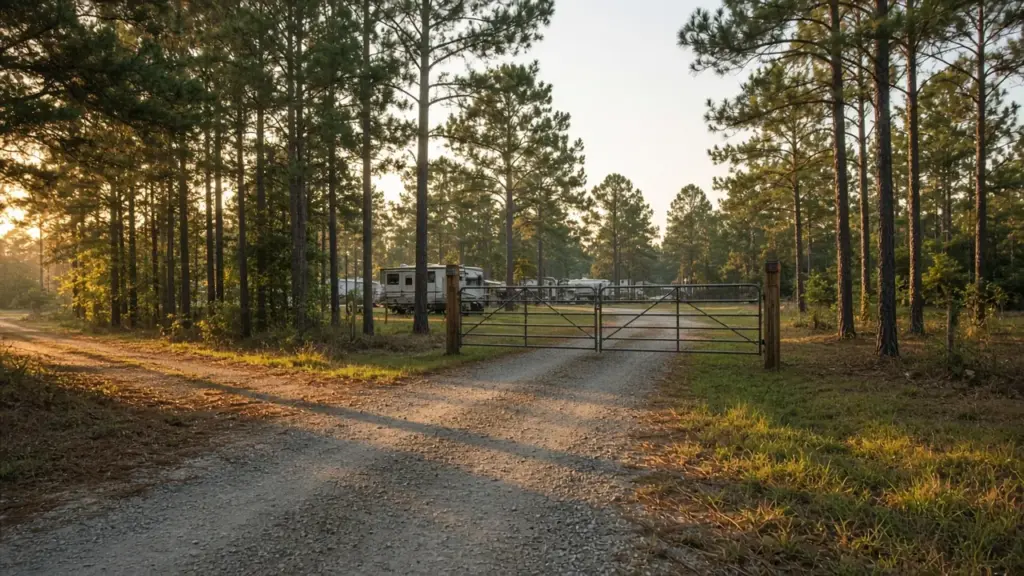
Most people picture RV parks as places where travelers pull in for a night or two, then move on. Some parks work differently. They accept only long-term residents and do not take overnight or short-term guests at all. If you are looking for a place to live in your RV for months, understanding why these parks exist, and how they differ, can help you choose.
This guide explains why some RV parks are long-term only, how that affects daily life, and how to tell if a long-term-only park fits your needs. For a broader comparison, see our pillar on small RV parks vs. big RV resorts.
What “Long-Term Only” Means
A long-term-only park rents sites to residents who stay for extended periods, often month to month or longer. It does not rent sites by the night to travelers passing through. Magnolia’s Finest is one of these parks. We accept long-term residents only and do not take overnight guests.
This is different from parks that offer a mix of nightly, weekly, and monthly sites. At mixed parks, long-term residents live alongside a rotating group of travelers.
Why Parks Choose Long-Term Only
There are several common reasons a park might choose to be long-term only:
Quieter, More Stable Community
Nightly guests often arrive late, set up in the dark, and leave early. Weekend travelers may be on vacation schedules. Long-term residents, by contrast, tend to have routines similar to people living in apartments or houses. A long-term-only park can feel more like a neighborhood.
Fewer Strangers Coming and Going
When sites turn over nightly, there are always new faces. In a long-term-only park, residents know their neighbors. Combined with features like a gated entrance, this can create a stronger sense of security.
Simpler Management
Nightly rentals require constant check-ins, cleaning, reservations, and turnover. A small park with only a handful of sites may prefer to focus on long-term residents rather than running a hospitality operation.
Consistent Rules
Rules are easier to follow and enforce when everyone knows them. A park where all residents have been screened and have agreed to the same rules often runs more smoothly.
Screening
Long-term parks commonly screen residents with applications and background checks. Screening every overnight traveler would be impractical. At our park, the background check costs $49 through our screening partner, and convicted felons are not permitted.
How Daily Life Differs
Living in a long-term-only park often feels different:
- Quieter nights without late arrivals
- Familiar neighbors you see regularly
- Consistent routines across the park
- Less traffic through the park
- A tidier appearance, because site rules apply to everyone equally
At our park, quiet hours run from 8 p.m. to 8 a.m., the speed limit is 10 mph, and items such as furniture, sheds, and trailers are not allowed on or under the site. These rules support a calm, orderly environment.
Trade-Offs to Consider
Long-term-only parks are not right for everyone. Consider:
- Less flexibility. You may need to commit to a month or more rather than a few nights.
- An application process. Expect screening, a deposit, and approval before moving in.
- Stricter rules. Long-term parks may have more detailed rules on vehicles, pets, and site use.
- Guest limits. Visitors may be limited. At our park, unregistered guests may stay no more than five consecutive days, and subletting is not allowed.
If you are traveling and need a place for a few nights, a long-term-only park will not fit. If you want a stable home base, it may be exactly what you need.
Who Long-Term-Only Parks Suit Best
Long-term-only parks often suit:
- Workers on long projects or contracts
- Full-time RVers who want a stable home base
- People relocating to an area and settling in
- Residents who value quiet and routine
- Retirees or remote workers who prefer consistency
Questions to Ask a Long-Term-Only Park
When considering a long-term-only park, ask:
- What is the minimum stay?
- What does the application involve?
- What are the RV standards?
- What are the guest and vehicle rules?
- How much notice is needed to leave?
At our park, RVs must be fully self-contained, in good condition, and 15 years or newer. Our post on questions to ask before signing up for a monthly RV site offers a longer list.
Read the Rules as a Preview
A long-term park’s rules tell you a lot about daily life. Our post on what a park rulebook tells you explains how to read rules before applying.
Visit Before You Commit
If possible, see a park before applying. Our guide on how to tour an RV park before you commit lists what to look for: site condition, cleanliness, how quiet it feels, and how management communicates.
Planning Your Setup
Once you are approved at a long-term park, setup matters more than at a campground. Our post on setting up an RV site for a months-long stay walks through leveling, connections, and organization for a long stay.
What About Friends and Family Visiting?
A common question about long-term-only parks is whether friends and family can visit. Most parks allow visitors, but with limits. Visitors typically need to follow park rules, park in approved areas, and leave by a certain time or within a set number of days. At our park, guests who are not registered may stay no more than five consecutive days, and they may not bring their own RV for an overnight stay. If family plans to visit for a longer period, talk with management ahead of time so everyone knows what to expect. Clear expectations help residents enjoy visits without affecting their neighbors.
How Long-Term Parks Handle Openings
Because long-term residents stay for months, openings at small long-term-only parks can be limited. A park with only ten sites might go weeks or months without a vacancy. That affects how you plan. Contact parks early, ask how they handle availability, and be ready to apply quickly when a site opens. Having your information organized, including RV photos, vehicle details, and pet records, helps. At our park, nothing is reserved until the application is approved and the deposit is paid, so a complete application can make the difference when a site becomes available. Flexibility on your move-in date can help too.
Being a Good Long-Term Neighbor
In a park where everyone stays for months, small courtesies matter. Keep noise down during quiet hours, drive slowly, keep your site tidy, and pick up after pets. A friendly wave goes a long way.
Frequently Asked Questions
Why don’t some RV parks accept overnight guests?
Long-term-only parks often aim for a quieter, more stable community with screened residents, consistent rules, and simpler management.
Does Magnolia’s Finest accept overnight guests?
No. Magnolia’s Finest is a long-term-only park and does not accept overnight guests.
Can friends visit me at a long-term-only park?
Usually, within the park’s guest rules. At our park, unregistered guests may stay no more than five consecutive days.
Is a long-term-only park right for me?
It may be if you want a stable home base, value quiet, and are comfortable with an application process and clear rules.
A Quiet, Long-Term-Only Community
Magnolia’s Finest is a small, gated, long-term-only RV park in Magnolia, TX, with covered sites, cement pads, and on-site laundry. Explore our amenities and sites and rates page to learn more.
Check Availability or call or text (281) 205-1959
Magnolia’s Finest RV Park · 32020 Old Hempstead Rd, Magnolia, TX 77355 · Contact us