
Setting Up an RV Site for a Months-Long Stay
November 17, 2025 · By Magnolia RV Park
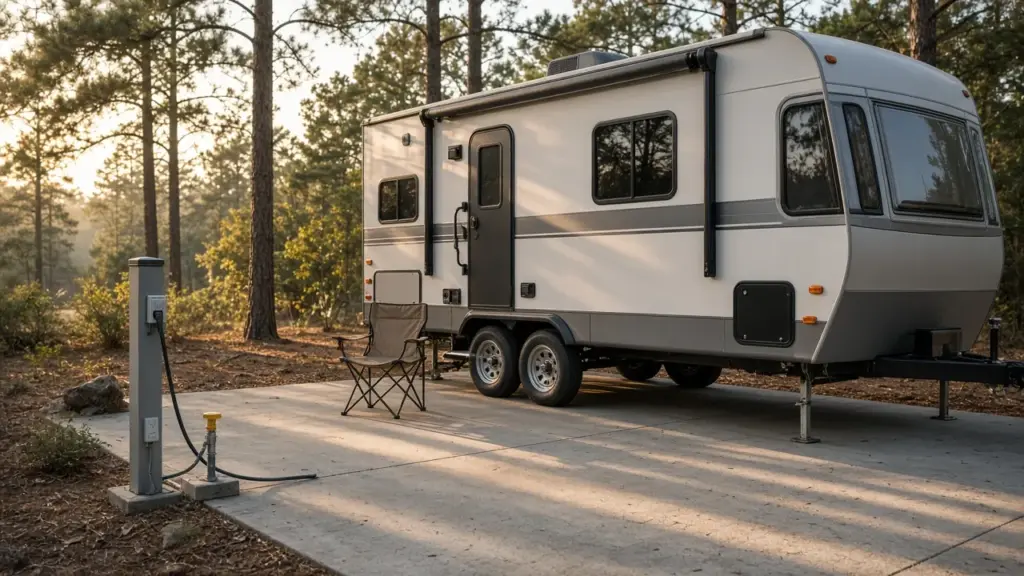
Setting up for a weekend and setting up for six months are two different jobs. On a short trip, you can live with a slightly unlevel rig, a tangle of hoses, and bags in the corner. On a months-long stay, those small annoyances become daily frustrations. A little extra care during setup pays off every day you live there.
This guide explains how to set up an RV site for a long stay, from leveling and connections to organization and routines. For the big picture, see our complete guide to monthly RV living.
Start With the Right Mindset
Treat long-term setup like moving into an apartment rather than pulling into a campground. Ask yourself:
- What will I use every day?
- What needs to be protected from sun, rain, and heat?
- What does the park allow outside the RV?
- What routines will I need for utilities and chores?
Our post on how long “long-term” is at an RV park can help you think about your timeline, which affects how much effort setup deserves.
Know the Park’s Site Rules First
Before setting anything up, reread the park’s rules. Long-term parks often have stricter site rules than campgrounds because residents live side by side for months.
At our park, items such as appliances, furniture, sheds, trampolines, boats, trailers, umbrellas, clotheslines, and tents are not allowed on or under the site. Tarps and covers are not permitted on RVs, and foil on windows is not allowed. The park handles lawn care. Knowing this up front saves you from buying items you cannot use.
Positioning and Leveling
Careful positioning is the foundation of a good long-term setup:
- Walk the site first. Note the pedestal, sewer connection, and any obstacles.
- Position the RV so hookups reach comfortably without stretching hoses or cords.
- Level side to side and front to back. A level RV helps appliances like refrigerators work properly, keeps doors and slides operating smoothly, and makes daily life more comfortable.
- Stabilize. Use stabilizers as designed; remember they are not meant to lift the RV.
- Chock wheels on towables.
Concrete pads make leveling easier and cleaner than dirt or gravel. All sites at our park have cement pads.
Electrical Connection
Set up your electrical connection carefully, since it will carry power for months:
- Use a surge protector or electrical management system at the pedestal
- Route the cord so it will not be driven over, tripped on, or sitting in water
- Avoid adapters when possible, and use quality ones when necessary
- Check the connection periodically for heat or discoloration
Never tamper with park electrical equipment or run cords from other sites. At our park, both are prohibited.
Water Connection
For a long stay, a tidy and reliable water setup matters:
- Use a drinking-water-safe hose
- Consider a pressure regulator to protect your plumbing
- Consider a water filter
- Route the hose neatly to avoid kinks and trip hazards
- Check connections for drips after the first day and periodically
In winter, Texas can have occasional freezes. Plan how you will protect your water connection during cold snaps.
Sewer Connection
Long-term sewer setups deserve extra care:
- Use a quality sewer hose and secure fittings
- Support the hose so it slopes toward the connection
- Keep the black tank valve closed until it is time to dump, so solids do not build up
- Use septic-safe products if the park uses a septic system
Our park uses a septic system, so only septic-safe waste should go down the drain.
Organize the Interior for Daily Life
Inside the RV, organize for how you actually live:
- Daily items in easy reach: coffee supplies, toiletries, keys, chargers
- Weekly items in secondary storage: cleaning supplies, laundry
- Seasonal items in deep storage: winter clothes, holiday items
- Paperwork in one folder: agreement, insurance, registrations
Our guide to your first week at a monthly RV park recommends waiting a few days before fully unpacking, so you can learn what you use most.
Create an Entry Zone
Since outdoor items are limited at many long-term parks, the area just inside your door becomes important:
- A washable mat
- A boot tray or shoe rack
- Hooks for jackets, leashes, and bags
- A small basket for keys and sunglasses
This keeps dirt out and makes coming and going easier.
Manage Heat and Light
In Texas, managing heat is part of setup:
- Use interior window shades or blinds on sunny sides
- Keep air conditioner filters clean
- Use vent fans to move air
- Consider a covered site if available, which reduces direct sun on the roof
At our park, eight of ten sites are covered.
Build Utility Routines
Long stays require routines you might never need on a short trip:
- Tank management: a schedule for dumping and flushing
- Filter changes: water and air conditioner filters
- Connection checks: monthly inspection of cords and hoses
- Roof checks: periodic inspection, especially after storms
Set reminders on your phone to keep these routines on track.
Vehicles and Parking
Know where your vehicles belong. At our park, each site allows up to two registered, running vehicles. Vehicles may not be driven on the grass or parked in empty lots, and the speed limit is 10 mph.
Make It Feel Like Home
Small comforts make a long stay more pleasant:
- A comfortable mattress topper
- Good lighting for reading and working
- Photos or artwork that are secured for movement
- A few plants inside, if space allows
- A small workspace for remote work or paperwork
These inside touches can make a big difference, especially at parks where outdoor decorations are limited.
Reviewing the Setup After a Month
After living on the site for a few weeks, take a fresh look at your setup. Is the water hose kinking in the same spot? Are you tripping over the power cord? Does the entry zone keep up with muddy days? Are you still searching for the same items every morning? Small adjustments at the one-month mark turn a workable setup into a comfortable one. Write down what you change, so your next move to a new site goes even faster.
Why Long-Stay Setup Is Different
If you have mostly stayed at parks for a few nights at a time, long-term setup will feel different. Our post comparing monthly and nightly RV park stays explains how the whole experience changes when you stay put. In general, comfort, routines, and neighbor relationships matter much more, and quick fixes that work for a weekend tend to wear out.
It also helps to gather details about your RV before you arrive, such as its electrical needs and the length of hoses and cords you carry. Much of that information is the same you would prepare for an application. Our checklist of what to have ready before you apply doubles as a handy setup reference.
Frequently Asked Questions
How do I set up an RV site for a long stay?
Read the park rules, position and level carefully, set up utilities neatly and safely, organize the interior for daily life, and build maintenance routines.
Can I put furniture or a shed on my RV site?
It depends on the park. At our park, furniture, sheds, and similar items are not allowed on or under the site.
Should I leave my black tank valve open during a long stay?
Generally no. Keep it closed until dumping so solids flush properly.
Are sites at Magnolia’s Finest level and paved?
All of our sites have cement pads, which help with leveling and keep setup clean.
Settle Into a Long-Term Site
Magnolia’s Finest is a small, gated long-term RV park in Magnolia, TX, with eight covered sites and two uncovered sites on cement pads. Visit our sites and rates page to learn more.
Check Availability or call or text (281) 205-1959
Magnolia’s Finest RV Park · 32020 Old Hempstead Rd, Magnolia, TX 77355 · Contact us