
RV Park vs. Mobile Home Park: Key Differences
February 25, 2026 · By Magnolia RV Park
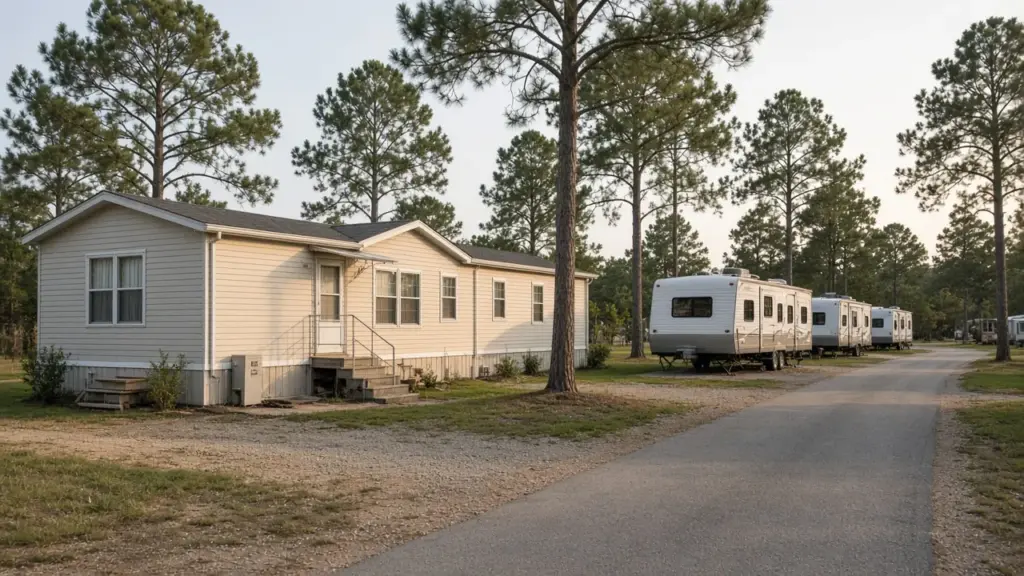
If you are looking for affordable, flexible housing, you may see both RV parks and mobile home parks in your search. They can look similar from the road, and some properties even mix the two. But they are built for different kinds of homes and different kinds of residents. Understanding the differences helps you choose the right fit for your situation.
This guide explains the key differences between RV parks and mobile home parks for long-term living. For a broader look at choosing an RV park, see our post on small RV parks vs. big RV resorts.
The Type of Home
The biggest difference is the home itself.
- RV parks host recreational vehicles: motorhomes, travel trailers, and fifth wheels. These are built to move and designed for travel, though many people live in them full time.
- Mobile home parks host manufactured homes, which are built in a factory and transported to a site but are generally intended to stay put.
Manufactured homes are usually larger, with more living space, full-size appliances, and traditional home layouts.
Mobility
RVs can move with relatively little preparation. If your job changes or you want to relocate, you can hitch up or drive away. Manufactured homes can be moved, but it requires professional movers, permits, and significant cost. Most stay in one place for years.
If flexibility matters, an RV offers more freedom.
Lease and Rent Structure
At mobile home parks, residents often own their home and rent the lot. Leases may be longer, and the rental relationship resembles traditional housing.
At RV parks, residents usually rent a site month to month or on a set agreement. At Magnolia’s Finest, all stays are long-term, and our policies are designed around monthly living. Call or text us for current site pricing.
Costs
Costs vary widely, but some general differences:
- Upfront: RVs can cost less than manufactured homes, though prices vary
- Monthly: Site rent differs by park and location
- Utilities: RV sites may include or meter certain utilities; manufactured homes often have individual utility accounts
- Maintenance: RVs need regular upkeep of seals, roofs, and mechanical systems
Our post on questions to ask before signing up for a monthly RV site helps you get clear answers on costs.
Space
Manufactured homes typically offer much more space than RVs. RV living requires downsizing and careful organization. Some people love the simplicity; others need more room.
Rules and Standards
Both types of parks have rules, but RV parks often have specific standards for RVs. At Magnolia’s Finest, RVs must be fully self-contained, in good condition, and 15 years old or newer. Occupancy is limited to two people, two pets, and two registered, running vehicles per site.
RV parks also commonly restrict what can be kept outside. At our park, items on or under the site are not allowed, including furniture, sheds, and appliances.
Site Layout and Surface
RV sites are designed for parking, leveling, and hooking up an RV. Surface matters for long stays. All sites at our park are on cement pads. Our post on concrete, gravel, or grass RV site surfaces compares options. Our post on pull-through vs. back-in RV sites discusses layouts.
Community
Mobile home parks often have long-established communities with families who have lived there for years. RV parks vary; some have constant turnover, while long-term-only parks feel more settled. At Magnolia’s Finest, we do not accept overnight guests, and our small size of 10 sites creates a close, quiet community.
Screening
Both types of parks may screen residents. At our park, applicants complete a $49 background check through a screening partner, and convicted felons are not permitted.
Hookups and Utilities
RV sites provide hookups designed for RVs. Utilities are confirmed per site at our park. Manufactured homes typically connect to utilities more like a traditional house.
Insurance
RV insurance and manufactured home insurance are different products. At our park, RV insurance must include liability and property coverage at state minimums.
Weather Considerations
Both RVs and manufactured homes face weather risks in Southeast Texas, including storms and hurricanes. RVs have the advantage of being able to move if an evacuation is recommended. Hurricane season runs June 1 through November 30.
Who Fits an RV Park Best?
RV parks tend to suit:
- Workers on projects or contracts
- People between homes
- Retirees who value simplicity
- Couples or individuals who want flexibility
- Those who already own an RV
Who Fits a Mobile Home Park Best?
Mobile home parks tend to suit:
- Families needing more space
- People planning to stay in one place for many years
- Those who want a more traditional home layout
Getting Out and About
Wherever you live, the surrounding area matters. Magnolia offers access to Lake Conroe, forests, and services. Our post on Lake Conroe day trips for RV residents is one example of what the area offers.
Resale and Long-Term Value
Consider what happens when you move on. RVs generally depreciate over time, especially in the first years, but they can be sold relatively easily and moved to a buyer anywhere. Manufactured homes may hold value differently depending on location, condition, and whether you own the land, but selling one in place often means finding a buyer willing to rent the same lot. Think about your long-term plans and how each option fits your finances and flexibility.
Mixed Properties
Some properties include both RV sites and manufactured homes. If you are considering one, ask how the two areas are managed, whether rules differ, and how traffic and noise are handled. Knowing the setup helps you set expectations.
Questions to Ask Either Type of Park
Whether you are touring an RV park or a mobile home park, ask the same core questions. What is the monthly cost, and what does it include? What deposits and fees apply? What are the rules on pets, guests, vehicles, and what can be kept outside? How are maintenance requests handled? What notice is required to leave? How long have most residents lived there? Clear, direct answers are a good sign that the property is well managed, no matter which type it is.
Making the Decision
Start with your timeline, budget, and need for space. If you expect to move within a few years, value flexibility, or already own an RV, an RV park is often the better fit. If you need more room and plan to stay many years, a manufactured home may make more sense. Visiting both types of communities can help clarify what feels right.
Frequently Asked Questions
Does Magnolia’s Finest allow manufactured homes?
No. Magnolia’s Finest is an RV park for fully self-contained RVs that are in good condition and 15 years old or newer.
Is an RV park cheaper than a mobile home park?
It depends on the park, location, and your home. Call or text us for current site pricing.
Can I stay long-term at an RV park?
Yes. At Magnolia’s Finest, all stays are long-term, and we do not accept overnight guests.
Can I add a shed or deck to my RV site?
No. Sheds, furniture, and other items on or under the site are not allowed.
Explore Long-Term RV Living in Magnolia
Magnolia’s Finest RV Park is a small, gated long-term community. Review our sites and rates, explore our amenities, or check availability.
Check Availability or call or text (281) 205-1959
Magnolia’s Finest RV Park · 32020 Old Hempstead Rd, Magnolia, TX 77355 · Contact us