
Humidity and Mold Prevention in a Gulf Coast RV
February 2, 2026 · By Magnolia RV Park
Southeast Texas is humid much of the year. For RV residents, humidity is not just uncomfortable. Moisture trapped inside an RV can lead to condensation, musty smells, mildew, and mold. Over time, moisture can damage walls, floors, cabinets, and your health. Fortunately, a few consistent habits keep humidity under control.
This guide explains why RVs are vulnerable to humidity, how to spot early warning signs, and how to prevent mold in a Gulf Coast climate. For a seasonal overview, see our guide on Texas weather and your RV.
Why RVs Are Vulnerable to Humidity
RVs are small, tightly sealed spaces. Everyday activities add moisture to the air:
- Breathing and sweating
- Cooking, especially boiling water
- Showering
- Drying clothes or towels inside
- Pets
In a house, moisture spreads through a larger volume of air. In an RV, it builds up quickly. Add Gulf Coast humidity outside, and moisture can become a constant challenge.
Signs of Too Much Moisture
Watch for these early warning signs:
- Condensation on windows, especially in the morning
- Musty or damp smells
- Damp bedding or cushions
- Water spots on ceilings or walls
- Black or green spots in corners, closets, or under mattresses
- Soft spots in floors or walls
Catching problems early prevents costly repairs.
Measure Humidity
An inexpensive hygrometer tells you your indoor humidity. Many experts recommend keeping indoor humidity roughly between 30 and 50 percent. Place a hygrometer in the main living area and check it daily until you understand your RV’s patterns.
Use Your Air Conditioning
Air conditioning removes moisture as it cools. During humid months, running your RV’s AC helps keep humidity down. Keep filters clean so the system works efficiently. At Magnolia’s Finest, window AC units are not allowed, so rely on your RV’s built-in system.
Use a Dehumidifier
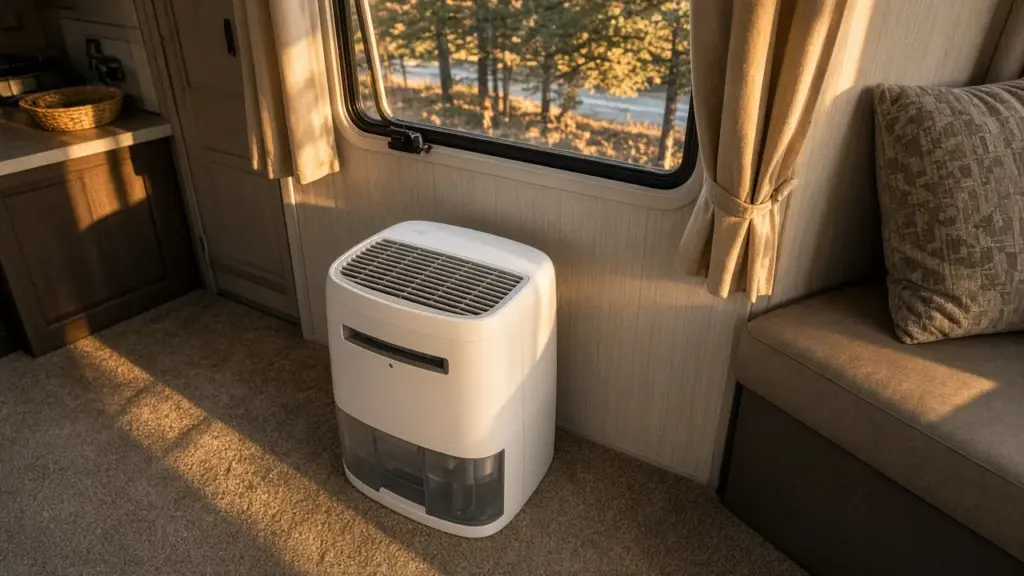
A compact dehumidifier can make a big difference, especially during mild, humid weather when AC does not run much. Empty the reservoir regularly or use a continuous drain if possible. Some residents also use moisture absorber products in closets and cabinets.
Ventilate Daily
Ventilation moves moist air out:
- Run the bathroom fan during and after showers
- Use the range hood when cooking
- Crack a roof vent when weather allows
- Open windows on dry days
Even a few minutes of ventilation after showers and cooking helps.
Reduce Moisture Sources
Small changes add up:
- Cover pots when cooking
- Take shorter showers
- Wipe down shower walls after use
- Use the park laundry instead of drying clothes inside
At our park, the laundry room has two washers and two dryers in an air-conditioned, cedar-paneled room, so there is no need to hang laundry inside the RV. Clotheslines on the site are not allowed.
Condensation in Winter
Winter brings its own moisture issues. When cold outside air meets warm, moist inside air, condensation forms on windows and walls. Running your furnace, ventilating, and using a dehumidifier help. Our posts on heated hoses and skirting and freeze prep discuss winter setup.
Note that space heaters and foil on windows are not allowed at our park. Use approved window coverings and built-in heat.
Check for Leaks
Leaks are a major source of mold. Inspect regularly:
- Roof seams and sealant
- Window and door seals
- Slide-out seals
- Plumbing under sinks and behind the toilet
- Water heater and water pump connections
Repair leaks promptly. After heavy storms, check ceilings and corners for water spots. Our post on tornado safety for RV residents includes storm preparation that pairs well with leak checks.
Leveling and Drainage
An RV that is not level can let water pool on the roof or in awnings. Level your RV properly; our post on leveling jacks and stabilizers on concrete pads explains how. Cement pads also keep your RV out of mud and standing water, which reduces moisture from below. All sites at Magnolia’s Finest are on cement pads.
Covered Sites and Humidity
Covered sites protect roofs from sun and rain, which can reduce leaks and heat. 8 of our 10 sites are covered. Cover does not eliminate humidity, but it helps protect the RV.
Air Circulation Inside
Mold loves stagnant air. Improve circulation by:
- Leaving closet and cabinet doors open occasionally
- Pulling furniture slightly away from walls
- Using small fans
- Lifting mattresses to air out underneath
Mattress underlayment products create airflow under beds, a common mold spot.
Power Outages and Humidity
During outages, AC and dehumidifiers stop. Humidity can rise quickly in summer. Our post on what to do during a power outage in an RV covers staying comfortable. After power returns, run AC and dehumidifiers to dry the RV.
Cleaning Mold Safely
If you find small spots of mold, clean them promptly with appropriate cleaners, wear gloves, and ventilate. Dry the area thoroughly. For large areas, recurring mold, or soft materials, consult a professional. Persistent mold can signal a hidden leak.
Health Considerations
Mold and high humidity can affect breathing, especially for people with allergies or asthma. If you notice symptoms that improve when you leave the RV, investigate moisture issues.
A Seasonal Humidity Routine
- Spring: Inspect seals after winter; check the roof.
- Summer: Run AC, empty dehumidifier reservoirs often, and watch for condensation around vents.
- Fall: Inspect after tropical storms; reseal as needed.
- Winter: Ventilate to manage condensation; check windows daily.
Storage Areas That Trap Moisture
Some spots in an RV are especially prone to hidden moisture. Basement storage bays can collect condensation and humidity, particularly if items are packed tightly against exterior walls. Under-bed storage, the backs of closets, and cabinets on outside walls also see less airflow. Check these areas monthly. Use plastic bins instead of cardboard, add moisture absorbers, and leave a little space between stored items and walls. Shoes, towels, and outdoor gear should be completely dry before going into storage. If you notice musty smells when you open a compartment, empty it, dry it out, and look for a leak.
Pets and Humidity
Pets add moisture and dander, and wet dogs coming in from a rainy walk can quickly raise humidity. Keep a towel by the door to dry paws and coats, wash pet bedding regularly, and keep water bowls on a mat to catch spills. At our park, dogs live primarily inside the RV, so these small habits help keep your indoor air fresh for everyone in the household.
Choosing Materials That Resist Mold
When you replace items in your RV, choose materials that resist moisture. Washable rugs, synthetic fabrics, and plastic storage containers hold up better than natural fibers and cardboard in humid climates. Wipeable surfaces make cleaning easier.
Frequently Asked Questions
What humidity level should I keep in my RV?
Many experts suggest roughly 30 to 50 percent. A hygrometer helps you monitor it.
Can I hang laundry inside my RV to dry?
It adds moisture. Use the park laundry instead; our laundry room has two washers and two dryers. Clotheslines on sites are not allowed.
Can I use a window AC unit for extra dehumidifying?
No. Window AC units are not allowed at our park. Use your RV’s built-in AC and a portable dehumidifier.
What should I do if I find mold?
Clean small spots promptly, dry the area, and look for the moisture source. Consult a professional for large or recurring problems.
Comfortable Living in Magnolia
Magnolia’s Finest RV Park offers covered cement-pad sites and an air-conditioned laundry room. Read our FAQ, explore our amenities, or check availability.
Check Availability or call or text (281) 205-1959
Magnolia’s Finest RV Park · 32020 Old Hempstead Rd, Magnolia, TX 77355 · Contact us