
Leveling Jacks and Stabilizers on Concrete Pads
January 23, 2026 · By Magnolia RV Park
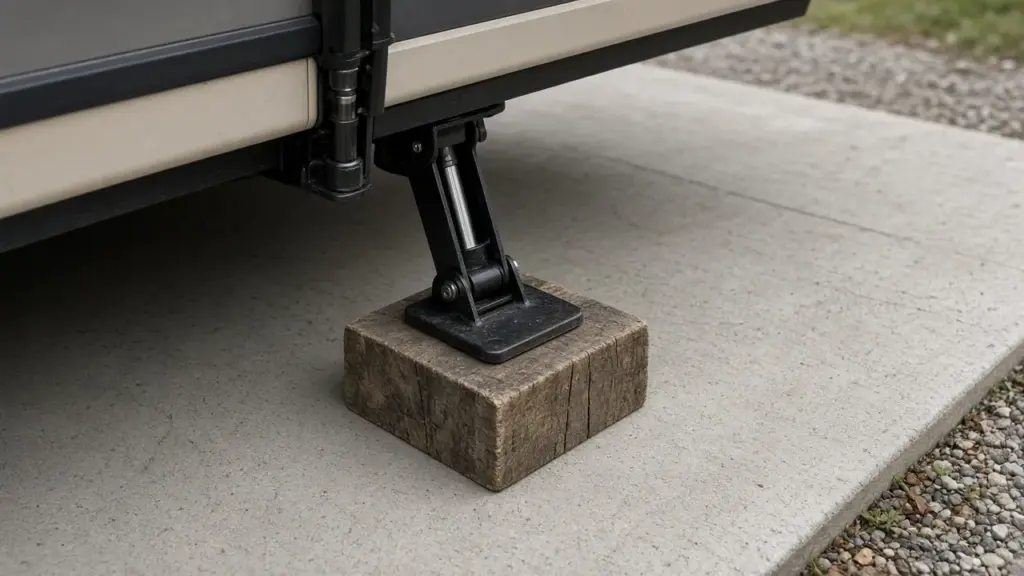
A concrete pad is one of the best surfaces you can park an RV on for a long stay. It is flat, firm, and does not turn to mud after a Texas downpour. But even on concrete, leveling and stabilizing your RV correctly matters. A level RV keeps your refrigerator working properly, doors and slide-outs aligned, and your floors from feeling like a funhouse.
This guide covers leveling jacks and stabilizers on concrete pads, how to set up for months instead of nights, and how to care for your leveling system over time. For a complete maintenance framework, see our pillar on RV maintenance for full-time residents.
Why Concrete Pads Help
Concrete pads offer several advantages over gravel, dirt, or grass sites:
- Stable footing that does not sink or shift in rain
- A flatter starting point, so less leveling is needed
- Cleaner setup with less mud tracked inside
- Better support for jacks and stabilizers over long periods
At Magnolia’s Finest, all 10 sites are on cement pads, 8 covered and 2 uncovered. That gives every resident a firm foundation for a long stay.
Leveling Jacks vs. Stabilizers
These two systems are often confused:
- Leveling jacks lift and level the RV. Many motorhomes and fifth wheels have hydraulic or electric leveling systems that can raise the RV’s weight.
- Stabilizers reduce bounce and sway once the RV is level. Most scissor stabilizers on travel trailers are not designed to lift the RV’s weight.
Using stabilizers to level can bend or damage them. Level first using the correct method, then deploy stabilizers to steady the RV.
Step One: Position the RV
Before leveling, park in the right spot on the pad. Consider:
- Hookup locations and hose and cord length
- Slide-out clearance on all sides
- Door and awning clearance
- Distance from neighboring sites
Our post on backing into your site on move-in day covers positioning in detail.
Step Two: Level Side to Side
For towables, side-to-side leveling usually comes first. Place a level inside the RV on a flat surface, or use a leveling app or built-in indicator. If one side is low, drive that side’s tires onto leveling blocks. Even concrete pads can have slight slopes for drainage, so small adjustments are normal.
Step Three: Level Front to Back
For travel trailers and fifth wheels, use the tongue jack or front landing gear to level front to back after unhitching. Motorhomes with automatic leveling systems handle this step with their jacks.
Use Jack Pads on Concrete
Even on concrete, place pads or blocks under jacks and stabilizers. Pads:
- Spread the load across a larger area
- Protect the concrete from scratches and point loads
- Protect jack feet from wear
- Reduce the distance jacks need to extend, which improves stability
Short, fully supported jacks are more stable than jacks extended to their limit.
Step Four: Deploy Stabilizers
Once level, lower stabilizers until they make firm contact with pads, then snug them. Do not use stabilizers to lift the RV. The goal is to reduce movement when people walk inside.
Check Level Again After a Few Days
After the first few days, check level again. RVs can settle slightly as tires and suspension adjust. Recheck after:
- Major weather changes
- Adding or removing heavy items
- Any time doors or slides begin to stick
Why Level Matters for Your Refrigerator
Many RV absorption refrigerators need to be close to level to work properly. Running them significantly off level can reduce cooling and, over time, damage components. Our post on RV refrigerator care for full-time use explains more.
Why Level Matters for Slide-Outs
Slide-outs are sensitive to frame twist. An RV that is not level can cause slides to bind or seals to wear unevenly. Level before extending slides, and check alignment regularly. Our post on slide-out maintenance covers seals, lubrication, and alignment.
Protecting Tires on a Long Stay
When parked for months, tires can develop flat spots and suffer from sun exposure. Some residents take weight off tires using leveling jacks on motorhomes, but check your manufacturer’s guidance before doing so. Covering tires from the sun is often recommended, but check park rules about covers. Our post on RV tire care when you’re parked for months goes deeper.
Caring for Hydraulic Leveling Systems
Hydraulic systems need periodic care:
- Check fluid levels according to the manual
- Look for leaks around cylinders and hoses
- Keep jack rams clean and retracted when not in use for long periods, if recommended
- Exercise jacks periodically if your manual suggests it
Caring for Electric Jacks and Stabilizers
Electric systems also need attention:
- Lubricate moving parts according to the manual
- Check for corrosion on connections
- Inspect motors and switches
- Clean away dirt and debris
Manual Stabilizers
Manual scissor stabilizers are simple but benefit from occasional cleaning and lubrication. Replace bent or damaged stabilizers promptly.
Keeping Jacks Clean in Texas Weather
Heat, humidity, and pollen can build grime on exposed jack rams and stabilizer screws. A simple routine every month or two, wiping rams with a clean cloth and checking for rust spots, keeps components moving smoothly. During pollen season in spring, you may notice a yellow film on everything outside, including your jacks. Clean it off before it mixes with moisture and becomes sticky. After heavy storms, glance under the RV to make sure pads are still in place and nothing has shifted.
Storm Considerations
Stabilizers reduce movement but do not anchor an RV against severe winds. During severe weather, follow official guidance and have a safety plan. Our post on what to do during a power outage in an RV covers storm-related preparation.
Park Rules and Site Care
Follow park rules about what can go on or under your site. At Magnolia’s Finest, items under the site such as appliances, furniture, sheds, or tarps are not allowed. Leveling blocks and jack pads in use are part of normal setup, but avoid storing extra gear under the RV. Tarps and covers are not permitted at our park.
When to Call a Technician
Call a qualified RV technician if:
- Jacks leak, stick, or fail to retract
- Stabilizers are bent
- Your RV will not stay level
- Warning lights appear on an automatic leveling system
A Simple Long-Stay Leveling Checklist
- Position the RV with clearance for slides, doors, and hookups
- Level side to side with blocks
- Level front to back with the tongue jack, landing gear, or leveling system
- Place pads under every jack and stabilizer
- Snug stabilizers without lifting
- Recheck level after a few days and after storms
- Inspect and clean jacks every month or two
Keeping this checklist with your owner’s manual makes setup and periodic checks fast and consistent, whether you have been parked for a week or a year.
Frequently Asked Questions
Are all sites at Magnolia’s Finest on concrete pads?
Yes. All 10 sites are on cement pads, with 8 covered and 2 uncovered.
Can I use my stabilizers to level my trailer?
Most stabilizers are not designed to lift weight. Level with blocks and the tongue jack, then use stabilizers to reduce movement.
Should I use jack pads on concrete?
Yes. Pads spread the load, protect the concrete, and reduce how far jacks need to extend.
How often should I recheck level on a long stay?
Check a few days after setup, after weather changes, and whenever doors or slides start to stick.
Set Up on a Solid Pad in Magnolia
Magnolia’s Finest RV Park offers cement pads on every site in a small, gated long-term community. Review our park rules, explore our amenities, or check availability.
Check Availability or call or text (281) 205-1959
Magnolia’s Finest RV Park · 32020 Old Hempstead Rd, Magnolia, TX 77355 · Contact us