
Full-Time RV Life on a Budget: Planning Money, Space, and Paperwork
October 10, 2025 · By Magnolia RV Park
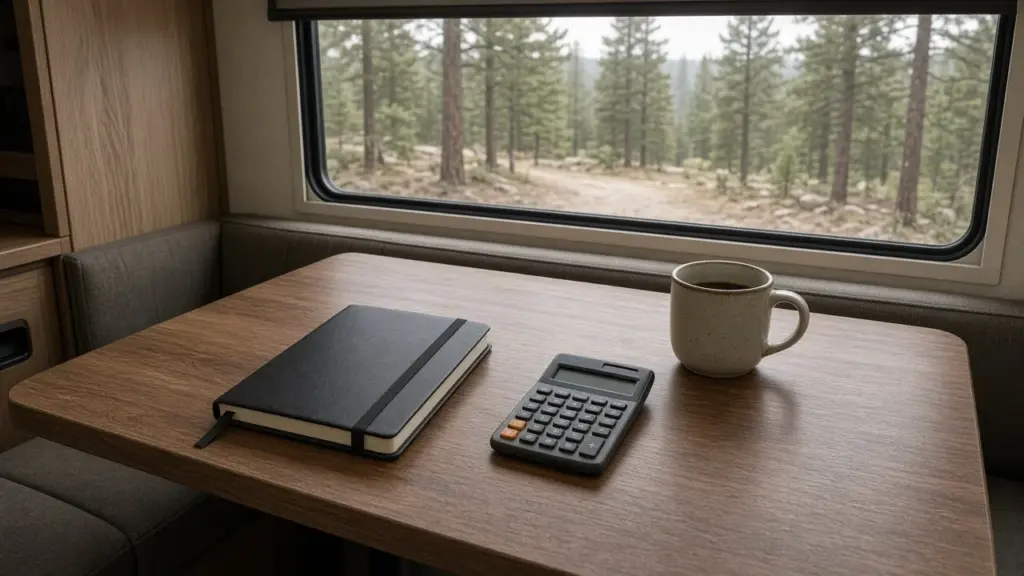
Full-time RV life has a reputation for being cheap. Sometimes it is. But the people who make it work over the long run are not the ones who spend the least. They are the ones who plan for the full picture: the obvious costs, the easy-to-forget costs, and the paperwork that comes with not living in a traditional house.
This guide walks through budgeting, downsizing, and the practical paperwork of full-time RV life. It is written for people who plan to stay in one place for months at a time, like residents at a long-term park. We will not quote market prices, because they vary widely and change often. Instead, we will help you build a budget that fits your own situation.
Start With the Big Picture
Before you look at individual expenses, answer a few questions:
- How long do you expect to live in the RV?
- Will you stay in one place or move between parks?
- Do you own the RV outright, or are you making payments?
- Will you keep any other property, such as a house or storage unit?
- What is your income, and is it steady or seasonal?
Your answers shape everything. A worker on a six-month assignment budgets differently from a retiree planning years of RV life.
The Core Monthly Costs
Site rent
For most long-term residents, site rent is the largest recurring cost. Rates vary by location, site type, and what is included. Small parks often quote current pricing directly because it can depend on the site. At our park, covered and uncovered sites are listed on Sites & Rates, and we confirm current pricing when you call or text.
When comparing parks, look past the headline rate. Ask what is included and what is billed separately.
Utilities
Depending on the park, you may pay separately for electricity, and you will likely buy your own propane. Internet and phone plans are usually your responsibility. Our guide to RV hookups for long stays explains the questions to ask about utilities.
Insurance
RV insurance is essential for full-timers, and long-term parks often require it. At our park, residents must keep liability and property insurance at state minimums without lapse, covering damage to the RV and vehicles from trees, flood, fire, theft, and similar events. Talk with an insurance agent about full-timer coverage, which can differ from recreational policies.
Vehicle costs
Most residents keep a car or truck for daily life. Budget for fuel, insurance, registration, and maintenance. If you have a motorhome and a tow vehicle, budget for both.
Food and household
Cooking in your RV is one of the easiest ways to control costs. A small fridge and pantry encourage planning, which reduces waste.
The Costs People Forget
These are the expenses that surprise new full-timers.
- Deposits and fees. Long-term parks commonly charge a security deposit and an application or background check fee. At our park, the listed background check is $49 and the security deposit is $125.
- Maintenance and repairs. RVs need regular upkeep, and things break. Our full-time RV maintenance schedule outlines what to expect.
- Replacement gear. Sewer hoses, water filters, surge protectors, and tires wear out.
- Storage. If you keep belongings in a storage unit, that is a recurring cost.
- Mail and services. Mail forwarding, a post office box, or a virtual mailbox has a cost.
- Laundry. Budget for laundry if machines are coin- or card-operated.
- Medical and pet care. Keep these in the plan, especially if you move to a new area.
Building Your Budget
A simple approach works best.
- List fixed costs. Site rent, insurance, loan payments, phone, and subscriptions.
- Estimate variable costs. Utilities, fuel, groceries, and laundry.
- Add a maintenance fund. Set aside money every month for repairs.
- Add an emergency fund. Keep a separate cushion for unexpected events.
- Track actual spending. Compare real spending with your estimates after the first two or three months and adjust.
Tracking is where budgets become useful. A spreadsheet, an app, or a notebook all work.
Emergency Funds for RV Residents
Full-time RV life has its own kinds of emergencies: a failed air conditioner in July, a storm that damages your roof, or a job that ends early. An emergency fund keeps a bad week from becoming a crisis. Many full-timers aim to keep enough to cover a major repair plus a month or two of living costs, but the right number depends on your situation.
Paying Rent at an RV Park
Paying on time keeps things simple. Parks usually list accepted payment methods and late policies in their rules. At our park, the preferred payment method is Zelle, and cash, check, money order, or credit card are also accepted, though card fees may apply. Late fees are $10 a day starting on the second day, followed by a three-day notice to vacate if the balance remains unpaid.
Set up a reminder or automatic transfer so rent never slips through the cracks. Our park rules include the full payment policy.
Downsizing Before You Move In
The transition from a house to an RV is as much about belongings as money.
- Start early. Downsizing takes longer than most people expect.
- Sort into categories. Keep, sell, donate, store, and discard.
- Measure your storage. Know how much space you really have.
- Keep what you use. If you have not used something in a year, it probably does not belong in your RV.
- Think about the site, too. Long-term parks usually limit what can be kept outside. At ours, items like appliances, indoor furniture, sheds, and large tools are not allowed on the site. If it does not fit on your slab, it cannot come.
Selling furniture and extra belongings can also help fund your first months of RV life.
Paperwork and Documents
Full-time RV life still involves plenty of paperwork.
Mail and address
You need a reliable way to receive mail. Options include mail forwarding services, a post office box, or a park arrangement. Ask your park how mail and packages work.
Vehicle and RV registration
Keep registration current. If you move to Texas, research the steps for registering vehicles and getting a Texas driver license through the appropriate state and county offices.
Important documents
Keep copies of identification, titles, insurance policies, medical records, and pet records in a secure, waterproof place in your RV, with digital copies stored safely.
Taxes and records
Keep organized records of income, expenses, and any work-related costs. For questions about taxes or residency, consult a qualified professional.
Keeping Costs Predictable Over Time
- Choose a park that fits your budget and needs for the long haul
- Keep up with maintenance to avoid expensive repairs
- Use energy wisely to control utility costs
- Cook at home most days
- Review your budget every few months
Our complete guide to monthly RV living covers daily routines that help, and our long-term RV living checklist keeps move-in week organized.
Before You Apply to a Park
Have your budget and documents ready before you apply. Long-term parks usually ask about occupants, vehicles, pets, your RV, and insurance, and require a background check. Our guide to applying to a long-term RV park walks through the process.
More Full-Time RV Life & Budget Guides
- Building a Monthly Budget for Full-Time RV Living
- Hidden Costs of RV Living to Plan For
- Emergency Funds for Full-Time RVers
- RV Insurance for Full-Time Residents: Coverage Types to Ask About
- Liability and Property Insurance Requirements at RV Parks
- Mail Forwarding and Addresses for RV Residents
- Banking and Digital Payments for RV Residents
- Paying Rent at an RV Park: Methods and Timing
- Storing Belongings Off-Site While Living in an RV
- Selling Furniture and Belongings Before RV Life
- Going Paperless in an RV
- Keeping Important Documents Safe in an RV
- Financing an RV You Plan to Live In: Questions to Ask
- Buying a Used RV for Full-Time Living: Inspection Checklist
- Newer vs. Older RVs for Full-Time Living
- Full-Time RV Life for Solo Residents
- Staying Social as a Full-Time RV Resident
- Minimalism in Practice: Owning Less in an RV
- Hobbies That Fit in an RV
- Meal Planning on a Budget in an RV
- Reducing Energy Use to Keep RV Costs Predictable
- Health Insurance and Finding Doctors as a Full-Time RVer
- Record Keeping for Full-Time RVers
- Tracking Spending in RV Life: Simple Systems
- Planning Your Next Step After RV Life
- Car-Light Living: Managing RV Life With One Vehicle
- Seasonal Clothing Storage in a Small RV
- Making the Most of Outdoor Living on a Small RV Pad
- Gifts, Holidays, and Celebrations in a Small RV
Frequently Asked Questions
Is full-time RV living cheaper than renting an apartment?
It can be, but it depends on site rent, utilities, insurance, maintenance, and your RV costs. Build a full budget before deciding.
What costs do new full-time RVers forget?
Deposits, screening fees, maintenance, replacement gear, storage units, mail services, and laundry are common surprises.
Do I need special insurance to live in an RV full-time?
Many full-timers need coverage designed for full-time use. Long-term parks often require liability and property coverage. Ask an insurance agent about your options.
How do I pay rent at an RV park?
Each park sets its own methods. At our park, Zelle is preferred, and cash, check, money order, or credit card are also accepted, with possible card fees.
How much emergency fund should a full-time RVer keep?
It depends on your situation, but many aim to cover a major repair plus a month or two of living costs.
Plan Your Stay With Clear Answers
Magnolia’s Finest confirms pricing and site details directly, so you can budget with real numbers. We are a small, gated, long-term park in Magnolia with eight covered sites, cement pads, and on-site laundry. Tell us your dates and your RV, and we will get back to you.
Check Availability or call or text (281) 205-1959
Magnolia’s Finest RV Park · 32020 Old Hempstead Rd, Magnolia, TX 77355 · Contact us