Meal Planning on a Budget in an RV
June 16, 2026 · By Magnolia RV Park
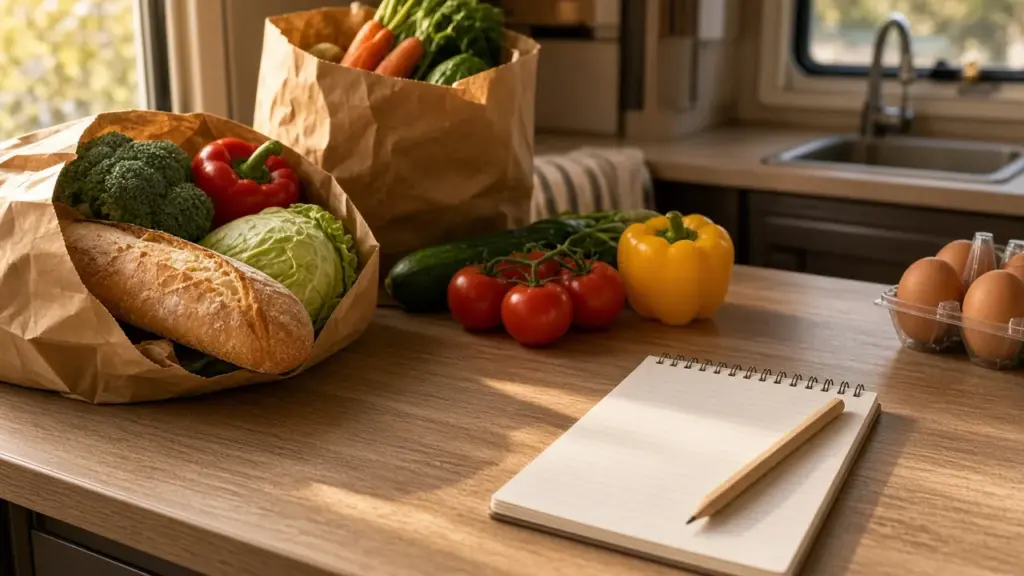
Food is one of the biggest monthly expenses for full-time RV residents, and one of the easiest to control. With a little planning, you can eat well, save money, and make the most of a small kitchen. Meal planning on a budget does not mean eating the same plain meals every day. It means knowing what you will cook, buying what you need, and wasting as little as possible.
This guide covers practical strategies for meal planning on a budget in an RV. For the bigger picture of managing money in RV life, start with our pillar, Full-Time RV Life on a Budget: Planning Money, Space, and Paperwork.
Why Meal Planning Saves Money
Without a plan, it is easy to make last-minute trips to the store, buy food that goes bad, or give in to takeout after a long day. Each of those habits adds up. A simple weekly plan helps you:
- Buy only what you need
- Use ingredients before they spoil
- Avoid impulse purchases
- Reduce takeout and fast food
- Make better use of limited storage
Even a basic plan can cut food costs noticeably.
Set a Food Budget
Start by deciding how much you want to spend on food each month. Look at what you currently spend, including groceries, takeout, and snacks. Set a realistic target and divide it into weekly amounts. Tracking spending for a month or two helps you see where money goes and where you can save.
Food spending is one part of your overall budget, alongside rent, utilities, insurance, and savings. Staying on track with food helps you pay rent on time; our post on avoiding late rent explains why that matters.
Build a Simple Weekly Plan
A weekly plan does not have to be complicated:
- Check what you already have in the fridge, freezer, and pantry.
- Choose a few dinners that use overlapping ingredients.
- Plan simple breakfasts and lunches.
- Write a shopping list based on your plan.
- Shop once, with a quick midweek stop for fresh produce if needed.
Overlapping ingredients stretch your budget. For example, a whole chicken can become a roast dinner, then chicken salad, then soup.
Budget-Friendly Staples
Some foods offer great value and store well in an RV:
- Rice, pasta, and oats
- Dried or canned beans and lentils
- Eggs
- Potatoes and onions
- Frozen vegetables
- Canned tomatoes
- Peanut butter
- Seasonal fruits and vegetables
- Whole chickens or economical cuts of meat
Buy staples in amounts that fit your storage. Bulk buying saves money only if you have space and use items before they expire.
Cook Once, Eat Twice
Batch cooking is a budget and time saver. Make a large pot of chili, soup, or pasta sauce, eat some now, and freeze or refrigerate portions for later. This reduces cooking time during busy weeks and helps avoid takeout.
Reduce Food Waste
Wasted food is wasted money. Tips:
- Store food properly in airtight containers
- Use older items first
- Turn leftovers into new meals
- Freeze bread, meat, and leftovers before they spoil
- Plan a “use it up” meal each week
Shop Smart
Smart shopping stretches your budget:
- Shop with a list and stick to it
- Compare unit prices
- Buy store brands
- Shop sales and plan meals around them
- Avoid shopping when hungry
- Consider farmers markets for seasonal produce
Our park is in Magnolia, with shopping options along FM 1774, FM 1488, and toward Tomball on SH 249. Combining shopping with other errands saves fuel.
Keep Your Kitchen Simple
A minimal kitchen can still produce great meals. A good skillet, a pot, a slow cooker or multi-cooker, and a few basic tools cover most needs. Our post on minimalism in practice explains how owning less can simplify life, including the kitchen.
Save on Energy While Cooking
In an RV, cooking uses propane or electricity, both of which cost money. Slow cookers and multi-cookers are energy efficient. Cooking during cooler hours in summer reduces AC load. Covering pots while cooking saves energy and reduces humidity.
Make Budget Cooking Enjoyable
Budget meals can be delicious and interesting. Experiment with spices, try recipes from different cuisines, and treat cooking as a hobby. Our post on hobbies that fit in an RV includes cooking as a rewarding pastime.
Keep Recipes and Lists Organized
Store favorite recipes, shopping lists, and meal plans on your phone or in a notes app. Going digital reduces clutter and keeps plans handy when you shop. Our post on going paperless in an RV has more ideas.
Planning Around Real Life
Budget plans work best when they are flexible. Some weeks you will be busier than expected, or you will be invited out to eat with friends. Build a little room into your plan for these moments. Keeping a few quick backup meals in the pantry or freezer, like pasta with jarred sauce or frozen soup, prevents a busy night from turning into an expensive takeout order.
It also helps to review your plan at the end of each week. Notice which meals you enjoyed, which ingredients went unused, and where money went. Small adjustments each week add up to real savings over months. Many residents find that after a few weeks, planning takes only a few minutes and becomes a habit they rely on.
Eating Well on a Tight Week
Some weeks, money is tighter than others. On those weeks, lean on the most affordable staples: rice and beans, pasta with vegetables, egg dishes, potato-based meals, and soups. These can be filling, nutritious, and flavorful with the right seasonings. A pot of beans cooked in a slow cooker can become burritos, rice bowls, and soup across several days for very little money.
Look through your pantry and freezer before shopping, and build meals around what you already have. Many residents are surprised how many meals they can make from items already on hand. A “pantry week” every so often also clears out older items before they expire.
Sharing Meals With Neighbors
In a small park, sharing food can be both social and economical. Some residents trade extra portions from batch-cooking days, split bulk purchases, or share produce from a market trip. These small exchanges build friendships and reduce waste, especially for solo residents who find it hard to cook for one.
Septic-Safe Cleanup
Our park uses a septic system, so scrape plates into the trash, never pour grease down the sink, and use septic-safe dish soap. Proper cleanup protects the park’s system and your RV’s tanks.
Frequently Asked Questions
How can I save money on food in an RV?
Plan meals weekly, shop with a list, buy budget-friendly staples, batch cook, and reduce waste.
What are good budget staples for RV living?
Rice, pasta, oats, beans, eggs, potatoes, frozen vegetables, canned tomatoes, and seasonal produce.
Is buying in bulk worth it in an RV?
Only if you have space to store items and will use them before they expire.
How can I reduce takeout spending?
Batch cook and keep easy meals ready for busy days.
Live Well for Less in Magnolia
Magnolia’s Finest RV Park is a small, gated long-term community with covered sites on cement pads. Learn about long-term RV living in Magnolia, view sites and rates, or check availability.
Check Availability or call or text (281) 205-1959
Magnolia’s Finest RV Park · 32020 Old Hempstead Rd, Magnolia, TX 77355 · Contact us