After the Storm: Inspecting Your RV for Damage
August 22, 2026 · By Magnolia RV Park
Storms are a regular part of life in Southeast Texas. Heavy rain, high winds, hail, and falling limbs can all damage an RV, and some damage is not obvious at first glance. After any major storm, a careful inspection helps you catch problems early, prevent further damage, and document issues for insurance.
This guide walks through how to inspect your RV after a storm. For a broader look at weather in the region, see our pillar, Texas Weather and Your RV: A Year-Round Guide.
Safety First
Before inspecting, make sure it is safe:
- Wait until the storm has fully passed and authorities say it is safe
- Watch for downed power lines and stay far away from them
- Be careful of fallen limbs, debris, and standing water
- If you smell propane, leave the area and call for help
- Do not climb on a wet or damaged roof
If you evacuated, return only when officials allow. Our post on evacuating with your RV vs. leaving it behind covers evacuation decisions.
Exterior Walk-Around
Start with a slow walk around your RV.
- Fallen limbs or debris. Look for branches on or against the RV. Our post on falling limbs and tree safety in pine country covers tree risks.
- Siding. Check for dents, cracks, punctures, or delamination.
- Windows. Look for cracks, broken glass, or damaged seals.
- Awnings. Inspect fabric, arms, and mounting points for damage.
- Slide-outs. Check seals and the top of each slide for debris or damage.
- Tires. Look for damage or signs the RV has shifted.
- Leveling and stabilizers. Make sure the RV is still level and stable.
Take photos of any damage.
Roof Inspection
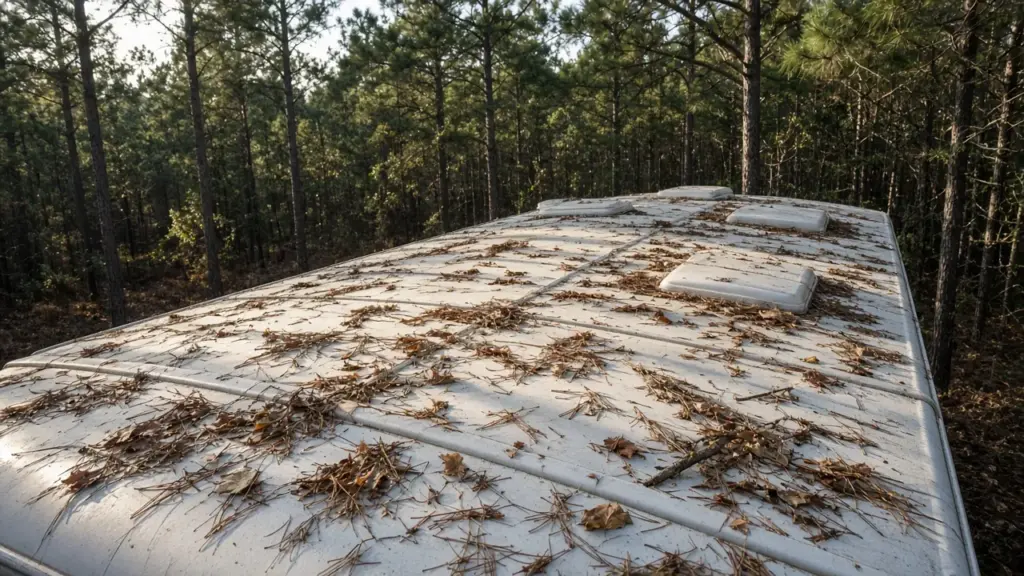
The roof is often where storm damage starts. If you can safely view the roof, check:
- Punctures or tears
- Damaged vents, skylights, or covers
- Loose or missing sealant
- Hail damage
- Debris buildup
If the roof is wet, damaged, or you are not comfortable, have a professional inspect it.
Interior Inspection
Next, check inside for signs of leaks or damage:
- Water stains on ceilings and walls
- Wet carpet or flooring
- Soft spots in floors or walls
- Musty smells
- Damp cabinets or compartments
- Water around windows and slide-outs
Water can travel before it shows, so check carefully and recheck over the next few days.
Electrical Check
Storms can cause power surges and outages, and water can affect electrical systems.
- Inspect your power cord and connection for damage
- Look for signs of water near electrical components
- Test outlets and GFCIs
- Watch for tripped breakers
If a breaker or GFCI trips repeatedly after a storm, moisture may be the cause. Our post on RV breakers and GFCIs explains troubleshooting. If you see scorch marks, smell burning, or suspect water in electrical components, call a qualified technician.
If the park’s pedestal or power supply seems damaged, contact management. Never tamper with park hookups.
Propane Check
- Check your propane detector
- Inspect lines and connections for damage
- If you smell propane, shut off the tank if safe, leave, and call for help
Plumbing and Water
- Check hose connections
- Look for leaks under sinks and around the water heater
- If flooding occurred, be cautious about water quality
Documenting Damage
Take clear photos and videos of all damage, inside and out. Note the date and time. Keep receipts for any emergency repairs or supplies.
Contacting Insurance
Contact your insurance company promptly to report damage. At our park, residents need liability and property coverage at state minimums. Review your policy for storm-related coverage.
Preventing Further Damage
If you find damage, take steps to prevent it from getting worse:
- Dry wet areas with fans and a dehumidifier
- Close damaged vents or windows as best you can
- Remove water-damaged items
Note that tarps and covers are not allowed at our park. If you need a temporary solution, talk with management.
Reporting to Management
Let management know about any damage to your site, park grounds, or utilities. Use the maintenance request form on the Residents page or text management at (281) 205-1959.
Restocking Your Emergency Kit
After a storm, restock any supplies you used. Our post on an emergency kit for RV residents lists what to include.
Following Up Over the Next Few Days
Some damage does not show right away. Water that entered through a damaged seal may take days to appear as a stain or soft spot. Recheck your ceilings, walls, floors, and cabinets for several days after a major storm, especially after the next rain. Smell for musty odors, which can signal hidden moisture. If you notice anything new, address it promptly and document it for your insurance claim.
It is also a good idea to schedule a professional inspection after a severe storm, even if you do not see obvious damage. Technicians can spot issues like loosened roof components or compromised seals that are easy to miss.
Hail Damage
Hailstorms occasionally strike Southeast Texas, and even small hail can damage RVs. Hail can crack roof vents and skylight covers, dent aluminum siding, chip fiberglass, and damage air conditioner shrouds. Large hail can puncture roofs and break windows. After a hailstorm, inspect all exposed surfaces carefully, and look closely at plastic roof components, which are especially vulnerable. Covered sites offer some protection, but wind-driven hail can still reach sides and windows.
Hail damage is often covered by insurance, but claims usually require documentation. Photograph dents, cracks, and broken parts from multiple angles, and include something in the photo to show scale.
Wind Damage
High winds can do more than knock down limbs. They can tear awnings, loosen roof components, and push debris into your RV. Awnings are especially vulnerable, so retract them before storms. After strong winds, check awning arms and mounting brackets for bending or looseness, and inspect roof vents and air conditioner covers for shifting or cracks.
Taking Care of Yourself
Storms are stressful. After making sure your home is safe, take time to rest, eat, and check in with family and friends. Cleanup and repairs can take time, so pace yourself and ask for help when you need it. Neighbors often support one another after storms, and a small community can make recovery feel much more manageable.
Keeping a Storm Log
Add storm inspections to your maintenance log. Record the date of the storm, what you inspected, any damage you found, and what repairs were made. Over time, this record shows how your RV has held up through different weather events and helps you spot recurring weak points, such as a particular vent or seal that tends to leak during heavy rain. It also provides useful history for insurance claims and future buyers.
Frequently Asked Questions
What should I check first after a storm?
Start with safety, then walk around the exterior, check the roof if safe, and inspect the interior for leaks.
Can I put a tarp over a damaged area?
Tarps and covers are not allowed at our park. Talk with management about temporary solutions.
Who do I contact about damage to the park’s utilities?
Contact management by text or use the maintenance request form on the Residents page.
Should I contact my insurance company?
Yes. Report damage promptly and document everything with photos.
Weather the Storms in Magnolia
Explore our amenities, read our FAQ, or check availability.
Check Availability or call or text (281) 205-1959
Magnolia’s Finest RV Park · 32020 Old Hempstead Rd, Magnolia, TX 77355 · Contact us