
Falling Limbs and Trees: RV Safety in Pine Country
June 22, 2026 · By Magnolia RV Park
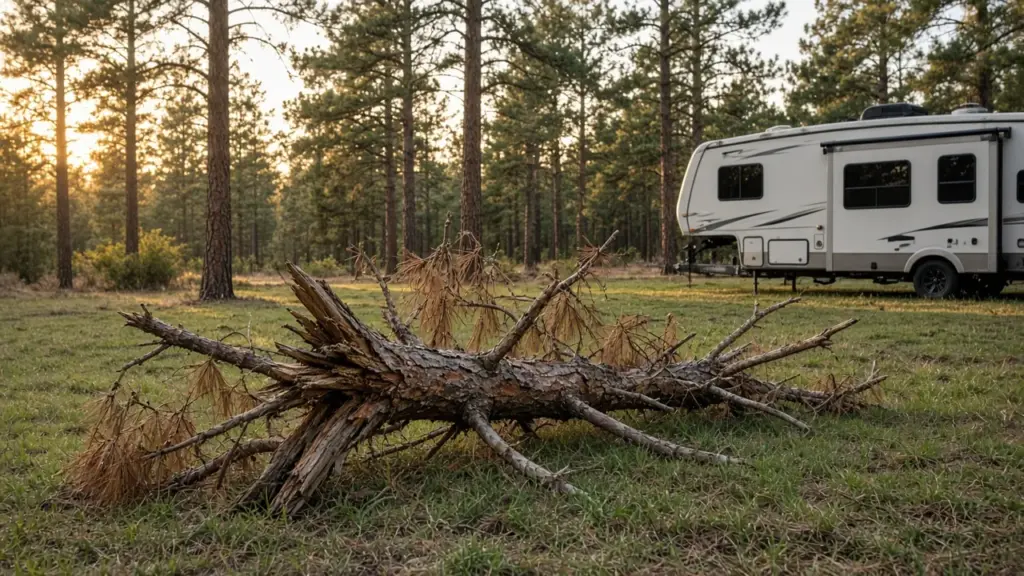
Tall pines and hardwoods are part of what makes the Magnolia area beautiful. They provide shade, habitat for wildlife, and a peaceful setting. But trees also carry a risk that RV residents should take seriously: falling limbs and, occasionally, falling trees. An RV roof is much thinner than a house roof, and even a moderate limb can cause significant damage.
This guide covers how to reduce risk from falling limbs and trees, spot warning signs, and prepare for storms. For a full-year view of local weather, see our pillar, Texas Weather and Your RV: A Year-Round Guide for Montgomery County.
Why Trees Pose a Risk to RVs
RV roofs are typically made of lightweight materials over a thin frame. They are designed to keep out weather, not to withstand heavy impacts. A falling branch can puncture a roof, damage air conditioners and vents, crack skylights, or dent sidewalls. Larger limbs or trees can cause major structural damage and injury.
Trees are most likely to drop limbs during high winds, severe thunderstorms, tropical storms, and hurricanes. Heavy rain can soften soil and loosen roots. Drought can weaken trees and make branches brittle. Occasionally, limbs fall on calm days due to decay or stress.
Warning Signs to Watch For
Take a look at the trees around your site from time to time. Warning signs of a potentially hazardous tree or limb include:
- Dead branches, often without leaves or needles
- Hanging or broken limbs caught in other branches
- Cracks or splits in the trunk or large limbs
- Leaning trees, especially if the lean has changed recently
- Fungus or mushrooms growing on the trunk or roots
- Hollow areas or decay
- Lifting soil around the base of a tree after storms
If you notice any of these signs near your site or on park property, report them to management. Do not attempt to trim or remove trees or limbs yourself.
How Covered Sites Help
Covered sites offer some protection from falling debris like pine needles, cones, and small twigs, as well as sun and hail. At our park, 8 of 10 sites are covered. A cover is not a guarantee against large limbs or trees, but it can reduce exposure to smaller debris and weather.
Preparing for Storms
Storm preparation is the best way to reduce risk:
- Set up weather alerts on your phone so you know when severe weather is coming. Our post on setting up weather alerts explains how.
- Retract awnings and slide toppers when high winds are forecast.
- Bring in loose items and secure anything outside your RV. At our park, items are not allowed on or under the site anyway, which reduces flying debris.
- Park vehicles thoughtfully in allowed areas.
- Know where you would go if you need to leave your RV during a severe storm.
During severe thunderstorms and high winds, consider staying in a sturdier building if one is available, especially if trees are close to your RV. During hurricanes, follow official evacuation guidance.
Our post on the spring storm season checklist covers other preparation steps.
After a Storm
After strong winds or storms:
- Check for downed limbs, damaged trees, and power lines before going outside.
- Stay away from downed lines and report them to the utility and management.
- Inspect your RV roof, AC units, and exterior for damage, if safe.
- Photograph any damage for insurance.
- Report fallen limbs or damaged trees on park property to management.
Do not climb on your RV roof during or immediately after a storm, and never try to move large limbs that are near power lines.
Insurance and Tree Damage
Tree damage is one reason insurance matters for RV residents. Our park requires liability and property coverage at state minimums. Check your policy to understand how falling limbs and trees are covered and what your deductible is. Our post on checking your RV insurance before storm season walks through questions to ask.
Keep photos of your RV’s roof and exterior on file so you can show its condition before any damage.
Routine Roof Checks
Even small debris can cause problems over time. Pine needles and leaves can collect on roofs and around seals, holding moisture and promoting damage. Check your roof periodically, clear debris when it is safe to do so, and inspect seals. If you are not comfortable on the roof, hire a professional.
Pets and Storms
Pets can be frightened by storms and falling branches. Keep pets inside during severe weather, and never leave them outside unattended, which is not allowed at our park. Our post on introducing your pet to neighbors covers other ways to help pets feel secure in a new park.
Why Reporting Matters
Park management relies on residents to point out hazards. In a small park, residents often notice changes first because they walk past the same trees every day. A quick text about a cracked limb or a leaning tree can prevent damage to your RV or a neighbor’s. Tree work is best handled by professionals with the right equipment and training, so let management arrange any trimming or removal.
When you report a concern, describe the location clearly and include a photo if possible. Photos help management assess the situation quickly and decide on next steps. Residents can use the maintenance request form on the Residents page or text (281) 205-1959.
Living Comfortably Among the Pines
Trees are a big part of what makes pine country pleasant, and most days they are nothing but a benefit. Shade keeps RVs cooler, trees block wind, and the setting feels peaceful. A little awareness, good storm preparation, and prompt reporting of hazards let you enjoy the trees while keeping risk low.
Drought and Tree Health
Trees can also become stressed during long dry spells. Summer droughts in Texas can weaken trees, causing branches to become brittle and more likely to break. Stressed trees may drop limbs even on calm days. After a dry summer, pay extra attention to the trees around your site and report anything that looks dead, cracked, or unusual.
Choosing Where to Stand During Wind
If you are outside when winds pick up, move away from trees and toward open areas or sturdy buildings. Avoid standing under tall pines during thunderstorms, both because of falling limbs and lightning risk. Getting inside a vehicle or building is usually safer than staying under trees.
Frequently Asked Questions
What should I do if I see a dead or hanging limb near my site?
Report it to management. Do not attempt to trim or remove it yourself.
Do covered sites protect against falling limbs?
They offer some protection from small debris and weather, but not from large limbs or trees.
What should I do during a severe storm?
Follow weather alerts, retract awnings, and consider moving to a sturdier building if trees are close to your RV. Follow official evacuation guidance during hurricanes.
Does insurance cover tree damage to my RV?
It depends on your policy. Review coverage and deductibles with your insurance agent.
Stay Safe at Magnolia’s Finest
Magnolia’s Finest RV Park offers mostly covered sites on cement pads in a small, gated community. See our amenities, read the FAQ, or check availability.
Check Availability or call or text (281) 205-1959
Magnolia’s Finest RV Park · 32020 Old Hempstead Rd, Magnolia, TX 77355 · Contact us