
An Emergency Kit for RV Residents
July 29, 2026 · By Magnolia RV Park
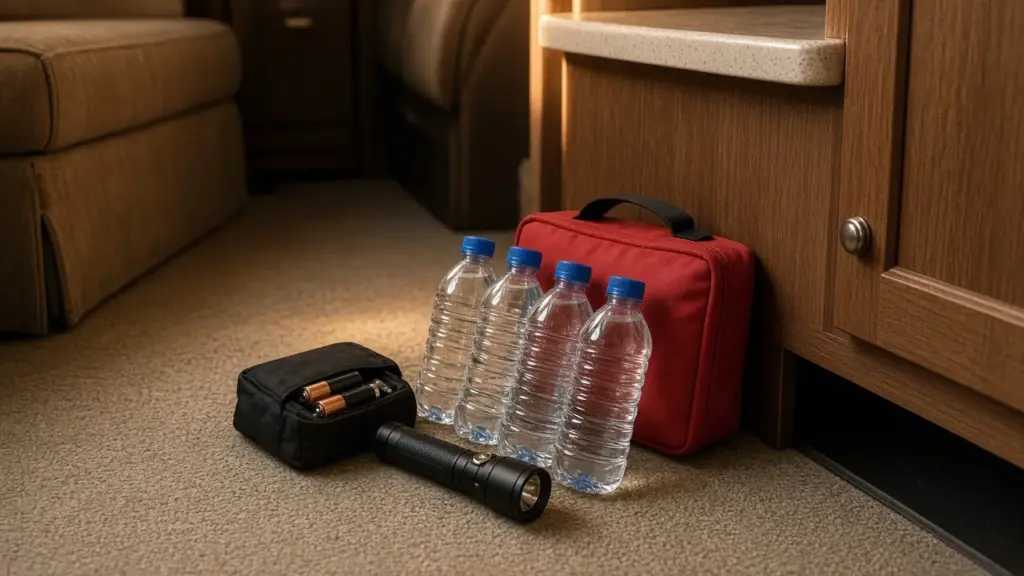
Emergencies can happen at any time. Hurricanes, severe storms, flooding, power outages, cold snaps, and medical situations can all disrupt daily life. For RV residents, being prepared is especially important, since RVs can be more vulnerable to weather and you may need to evacuate quickly. A well-stocked emergency kit gives you peace of mind and helps you handle the unexpected.
This guide covers what to include in an emergency kit for RV living in Southeast Texas. For a broader look at weather in the region, see our pillar, Texas Weather and Your RV: A Year-Round Guide.
Why RV Residents Need an Emergency Kit
RVs are not as sturdy as houses during severe weather. You may need to leave quickly during a hurricane or flood threat. Power outages can affect your air conditioning, refrigerator, and water pump. Having supplies ready means you can respond calmly instead of scrambling.
Southeast Texas has specific risks to plan for:
- Hurricane season from June 1 to November 30
- Heavy rain and flash flooding
- Severe thunderstorms and high winds
- Occasional winter cold snaps
- Extreme summer heat
Water
Water is one of the most important items in any emergency kit. A common guideline is at least one gallon per person per day for several days. Include extra for pets. Store water in sealed containers and rotate it periodically.
Remember that your fresh water tank can be a backup source if it is clean. Our post on sanitizing RV fresh water lines and tanks explains how to keep it ready.
Food
Keep several days of non-perishable food that does not require cooking:
- Canned goods with a manual can opener
- Peanut butter and crackers
- Granola bars and trail mix
- Dried fruit
- Shelf-stable milk or juice
- Pet food
Rotate items so they stay fresh.
First Aid Supplies
A well-stocked first aid kit should include:
- Bandages and gauze
- Antiseptic wipes
- Pain relievers
- Any prescription medications, with a supply for several days
- Tweezers and scissors
- A first aid guide
Light and Power
- Flashlights and headlamps with extra batteries
- Battery-powered or hand-crank radio for weather updates
- Portable phone chargers or power banks
- Charging cables
Documents
Keep copies of important documents in a waterproof container:
- Identification
- RV and vehicle titles and registration
- Insurance policies
- Medical information and medication lists
- Pet vaccination records
- Emergency contact list
Digital copies stored securely in the cloud are also helpful.
Clothing and Bedding
- A change of clothes for each person
- Rain gear
- Sturdy shoes
- Blankets or sleeping bags
- Warm layers for cold snaps
Our post on cold snaps and RV propane use covers staying warm safely. Remember that space heaters are not allowed at our park.
Tools and Supplies
- Multi-tool or basic tool kit
- Duct tape
- Work gloves
- Zip ties
- Trash bags
- Whistle to signal for help
Hygiene Items
- Hand sanitizer
- Wet wipes
- Toilet paper
- Toothbrushes and toothpaste
- Feminine hygiene products
Pet Supplies
If you have pets, include:
- Food and water for several days
- Leash, collar, and ID tags
- Carrier or crate
- Medications
- Waste bags
- Vaccination records
If you have a new puppy, our post on raising a puppy in an RV covers other supplies to keep on hand.
Cash
Keep some cash on hand. During power outages, card readers and ATMs may not work.
Weather Alerts
Staying informed is part of being prepared. Set up weather alerts on your phone so you know about severe weather in time to act. Our post on setting up weather alerts on your phone for RV living walks through the process.
Where to Store Your Kit
Store your emergency kit inside your RV or vehicle. At our park, items cannot be stored on or under the site, so keep the kit in an interior closet, compartment, or your vehicle. Make sure everyone in your household knows where it is.
Planning for Evacuation
An emergency kit is only part of the plan. Know where you would go if you had to evacuate, how you would get there, and what you would bring. Decide in advance whether you would move your RV or leave it and travel by vehicle. Keep your fuel tank at least half full during storm season.
Maintaining Your RV
Keeping your RV in good repair helps you weather storms. Check your roof and seals regularly; our post on keeping slide-out seals healthy through heat and rain explains what to look for.
Reviewing Your Kit
Check your kit at least twice a year. Replace expired food, water, medications, and batteries. Update documents and contact lists. A good time to review is before hurricane season begins and again before winter.
Building Your Kit Over Time
You do not have to buy everything at once. Many people build their kit gradually, adding a few items with each grocery trip. Start with the essentials, such as water, food, flashlights, first aid, and documents, then add the rest over a few weeks. Spreading out the cost makes preparation more affordable and less overwhelming.
Preparing for Power Outages
Power outages are one of the most common emergencies RV residents face. Storms can knock out power for hours or even days. Without power, your air conditioning, refrigerator, and water pump may stop working, depending on your RV’s systems. Plan ahead for how you would handle an outage in both summer and winter.
In summer heat, staying cool is the biggest concern. Keep battery-powered fans in your kit, stay hydrated, and know where you could go to cool off if an outage lasts a long time. Watch for signs of heat illness in yourself, family members, and pets. In winter, extra blankets and warm clothing are important, and your propane furnace may still work if your batteries are charged, since the fan runs on 12-volt power.
Keep your refrigerator closed as much as possible during an outage to preserve food. A cooler and ice can help for longer outages. When in doubt about whether food is safe, throw it out.
Medical Needs
If anyone in your household depends on medical equipment that requires power, plan carefully. Talk with your doctor about backup options and consider where you would go during an extended outage. Keep an extra supply of essential medications, and make sure prescriptions are stored properly, since RV interiors can become very hot without air conditioning.
Staying Calm and Connected
In an emergency, clear communication helps. Agree with your household on how you will contact each other if separated, and share your plans with a family member or friend outside the area.
Checking on Neighbors
After a storm or outage, check on your neighbors when it is safe to do so. A quick text or knock can make a big difference, especially for residents who live alone.
Frequently Asked Questions
How much water should I keep in my emergency kit?
A common guideline is at least one gallon per person per day for several days, plus water for pets.
Where should I store my emergency kit?
Inside your RV or vehicle. Items cannot be stored on or under the site at our park.
When is hurricane season?
Hurricane season runs from June 1 to November 30.
How often should I check my emergency kit?
At least twice a year, such as before hurricane season and before winter.
Stay Prepared in Magnolia
Read our FAQ, explore our amenities, or check availability.
Check Availability or call or text (281) 205-1959
Magnolia’s Finest RV Park · 32020 Old Hempstead Rd, Magnolia, TX 77355 · Contact us