Keeping Slide-Out Seals Healthy Through Heat and Rain
July 15, 2026 · By Magnolia RV Park
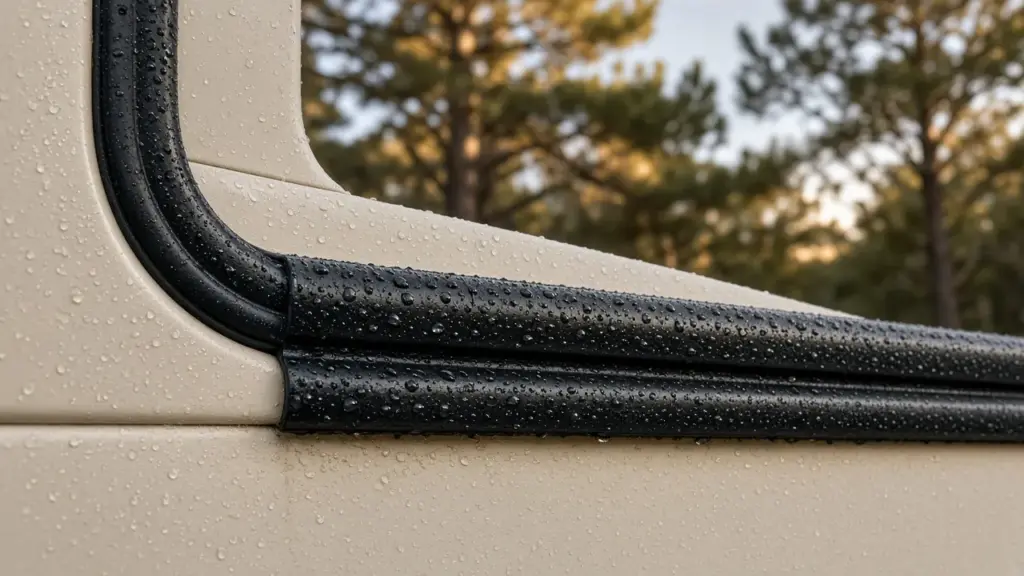
Slide-outs make RVs feel much more spacious, which is a big advantage for long-term living. But every slide-out depends on rubber seals to keep water, air, dust, and insects out. In Southeast Texas, where intense sun, heat, humidity, and heavy rain are all part of the year, those seals take a beating. Neglected seals can lead to leaks, drafts, higher energy use, and water damage.
This guide explains how slide-out seals work, how weather affects them, and what you can do to keep them healthy. For more on how the local climate affects RV life, see our pillar, Texas Weather and Your RV: A Year-Round Guide.
How Slide-Out Seals Work
Most slide-outs have two main types of seals:
- Wiper seals that brush against the slide as it moves in and out, keeping debris and water from getting inside.
- Bulb seals that compress when the slide is fully extended or retracted, creating a tight barrier.
These seals are usually made of rubber or similar flexible materials. Over time, exposure to sun, heat, and moisture can cause them to dry out, crack, shrink, or tear.
How Texas Weather Affects Seals
Heat and Sun
UV rays and high temperatures are hard on rubber. Seals exposed to direct sun can dry out, harden, and crack. Once they lose flexibility, they no longer seal properly.
Heavy Rain
Southeast Texas can see intense rainstorms, especially during hurricane season from June 1 to November 30. Heavy rain tests every seal on your RV. Worn slide seals can let water seep into walls and floors.
Humidity
Humidity encourages mold and mildew growth on seals and surrounding surfaces, especially if debris collects in the folds.
Cold Snaps
Occasional winter cold snaps can make seals stiffer. Our post on cold snaps and RV propane use covers other cold-weather considerations.
Inspecting Your Slide Seals
Regular inspections catch problems early. Check your seals at least every few months, and after major storms.
What to look for:
- Cracks, tears, or splits
- Hardened or brittle rubber
- Gaps between the seal and the RV body
- Seals that have pulled loose or shifted
- Mold, mildew, or debris buildup
- Water stains inside near the slide
- Drafts or light visible around the slide when it is extended
Check both the outside and inside of the slide. Look at the top, bottom, and sides.
Cleaning Slide Seals
Dirt, pine needles, leaves, and debris can wear down seals and trap moisture. Clean your seals regularly:
- Use a soft brush or cloth to remove debris.
- Wash with mild soap and water, or a cleaner recommended for RV rubber.
- Rinse lightly and let dry.
Note that vehicle washing is not allowed at our park, so keep cleaning to gentle maintenance of seals and avoid washing the RV exterior on site. Ask management if you have questions about what is allowed.
Conditioning Seals
After cleaning, apply a rubber seal conditioner made for RVs. Conditioners help keep rubber flexible and protect it from UV damage. Follow product directions, and avoid petroleum-based products that can damage rubber. Many owners condition seals a few times a year, more often in hot, sunny climates.
Protecting the Slide Top
Water, leaves, and pine needles can collect on top of a slide-out, especially under trees. Debris traps moisture against seals and can cause leaks. Periodically check and clear the top of your slide, if you can do so safely.
In pine country, falling needles and limbs are common. Our post on falling limbs and tree safety in pine country covers related concerns.
Remember that tarps and covers are not allowed at our park, so rely on regular inspection and cleaning rather than covering your slides.
Operating Slides Properly
How you use your slides also affects seal life:
- Make sure seals are clean before retracting slides
- Watch the seals as the slide moves to be sure they fold properly
- Do not operate slides in high winds if your manual advises against it
- Follow your manufacturer’s maintenance recommendations for slide mechanisms
For long-term residents who rarely move slides, occasional operation can help you spot problems, but follow your manual.
Replacing Worn Seals
If seals are cracked, torn, or no longer sealing, replace them. Some owners can replace simple seals themselves, while others prefer a qualified RV technician. Extensive mechanic work is not allowed at our park, so major repairs should be done by a professional.
Watching for Leaks Inside
Leaks from slide seals may show up as stains, soft spots, or musty smells near the slide. Check the floor and walls around your slides regularly. Water can travel before it shows up, so investigate any signs of moisture. Also keep your water system in good shape; see our post on sanitizing RV fresh water lines and tanks.
Benefits of Covered Sites
Most of our sites are covered, which can reduce direct sun and rain exposure on your RV. That helps slow the wear on seals and roofs, but it does not replace regular maintenance. Wind-driven rain and humidity still affect seals, so keep up with inspections.
Energy Savings From Healthy Seals
Good seals keep cool air in during summer and warm air in during winter. Worn seals let conditioned air escape, which makes your air conditioner and furnace work harder. In a Southeast Texas summer, that can mean higher energy use and a less comfortable RV. Healthy seals help your RV stay comfortable and efficient year-round.
You can check for air leaks on a sunny day by looking for light around the edges of the slide from inside, or by feeling for drafts with your hand. Addressing these gaps early is one of the simplest ways to improve comfort.
Building Seal Care Into Your Routine
The easiest way to keep seals healthy is to build care into a regular schedule. Many residents inspect seals monthly during their normal walk-around, clean them every few months, and condition them at the start of summer and again in the fall. Adding these tasks to your calendar keeps them from being forgotten. A few minutes of attention each season can prevent costly water damage and help your slide-outs work smoothly for years.
Keeping Pests Out
Slide seals also help keep insects and small animals out of your RV. In a rural, wooded area, ants, spiders, and other pests look for small openings. Damaged or gapped seals make it easier for them to get inside. Keeping seals intact is one of the best ways to reduce pest problems, along with keeping food sealed and your RV clean.
Frequently Asked Questions
How often should I condition slide-out seals?
Many owners condition seals a few times a year, more often in hot, sunny climates. Follow product directions.
Can I use a tarp to protect my slides?
No. Tarps and covers are not allowed at our park.
What are signs of a failing slide seal?
Cracks, tears, gaps, drafts, and water stains near the slide.
Should I replace seals myself?
Simple seals may be manageable, but major repairs should be done by a professional.
Protect Your Home in Magnolia
Magnolia’s Finest RV Park offers covered sites on cement pads. Explore our amenities, read our FAQ, or check availability.
Check Availability or call or text (281) 205-1959
Magnolia’s Finest RV Park · 32020 Old Hempstead Rd, Magnolia, TX 77355 · Contact us