
Propane Tank Safety and Leak Checks
May 21, 2026 · By Magnolia RV Park
Propane is a reliable and efficient fuel for RVs, powering furnaces, water heaters, stoves, and sometimes refrigerators. For full-time residents, propane is used day in and day out, which makes regular safety checks essential. A small leak or a damaged hose can become a serious hazard if it goes unnoticed.
This guide covers propane tank safety and leak checks for RV residents, including routine inspections, simple leak tests, and what to do if you suspect a problem. For an introduction to how propane works in an RV, see our post on propane basics for RV living. For the broader utility picture, start with our pillar, RV Hookups Explained.
Why Regular Checks Matter
Propane systems include tanks, valves, regulators, hoses, and lines that run throughout your RV. Over time, vibration, heat, sun exposure, and age can wear these components. Connections can loosen, hoses can crack, and regulators can fail.
Living in your RV full time means propane appliances run often, and you are sleeping just a few feet away from them. Regular checks help catch problems early, before they become dangerous.
Know the Smell of Propane
Propane is naturally odorless, so an odorant is added to help people detect leaks. The smell is often described as rotten eggs or sulfur. Everyone in your household should know what it smells like and what to do if they notice it.
Keep in mind that some people have a reduced sense of smell, and odor can fade in some situations. That is why working propane detectors are essential.
Test Your Propane Detector
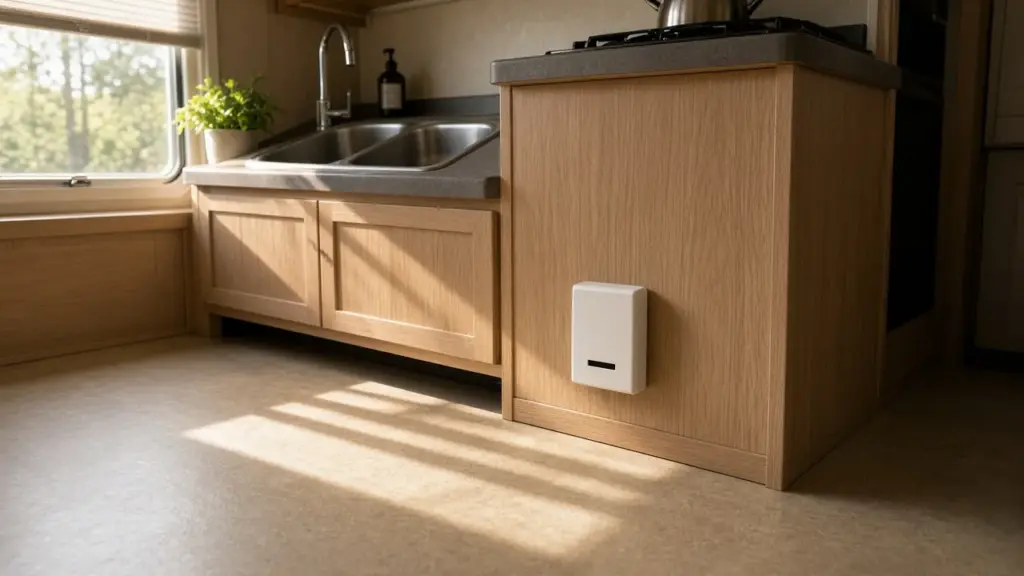
Most RVs have a propane detector mounted low on a wall, since propane is heavier than air and settles near the floor. Test it regularly using the test button, and replace it according to the manufacturer’s guidelines. Many detectors have an expiration date printed on them.
Carbon monoxide detectors are equally important, since propane appliances can produce carbon monoxide if they malfunction. Our post on testing RV smoke, CO, and propane detectors covers both.
Visual Inspection
Once a month, inspect your propane system visually:
- Tanks. Look for rust, dents, bulges, or damage. Check that tanks are mounted securely.
- Valves. Make sure valves open and close smoothly and are not damaged.
- Regulator. Check for corrosion, damage, or blocked vents. Regulators should be protected from rain and debris.
- Hoses. Look for cracks, brittleness, abrasions, or swelling.
- Lines and fittings. Inspect visible connections for corrosion or damage.
Sun and heat can degrade rubber hoses faster in Southeast Texas. Replace hoses that show any wear.
The Soapy Water Leak Test
A simple way to check for leaks at connections is the soapy water test:
- Mix a solution of water and dish soap in a spray bottle or bowl.
- With the propane on, apply the solution to connections, valves, and fittings.
- Watch for bubbles. Growing bubbles indicate escaping gas.
- If you find a leak, turn off the propane at the tank and contact a qualified technician.
Never use a flame to check for leaks. Commercial leak detection solutions are also available.
Professional Inspections
A qualified RV technician can perform a pressure test on your propane system to detect leaks that are not visible. Many owners have this done annually or whenever they notice a problem. Technicians can also check regulator performance and appliance operation.
Minor inspections are fine to do yourself, but extensive mechanic work is not allowed at our park. Plan major repairs with a professional.
What to Do If You Smell Propane
If you smell propane inside or around your RV:
- Turn off the propane supply at the tank if it is safe to do so.
- Put out any open flames and avoid creating sparks. Do not flip light switches, use appliances, or start vehicles.
- Leave the RV and move a safe distance away.
- Alert others nearby if the smell is strong.
- Call for help. Contact a qualified technician or emergency services, depending on the severity.
- Do not return until the system has been checked and the area is safe.
In a small park, letting management know about a propane issue helps protect neighbors too. Text is preferred at (281) 205-1959.
Safe Tank Handling
When handling portable cylinders:
- Always transport and store cylinders upright
- Secure cylinders so they cannot tip or roll
- Never store cylinders inside the RV or in a closed vehicle
- Keep cylinders away from heat sources and direct flame
- Close valves when cylinders are not in use
Have cylinders refilled by trained staff. Cylinders have requalification dates, and outdated cylinders may not be refillable.
At our park, items cannot be stored on or under the site, so keep cylinders in your RV’s designated propane compartment or mount.
Propane and Appliances
Keep propane appliances in good condition:
- Make sure burners light properly and burn with a steady flame
- Keep furnace and water heater vents clear of debris and insect nests
- Run the range hood fan when cooking
- Never use a stove or oven to heat your RV
Space heaters are not allowed at our park, so your furnace is your main heat source in winter. Keep it well maintained.
Propane, Tanks, and Other Systems
Propane is just one of the systems you manage in a full-time RV. Keeping all systems in good shape, including tanks and plumbing, makes daily life smoother. Our post on gray tank management when connected full-time covers another routine task.
During storms, a local broadcast antenna can keep you informed if the internet goes down. Our post on TV options for RV living explains how.
Pests and Propane Systems
Insects and rodents can cause problems for propane systems. Spiders and wasps may nest in appliance vents, and rodents may chew hoses. Check vents and compartments regularly. Our post on mosquitoes and bugs around an RV covers keeping pests away.
Teach Everyone in the Household
Propane safety is not just the job of the person who handles maintenance. Everyone who lives in or regularly visits your RV should know what propane smells like, where the tank shutoff valve is, and what to do if they smell gas. Walk through the steps together and make sure everyone knows how to get out of the RV quickly, including the emergency exit window. A plan that everyone understands is far more effective in an emergency.
Monthly Propane Safety Checklist
- Test the propane and CO detectors
- Inspect tanks, valves, regulator, and hoses
- Perform a soapy water test on connections
- Check appliance vents for blockages
- Confirm tanks are secure and valves close properly
- Review what to do if you smell propane
Frequently Asked Questions
How often should I check my RV propane system?
Inspect it visually monthly, test detectors regularly, and consider a professional pressure test annually.
How do I check for a propane leak?
Apply soapy water to connections and watch for bubbles. Never use a flame.
What should I do if I smell propane?
Turn off the supply, avoid sparks, leave the RV, alert others, and call a technician or emergency services.
Can I store propane cylinders inside my RV?
No. Store cylinders upright in your RV’s designated propane compartment or mount.
Can I repair propane lines myself?
Minor inspections are fine, but propane repairs should be handled by a qualified professional.
Stay Safe at Magnolia’s Finest
Magnolia’s Finest RV Park is a small, gated long-term community with covered sites on cement pads. See our amenities, read the FAQ, or check availability.
Check Availability or call or text (281) 205-1959
Magnolia’s Finest RV Park · 32020 Old Hempstead Rd, Magnolia, TX 77355 · Contact us