
Concrete, Gravel, or Grass: RV Site Surfaces Compared
February 12, 2026 · By Magnolia RV Park
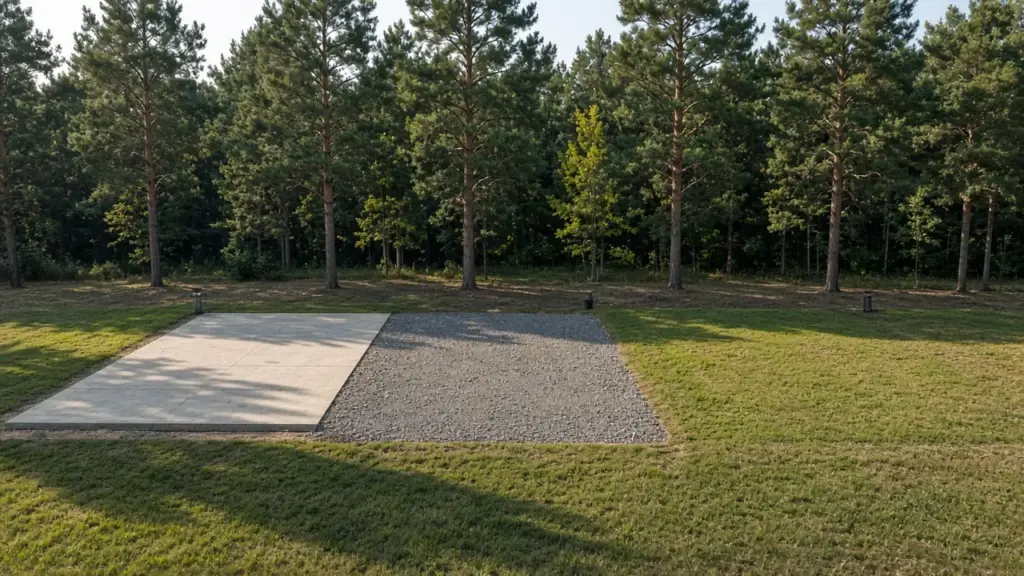
When you are choosing a long-term RV site, the surface under your RV might not be the first thing you think about. But over months of living, it affects nearly everything: how level your RV stays, how much mud comes inside, how your site handles storms, and how your jacks and tires hold up. In Southeast Texas, where heavy rain and heat are common, the surface can make a big difference in daily comfort.
This guide compares concrete, gravel, and grass RV site surfaces for long stays. For a broader framework on choosing a park, see our post on small RV parks vs. big RV resorts.
Concrete Pads
Concrete pads are poured, solid surfaces designed to support an RV.
Advantages:
- Firm, stable footing that does not shift
- Easier leveling on a flat surface
- No mud after rain
- Cleaner setup with less dirt tracked inside
- Good support for jacks and stabilizers
- Easy to sweep and keep tidy
Considerations:
- Concrete can get hot in direct sun
- Pads may have a slight slope for drainage
- Use jack pads to protect the surface and jack feet
At Magnolia’s Finest, all 10 sites are on cement pads, 8 covered and 2 uncovered. Cover helps reduce heat on the pad and the RV.
Gravel Sites
Gravel sites use crushed stone over compacted soil.
Advantages:
- Better drainage than bare soil
- Lower cost for parks to build
- Firmer than grass
Considerations:
- Gravel can shift, requiring re-leveling
- Jacks can sink into loose gravel
- Dust in dry weather
- Stones can be tracked inside
- Potholes and ruts can form over time
- Weeds may grow through
Gravel quality varies widely. Well-maintained, compacted gravel works reasonably well; loose or thin gravel can be frustrating.
Grass Sites
Grass sites are common at campgrounds and rural parks.
Advantages:
- Natural, pleasant appearance
- Cooler underfoot than concrete
Considerations:
- Mud after rain
- RVs and vehicles can sink or rut
- Leveling is harder and can change
- Moisture under the RV can increase humidity
- Mowing around RVs is difficult
- Pests like fire ants are common
For long stays, grass sites often become muddy and uneven, especially in rainy seasons.
Leveling and Stability
Leveling affects appliances, doors, and slide-outs. Concrete provides the most consistent level over time. Gravel and grass can shift with weather and weight. Our post on leveling jacks and stabilizers on concrete pads explains setup.
Mud and Cleanliness
Mud is a major quality-of-life issue for long stays. Concrete pads keep your entry area clean. With gravel and grass, you will likely need mats and frequent cleaning.
Drainage in Heavy Rain
Southeast Texas storms can drop heavy rain quickly. A good site drains away from the RV. Concrete pads with slight slopes shed water. Gravel drains well if properly built. Grass can hold water and turn soggy. Our post on flash flooding around Houston discusses storm awareness.
Heat and Surfaces
Concrete absorbs heat in direct sun, which can radiate up. Covered sites help offset this. Gravel and grass stay somewhat cooler but bring other tradeoffs. Our post on covered and uncovered sites discusses cover in detail.
Humidity Under the RV
Moisture from wet ground can increase humidity inside. Solid surfaces like concrete reduce moisture rising from below.
Tires and Jacks
Tires resting on concrete stay cleaner and drier. On grass or soil, tires can sit in moisture. Jacks on concrete stay stable; on soft ground, they can sink. Use pads in all cases.
Site Upkeep and Park Rules
Parks with solid surfaces often have cleaner, more organized sites. Rules also matter. At our park, items on or under the site are not allowed, and there is no driving or parking on the grass. The park handles lawn care, keeping green spaces tidy.
Vehicle Parking
Your vehicles need a stable place to park too. At our park, each site may have up to two registered, running vehicles, parked in designated spaces, not on the grass or in empty lots.
What About Pull-Through vs. Back-In?
Surface usually matters more than layout for long stays. Our post on pull-through vs. back-in RV sites explains why.
Red Flags in Site Surfaces
Watch for:
- Deep ruts or potholes
- Standing water
- Sinking pads or crumbling concrete
- Loose gravel with bare patches
Any of these can signal a site that will be frustrating to live on for months, and they often point to broader maintenance problems at the park.
Long-Term Parks and Surfaces
Parks built for long-term residents often invest in better surfaces because residents stay for months. Our post on why some RV parks don’t take overnight guests explains how long-term-only parks differ. Our post on why RV parks don’t allow subletting covers other policies that keep long-term parks stable.
Accessibility and Safety
Surfaces also affect how easy it is to move around your site. Concrete provides a smooth, stable surface for walking, carrying groceries, using a cart, or managing mobility aids. Gravel can be uneven and hard on ankles, and grass becomes slippery when wet. For older residents or anyone with mobility concerns, a solid pad can make daily life safer. Stable ground also makes it easier to handle hookups, sewer hoses, and maintenance tasks without slipping.
Pets and Surfaces
Dogs coming in from walks track in whatever is on the ground. Concrete pads mean fewer muddy paws. Hot concrete in summer can burn paws, so walk dogs during cooler hours and on grassy areas where allowed.
Cost Differences for Residents
Surface type can affect your costs in subtle ways. On gravel or grass, you may spend more on leveling blocks, mats, cleaning supplies, and pest control. Muddy conditions can mean more wear on flooring and more frequent vacuuming. Jacks that sink into soft ground may need more maintenance, and tires sitting in moisture can age faster. A concrete pad does not guarantee lower costs, but it removes several recurring hassles. When comparing parks, consider the full picture of what daily life will cost you, not just the monthly rate.
Seasonal Changes
Surfaces behave differently through the year. Grass and soil can harden and crack in dry summer spells, then turn soft and muddy during spring storms and tropical systems. Gravel can wash out in heavy rain. Concrete stays largely the same in every season, which is one reason long-term residents value it.
Questions to Ask a Park
Ask whether pads are concrete, gravel, or grass; how the site drains; where vehicles park; and whether the site is covered. A quick photo or video of the specific site can answer most questions.
Frequently Asked Questions
Are the sites at Magnolia’s Finest on concrete?
Yes. All 10 sites are on cement pads, with 8 covered and 2 uncovered.
Is gravel good enough for a long-term stay?
Well-maintained, compacted gravel can work, but it may shift, create dust, and require re-leveling.
Do grass sites get muddy?
Often, especially after heavy rain. Mud and ruts are common challenges on grass sites.
Can I park on the grass next to my pad?
No. Driving and parking on the grass are not allowed at our park.
Live on a Solid Pad in Magnolia
Magnolia’s Finest RV Park offers cement-pad sites in a small, gated long-term community. Explore our amenities, review our sites and rates, or check availability.
Check Availability or call or text (281) 205-1959
Magnolia’s Finest RV Park · 32020 Old Hempstead Rd, Magnolia, TX 77355 · Contact us