Sewer Hose Setup for a Long-Term RV Site
January 24, 2026 · By Magnolia RV Park
A good sewer hose setup is one of the least glamorous parts of RV living, but it makes a big difference over a long stay. A properly sloped, well-sealed hose drains cleanly, avoids odors, and prevents messes. A sloppy setup leads to clogs, leaks, and unpleasant surprises.
This guide explains how to set up a sewer hose for a long-term RV site, how to manage your tanks, and how to maintain everything for months. For the bigger picture on hookups, see our pillar on RV hookups explained for long stays.
Confirm Your Site’s Sewer Connection
Before you arrive, confirm what hookups your site offers. Utilities are confirmed per site at Magnolia’s Finest, so call or text to verify details for the site you are considering. Our post on full hookup vs. partial hookup RV sites explains the differences.
Choose a Quality Hose
A long stay is worth a better hose. Look for:
- Durable material that resists punctures and UV damage
- Adequate length to reach the connection without excessive slack
- Secure fittings on both ends
- A clear elbow or adapter so you can see when tanks are running clean
Replace cracked or brittle hoses right away. A failing hose is not something to gamble with.
Use a Hose Support
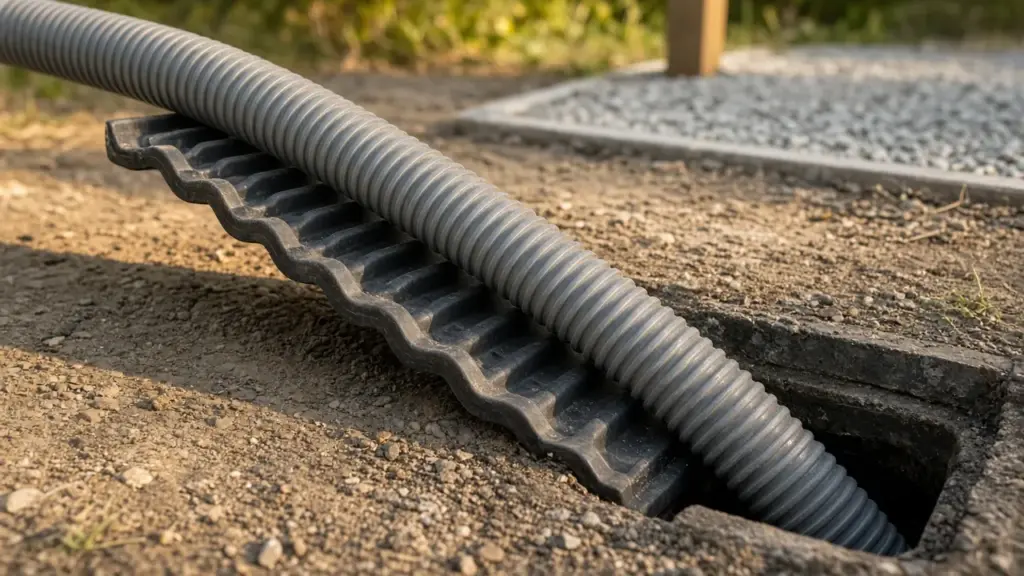
A hose lying flat on the ground can hold liquid and solids in low spots. A hose support creates a steady downward slope from your RV to the sewer inlet. Supports:
- Keep the hose off hot concrete
- Maintain consistent slope
- Reduce the chance of clogs and odors
- Make the setup look tidier
Get the Slope Right
Gravity does the work. Arrange the hose so it slopes downward the entire way, with no dips or rises. Avoid long, flat runs. Adjust supports so the RV end sits higher than the sewer inlet.
Seal the Connection
Use a proper sewer fitting or a threaded adapter at the inlet. A good seal prevents odors and keeps pests out. Many parks require a sealed connection, so check the rules and use appropriate adapters.
Keep Valves Closed Most of the Time
One of the most important long-stay habits is keeping your black tank valve closed until the tank is mostly full. Leaving the black valve open lets liquids drain while solids stay behind, which can create a stubborn buildup often called a pyramid.
A good routine:
- Keep the black valve closed until the tank is about two-thirds full or more.
- Dump the black tank first.
- Then dump the gray tank to help rinse the hose.
- Close valves after dumping.
Some residents leave the gray valve open for convenience, but closing it periodically and dumping in a batch can help rinse the hose.
Use Enough Water
Use plenty of water when flushing the toilet. Water helps solids break down and move out of the tank. A tank flush or rinse system can help clean the black tank periodically.
Septic-Safe Products Only
At Magnolia’s Finest, the park is on a septic system, so only septic-safe products should go down drains and toilets. That means:
- RV or septic-safe toilet paper
- Septic-safe tank treatments
- No wipes, even those labeled flushable
- No grease, food scraps, or harsh chemicals down drains
Protecting the septic system protects everyone in the park.
Watch for Leaks
Check connections regularly for drips or odors. Tighten fittings, replace worn gaskets, and repair cracked parts immediately. Report any issue with the site’s sewer inlet to management rather than attempting repairs to park equipment. Tampering with hookups is not allowed at our park.
Protecting Your Hose From Heat and Sun
Texas sun can break down hoses over time. Hose supports lift them off hot concrete, and covered sites reduce exposure. At our park, 8 of the 10 sites are covered, which helps protect hookups and hoses. Inspect your hose for fading, cracks, or stiffness every few months.
Preventing Freeze Damage
During hard freezes, gray and black tanks, valves, and hoses can freeze. Keep valves closed during freezes, dump before a cold snap if possible, and follow the guidance in our freeze prep posts. Water left in a low spot in the hose can freeze and crack it.
Water Pressure and Sewer Health
Water pressure affects more than your faucets. A regulator protects plumbing from high pressure and helps prevent leaks that could affect tanks. Our post on water pressure regulators for RV hookups explains why.
Electrical Safety Near Hookups
Sewer, water, and electric connections often sit near each other. Keep your power cord away from sewer connections and standing water. Use a surge protector; our post on using a surge protector at a long-term RV site covers this.
Outages and Tanks
During outages, your RV’s water pump may depend on batteries, and tanks continue filling. Our post on what to do during a power outage in an RV explains how to manage water use during outages.
Clean Up and Hygiene
When dumping or handling sewer connections:
- Wear disposable gloves
- Keep a dedicated set of tools for sewer tasks
- Wash hands thoroughly afterward
- Never use your drinking water hose for rinsing sewer connections
Keep the Site Tidy
Coil and store extra hose sections inside a compartment rather than leaving them on the ground. Park rules often restrict items on or under the site, so keep only your active connection outside.
Troubleshooting Slow Drains and Odors
If your tanks drain slowly or odors appear, work through a simple checklist. Confirm the hose has steady slope with no sags. Check that the black valve has been kept closed between dumps. Add extra water to the black tank before dumping to loosen buildup. Look for a dry P-trap under sinks, which can let odors into the RV; running water for a few seconds refills it. Check roof vent caps for damage. If sensors read full when the tank is empty, sensors may be coated, which is common and usually a nuisance rather than an emergency. Persistent problems deserve a visit from a qualified RV technician.
A Monthly Sewer Checklist
- Inspect the hose for cracks, fading, and stiffness
- Check the inlet seal and fittings for odors or drips
- Confirm the hose support still holds steady slope
- Flush or rinse the black tank
- Verify you are stocked with septic-safe toilet paper and treatments
- Replace gloves and clean your sewer tool kit
A few minutes each month keeps your setup reliable and helps you catch small problems before they turn into messy ones.
Frequently Asked Questions
Should I leave my black tank valve open at a long-term site?
No. Keep it closed until the tank is mostly full, then dump. Leaving it open can cause solids to build up.
What products are safe at Magnolia’s Finest?
The park is on a septic system, so only septic-safe products should be used. Avoid wipes, grease, and harsh chemicals.
Do I need a hose support?
A hose support is strongly recommended. It keeps consistent slope, reduces clogs, and protects the hose from hot concrete.
What hookups are available at my site?
Utilities are confirmed per site. Call or text us at (281) 205-1959 to verify details for a specific site.
A Well-Kept Site in Magnolia
Magnolia’s Finest RV Park offers cement pads and a quiet, gated long-term community. Read our FAQ, explore our amenities, or check availability.
Check Availability or call or text (281) 205-1959
Magnolia’s Finest RV Park · 32020 Old Hempstead Rd, Magnolia, TX 77355 · Contact us