
RV Refrigerator Care for Full-Time Use
January 2, 2026 · By Magnolia RV Park
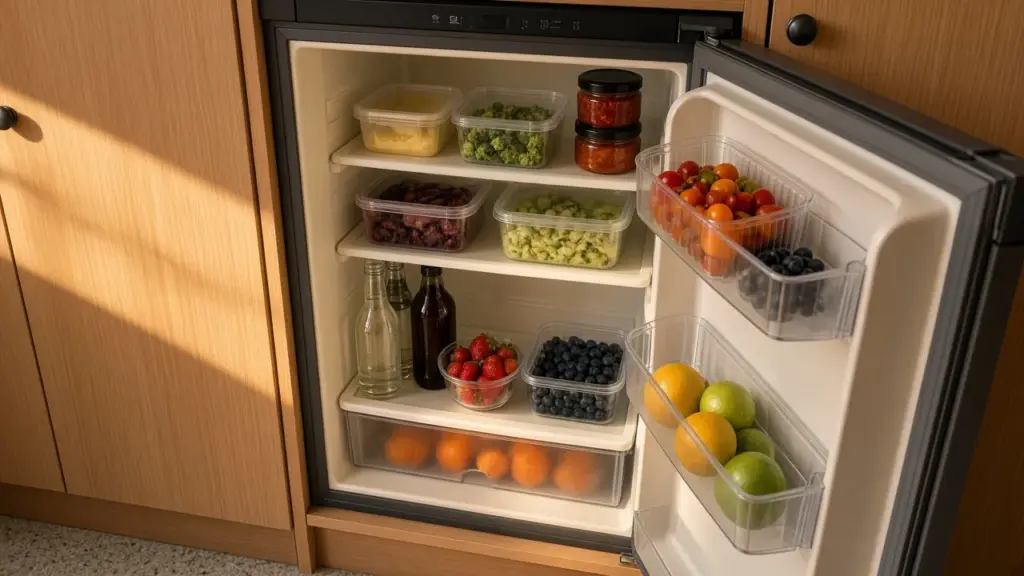
Your RV refrigerator works every hour of every day when you live in your rig full time. It keeps food safe, drinks cold, and medications at the right temperature. Yet many owners do not think about it until something goes wrong. Regular care helps your refrigerator run efficiently, last longer, and keep food safe, especially through long Texas summers.
This guide explains how full-time RVers can care for their refrigerators. It is general information. Always follow your refrigerator manufacturer’s instructions and consult a qualified RV technician for repairs. For a full maintenance calendar, see our pillar on RV maintenance for full-time residents.
Know Your Refrigerator Type
RV refrigerators generally fall into two categories:
- Absorption refrigerators, which use heat from propane or an electric element to drive a cooling process. Many older and some newer RVs use them.
- Compressor refrigerators, which work like home refrigerators and typically run on 12-volt DC or 120-volt AC power.
Maintenance differs between types. Check your owner’s manual to know what you have.
Why Leveling Matters for Absorption Refrigerators
Absorption refrigerators rely on gravity-driven flow in their cooling system. Operating them significantly out of level can reduce cooling and potentially damage the unit over time. When you set up at a long-term site, level your RV carefully. Cement pads, like those at our park, make leveling easier.
Airflow and Ventilation
Refrigerators need airflow to remove heat:
- Absorption refrigerators usually vent through exterior side or roof vents. Keep vents clear of debris, insect nests, and obstructions.
- Compressor refrigerators need airflow around the unit or its vents.
Inside, avoid overpacking. Cold air needs to circulate around food. Leave space between items and do not block interior vents or fins.
Helping Your Refrigerator in Texas Heat
High outdoor temperatures make refrigerators work harder, especially absorption models. To help:
- Keep the RV interior cool with a well-maintained air conditioner
- Shade the refrigerator side of the RV if possible; covered sites help, and eight of our ten sites are covered
- Keep exterior vents clear
- Consider refrigerator vent fans designed for your model, following manufacturer guidance
- Limit door openings during hot afternoons
- Load cold items, rather than warm leftovers, when possible
Door Seals
Door gaskets keep cold air in. Check them regularly:
- Look for cracks, tears, or gaps
- Close the door on a piece of paper; if it slides out easily, the seal may not be tight
- Clean gaskets with mild soap and water
- Replace damaged seals
Make sure door latches work, especially important if you ever move the RV.
Cleaning the Interior
Clean the interior regularly:
- Remove expired food weekly
- Wipe spills promptly
- Clean shelves and drawers with mild soap and water
- Avoid harsh chemicals that can damage plastics
- Keep an open box of baking soda for odors
Defrosting
Some RV refrigerators and freezers build up frost over time, which reduces efficiency. Follow manufacturer instructions for defrosting. Never use sharp tools to remove ice, which can puncture cooling components. Place towels to catch water, and keep food in a cooler during defrosting.
Checking Temperatures
Use refrigerator and freezer thermometers to confirm safe temperatures. Food safety guidelines recommend keeping refrigerators at or below 40°F and freezers at 0°F. Check thermometers regularly, especially during heat waves.
Propane Operation and Safety
If your absorption refrigerator runs on propane:
- Inspect the burner area and exterior vents for debris, soot, and insect nests
- Watch for yellow flames or soot, which can indicate a problem
- Know how to shut off propane in an emergency
If you smell gas, turn off the propane supply, avoid creating sparks, and contact a qualified technician.
Electrical Load
Refrigerators on electric mode add to your electrical load. Absorption refrigerators use a heating element that draws significant power; compressor models cycle on and off. Our post on managing electrical load explains how to avoid tripped breakers.
Power Outages
During outages, keep doors closed as much as possible. A full refrigerator and freezer stay cold longer. If an outage lasts many hours, check food temperatures and discard anything unsafe. Healthy batteries help 12-volt systems keep working; our post on RV battery care when plugged in long-term explains battery maintenance.
Water Lines and Ice Makers
Some RV refrigerators have ice makers or water dispensers connected to your fresh water system. Check lines for leaks, and replace filters as recommended. Our post on drinking water hoses and filters for RVs covers water quality.
Roof and Exterior Vents
For refrigerators that vent through the roof, include the vent cap in your roof inspections. Our guide to resealing RV roof seams and edges covers sealing around roof penetrations to prevent leaks.
Signs Your Refrigerator Needs Service
- Warmer temperatures despite correct settings
- Ammonia smell or yellow residue (absorption models)
- Unusual noises
- Excessive frost buildup
- Water leaking inside the RV
- Frequent breaker trips
An ammonia smell can indicate a cooling unit leak in absorption refrigerators. Stop using the refrigerator and contact a qualified technician.
Maintenance at a Long-Term Park
Refrigerator care is routine RV maintenance, but major repairs should be done by a qualified technician. At our park, extensive mechanic work is not permitted. Our park rules explain what is allowed. Also note that appliances may not be stored on or under the site, so do not place an extra refrigerator or freezer outside your RV.
A Refrigerator Care Routine
- Weekly: remove expired food and wipe spills
- Monthly: check door seals and thermometers
- Seasonally: inspect exterior vents and burner area
- As needed: defrost and deep clean
- Annually: consider a professional inspection
Our post on RV water heater maintenance covers another appliance that benefits from a regular routine.
Organizing for Efficiency
How you organize your refrigerator affects how well it works. Keep frequently used items near the front so the door is open for less time. Use clear bins to group similar items and make them easy to find. Store raw meat on the lowest shelf to prevent drips onto other foods. Avoid stacking items against the back wall, where cooling fins often sit. A well-organized refrigerator cools more evenly and reduces food waste.
Moving Day and Your Refrigerator
If you ever move your RV, prepare the refrigerator first. Secure doors with travel latches, remove or secure loose items, and follow manufacturer guidance about operating the refrigerator while traveling. After arriving and leveling, give the refrigerator time to reach safe temperatures before restocking with perishable food.
Frequently Asked Questions
Why does my RV refrigerator struggle in summer?
High outdoor temperatures make refrigerators, especially absorption models, work harder. Keep vents clear, shade the RV, and limit door openings.
Does my RV need to be level for the refrigerator to work?
Absorption refrigerators should be operated level for proper cooling. Level your RV carefully at setup.
What temperature should my RV refrigerator be?
Food safety guidelines recommend 40°F or below for refrigerators and 0°F for freezers.
What does an ammonia smell mean?
In absorption refrigerators, it can indicate a cooling unit leak. Stop using the refrigerator and contact a technician.
Comfortable Long-Term Living
Magnolia’s Finest is a small, gated long-term park in Magnolia, TX, with covered sites and cement pads. Explore our amenities to learn more.
Check Availability or call or text (281) 205-1959
Magnolia’s Finest RV Park · 32020 Old Hempstead Rd, Magnolia, TX 77355 · Contact us