
RV Battery Care When You’re Plugged In Long-Term
December 21, 2025 · By Magnolia RV Park
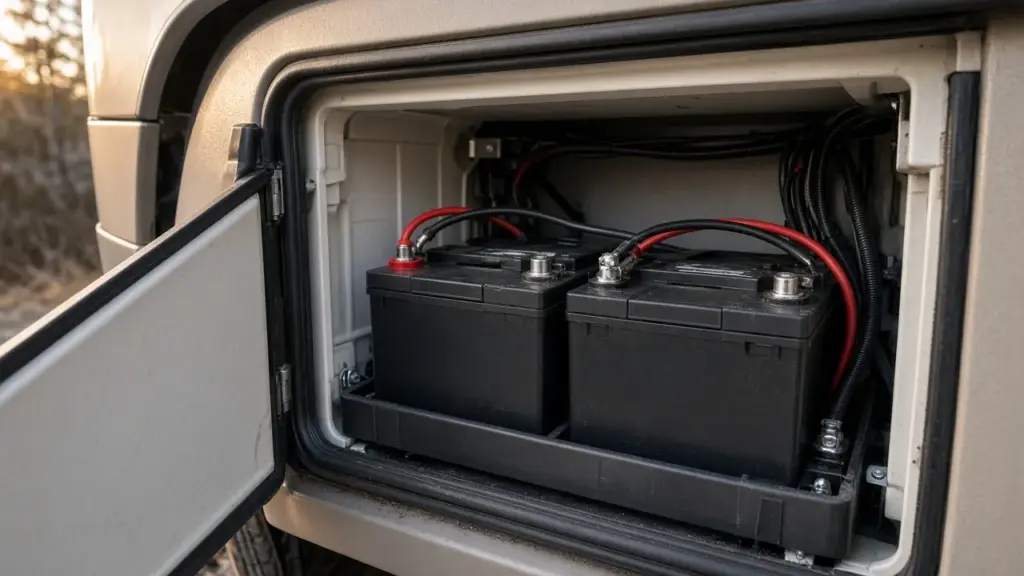
When you are plugged into shore power at a long-term site, it is easy to forget your RV batteries. After all, the pedestal is powering everything. But batteries still play an important role, and long periods on shore power can shorten their life if they are not maintained. A dead or damaged battery can also leave you stuck when you need to move or when the power goes out.
This guide explains how to care for RV batteries when you are plugged in long-term. It is general information. Always follow your RV, battery, and charger manufacturers’ instructions, and consult a qualified technician if you are unsure. For a full maintenance calendar, see our pillar on RV maintenance for full-time residents.
House Batteries vs. Chassis Batteries
Most RVs have two battery systems:
- House batteries power 12-volt systems in the living area, such as lights, water pumps, fans, slide motors, and control boards.
- Chassis batteries start the engine in motorhomes and power vehicle systems.
Towable RVs usually have only house batteries. Both types need attention during long stays.
Why Batteries Matter on Shore Power
Even on shore power, batteries:
- Help stabilize 12-volt systems
- Provide backup during power outages
- Power slides, leveling systems, and some safety devices
- Keep the propane detector and other safety systems running if shore power fails
A battery in poor condition can cause strange electrical behavior or fail when you need it most.
Know Your Battery Type
Common RV battery types include:
- Flooded lead-acid batteries, which need periodic water checks
- AGM batteries, which are sealed and do not need water
- Lithium batteries, which have their own charging requirements and built-in management systems
Your maintenance routine depends on battery type. Check labels and your owner’s manual.
Charging on Shore Power
Your RV’s converter or inverter-charger charges house batteries while plugged in. Some older converters may overcharge or undercharge certain battery types during long periods on shore power. Ask a technician whether your charger is suited to your battery type and long-term use. Many modern chargers use multi-stage charging designed for long connections.
Checking Water Levels in Flooded Batteries
Flooded lead-acid batteries lose water over time, especially in heat. To check:
- Wear eye protection and gloves.
- Turn off chargers and disconnect loads as recommended.
- Remove the cell caps.
- Check that the plates are covered.
- Top up with distilled water only, to the recommended level.
- Replace caps securely.
Never overfill. Check more often during Texas summers, when heat speeds water loss.
Cleaning Terminals
Corrosion on battery terminals can reduce performance. Periodically:
- Inspect terminals for white or greenish buildup
- Disconnect cables following the correct sequence in your manual
- Clean terminals with a battery terminal cleaner or a manufacturer-approved method
- Reconnect securely and consider a protective terminal spray
Battery Disconnect Switches
Many RVs have battery disconnect switches. Learn what your switch does. In some RVs, turning off the disconnect while plugged in stops the batteries from charging. In others, it simply isolates the batteries from loads. Check your owner’s manual so you do not accidentally leave batteries uncharged for months.
Chassis Battery Care for Motorhomes
Motorhome chassis batteries can drain slowly while parked due to small loads from vehicle electronics. Options include:
- A charging system that maintains the chassis battery from shore power, if your RV has one
- A battery maintainer designed for your battery type
- Starting the engine periodically, following manufacturer guidance
Heat and Batteries
Texas heat is hard on batteries. High temperatures speed up chemical reactions and water loss. Help your batteries by:
- Checking water levels more often in summer
- Keeping battery compartments ventilated
- Choosing a covered site when possible; eight of our ten sites are covered
Signs of a Failing Battery
- Lights dimming or flickering
- Slides or jacks moving slowly
- Batteries that will not hold a charge
- Bulging or cracked cases
- Strong sulfur smell
- Excessive heat from the battery
If you notice these signs, consult a technician. Damaged batteries can be hazardous.
Batteries and Power Outages
When the pedestal loses power, your batteries become your backup. Healthy batteries keep essentials running for a while. Our post on flash flooding around Houston discusses storms that often cause outages, and good battery care helps you ride them out.
Safety Around Batteries
- Keep sparks and flames away from batteries
- Wear eye protection and gloves
- Ventilate battery compartments
- Recycle old batteries properly; never throw them in household trash
Battery Work at a Long-Term Park
Battery maintenance is routine RV care. Keep the work tidy and dispose of old batteries properly. At our park, extensive mechanic work is not allowed, so major electrical repairs should be done by a technician or at a shop. Our park rules cover what is allowed.
Adding Battery Checks to Your Routine
- Monthly: inspect batteries and terminals; check water in flooded batteries
- Seasonally: clean terminals and test battery condition
- Before moving: confirm chassis and house batteries are charged
- After outages: check battery health
Include battery care with other routines like tire care, water heater maintenance, and AC filter and coil cleaning.
Budgeting for Battery Replacement
Batteries wear out over time, even with good care. Replacing a set of house batteries can be a significant expense, especially if you upgrade to a different battery type. Include eventual battery replacement in your maintenance fund. Keep a note of when you installed your current batteries and how they have performed. If you notice declining performance, start planning for replacement before a failure leaves you without backup power during a storm or outage. Planning ahead lets you compare options and avoid rushed decisions.
Understanding Parasitic Loads
Even when you are not using anything, some RV systems draw small amounts of power from the batteries. These are called parasitic loads. Examples include propane and carbon monoxide detectors, stereo memory, control boards, and clocks. On shore power, the charger replaces this draw. But if the charger fails, a breaker trips, or you turn off the disconnect by mistake, parasitic loads can slowly drain batteries over days or weeks. Deeply discharged batteries, especially lead-acid types, can be permanently damaged. Checking your battery monitor or voltage regularly helps you catch charging problems before they cause harm. Some owners install a battery monitor that shows state of charge at a glance, which makes spotting problems much easier.
Keeping a Battery Log
Write down the battery type, install date, and results of each check. Over time, the log shows how your batteries are aging and helps a technician diagnose problems.
Frequently Asked Questions
Do RV batteries need care if I am always plugged in?
Yes. Charging systems, heat, water loss, and corrosion can all affect batteries on long-term shore power.
How often should I check water in flooded RV batteries?
Many owners check monthly, and more often in Texas summer heat. Use distilled water only.
Does my battery disconnect switch stop charging?
It depends on the RV. In some models it does. Check your owner’s manual.
What are signs my RV battery is failing?
Dimming lights, slow slides or jacks, poor charge holding, bulging cases, sulfur smells, or excessive heat.
Comfortable Long-Term Living
Magnolia’s Finest is a small, gated long-term park in Magnolia, TX, with covered sites and cement pads. Explore our amenities to learn more.
Check Availability or call or text (281) 205-1959
Magnolia’s Finest RV Park · 32020 Old Hempstead Rd, Magnolia, TX 77355 · Contact us