
Temperature Monitoring for Pets Inside an RV
January 4, 2026 · By Magnolia RV Park
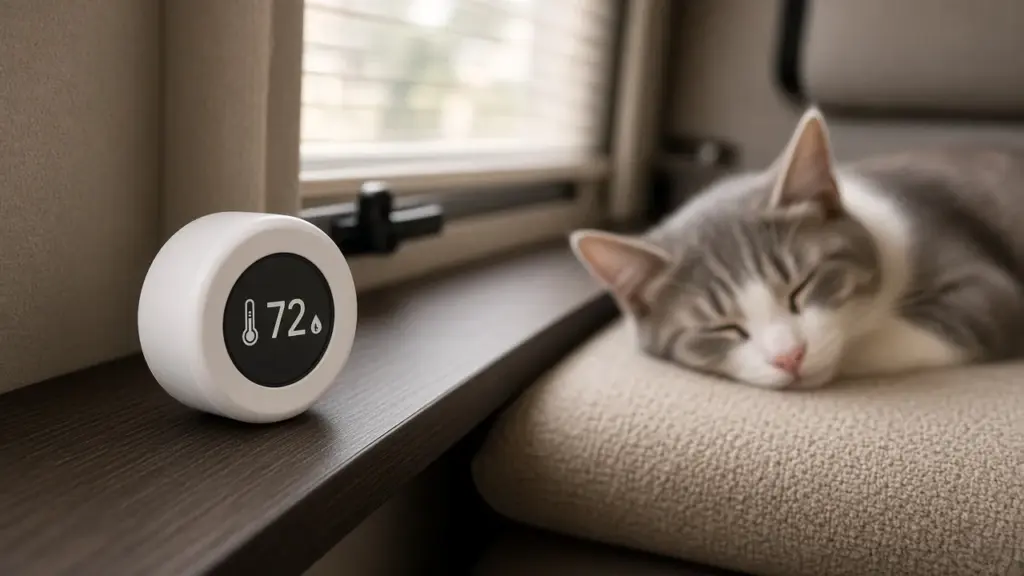
When you leave your pets inside your RV, their safety depends on the temperature staying comfortable. In Southeast Texas, where summer heat and humidity are intense and power outages can happen during storms, the inside of an RV can become dangerously hot surprisingly fast if the air conditioner stops. A temperature monitor is one of the most important tools for pet owners living in RVs.
This guide explains why temperature monitoring matters, how monitors work, and how to build a backup plan. For a broader guide to pets in RVs, see our pillar on long-term RV living with dogs and cats.
Why Temperature Monitoring Matters
RVs heat up quickly because they are smaller and less insulated than houses. If the air conditioner fails, a breaker trips, or park power goes out, interior temperatures can rise rapidly on a hot day. Pets cannot open windows or leave, and heatstroke can be life-threatening.
At our park, the park is not responsible for pets left in the RV. Owners must plan carefully. Dogs live primarily inside the RV at our park and may never be left outside unattended, so indoor temperature control is essential. Our post on why pets can’t be left outside unattended explains that rule.
How Temperature Monitors Work
RV pet temperature monitors typically:
- Measure inside temperature, and sometimes humidity
- Send alerts to your phone when temperatures go outside a range you set
- Alert you to power loss at the RV
- Connect through cellular networks or Wi-Fi
Cellular-based monitors can work even if Wi-Fi goes down during a power outage, which is important. Wi-Fi-based monitors depend on a router that may lose power. Some monitors include battery backup for this reason.
Choosing a Monitor
When choosing a monitor, consider:
- Connection type: cellular, Wi-Fi, or both
- Battery backup so it keeps working during outages
- Power loss alerts
- Customizable temperature ranges
- Multiple contacts who receive alerts
- Subscription costs, if any
A monitor that alerts you and a backup contact provides extra protection.
Setting Alert Ranges
Set temperature alerts that give you time to respond before conditions become dangerous. Consider:
- Your pets’ ages and health
- Breed-specific heat sensitivity
- How long it takes you to get back to your RV
Set alerts conservatively. It is better to receive an alert you do not need than to miss one you do.
Build a Backup Plan
A monitor only helps if you can act on alerts. Before leaving pets in the RV, have a plan:
- How quickly can you return? If you work far away, you may need a nearby backup.
- Who can help? A trusted neighbor, friend, or pet sitter who can check on pets.
- Where can pets go? A cool place such as a friend’s home or a pet boarding facility.
Share your plan with your backup contact, and make sure they know how to reach your pets safely.
Keeping the RV Cool
Monitoring is one part of pet safety. Also help your RV stay cool:
- Maintain the air conditioner, including cleaning filters regularly
- Close blinds on sunny sides
- Choose a covered site when possible; eight of our ten sites are covered
- Manage electrical load so breakers do not trip while you are away
- Use a surge protector or electrical management system to protect your AC
Note that window AC units are not permitted at our park, so your rooftop or ducted system must be reliable.
Power Outages and Storms
Summer thunderstorms and hurricane season can cause outages. On days with severe weather in the forecast, consider:
- Bringing pets with you
- Arranging a pet sitter
- Staying home if possible
Our post on severe thunderstorms and RVs covers storm preparation.
Cats and Temperature
Cats are also at risk of overheating. Make sure cats have access to cool areas and fresh water, and include them in your monitoring plan. Our post on cats in an RV offers more tips for keeping cats comfortable.
Winter Considerations
Temperature monitoring also matters during occasional winter freezes in Southeast Texas. If the furnace stops or power goes out, the RV can get very cold. Set low-temperature alerts too. Space heaters are not permitted at our park, so rely on your RV’s built-in heating.
Daily Habits
- Check the monitor app before leaving
- Confirm the AC is running and blinds are closed
- Leave fresh water in a spill-proof bowl
- Keep your phone charged and notifications on
- Check in on the app during the day
Signs of Heat Stress in Pets
Know the signs of overheating:
- Heavy panting or drooling
- Lethargy or weakness
- Vomiting
- Bright red gums or tongue
- Collapse
If you see these signs, move your pet to a cool area, offer water, and contact a veterinarian immediately.
Two-Pet Households
If you have two pets, make sure both have access to cool areas and water. Our post on two-pet limits at RV parks discusses planning a household with multiple pets. At our park, up to two pets are allowed.
Arrival Days and Moving
Travel days can be hard on pets in hot weather. Our post on arrival day at an RV park explains why arriving earlier in the day is safer, including for pets who may be in the RV during setup. Keep the RV cool before pets go inside.
Testing Your Monitor Regularly
A monitor is only useful if it works when you need it. Test it regularly. Check that alerts arrive on your phone and your backup contact’s phone. If your monitor has a battery backup, confirm the battery is charged. Unplug the monitor briefly to make sure the power-loss alert works. Verify that the temperature reading matches another thermometer in the RV. Update contact information if your backup person changes. Put a monthly reminder on your calendar so testing becomes routine rather than an afterthought.
Planning Around Work Schedules
Working residents often leave pets in the RV for long stretches. On workdays, think through what happens if an alert arrives while you are in a meeting, on a job site, or driving. Keep your phone where you will notice alerts. Tell a coworker or supervisor that you may occasionally need to step away for a pet emergency. If your job makes it hard to respond quickly, arrange a reliable backup person who lives or works close to the park. On the hottest days, or when storms are forecast, consider a pet daycare or sitter. A little extra planning on high-risk days can prevent a tragedy.
Frequently Asked Questions
Why do I need a temperature monitor for pets in my RV?
RVs heat up quickly if the AC fails or power goes out. A monitor alerts you so you can respond before conditions become dangerous.
Should I choose a cellular or Wi-Fi monitor?
Cellular monitors can keep working when Wi-Fi goes down during outages. Battery backup is also important.
Is the park responsible for my pets inside my RV?
No. At our park, the park is not responsible for pets left in the RV.
What should I do if I get a high-temperature alert?
Return immediately or contact your backup person, move pets to a cool area, and check for heat stress.
A Pet-Friendly Home Base
Magnolia’s Finest welcomes friendly pets within clear rules in a small gated park in Magnolia, TX. Review our park rules and FAQ page.
Check Availability or call or text (281) 205-1959
Magnolia’s Finest RV Park · 32020 Old Hempstead Rd, Magnolia, TX 77355 · Contact us