
Heat Safety for People Living in RVs
April 24, 2026 · By Magnolia RV Park
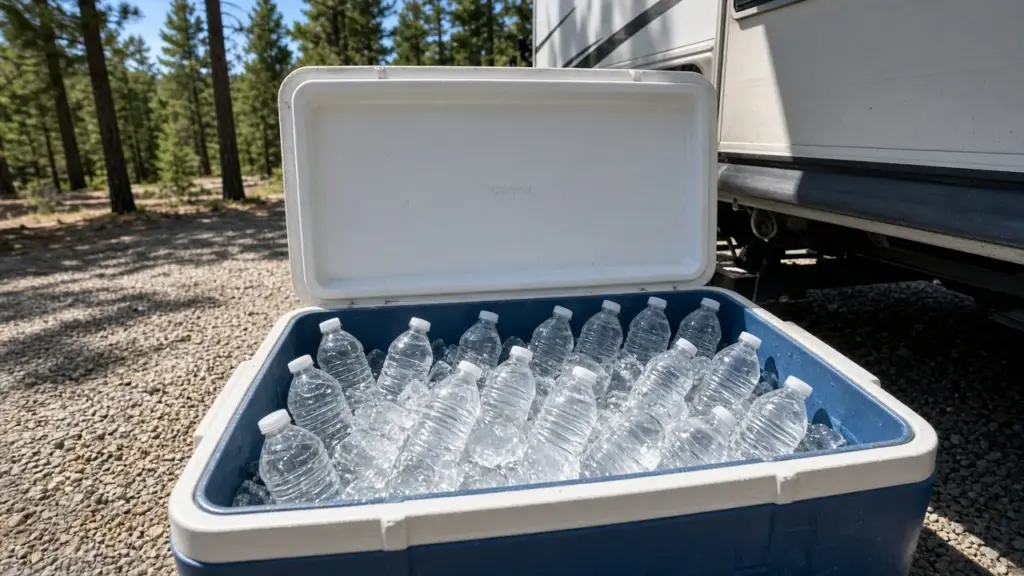
Summer in Southeast Texas is long, hot, and humid. For people who live in RVs full time, heat is not just uncomfortable. It can become a real health risk if you are not prepared. An RV has thinner walls than a house, heats up quickly in direct sun, and depends heavily on its air conditioner and electrical service.
This guide covers heat safety for RV residents: how to recognize heat illness, how to keep your RV cooler, how to protect yourself outdoors, and what to do if your AC stops working. For a full-year view of the local climate, see our pillar, Texas Weather and Your RV: A Year-Round Guide for Montgomery County.
Why Heat Is Different in an RV
A house has thick insulation, a large volume of air, and shade from surrounding structures. An RV has much less of all of those. On a sunny afternoon, an RV parked in direct sun can heat up quickly, and once the interior gets hot, it takes a while for the AC to catch up.
Humidity makes things worse. In the Houston area, high humidity reduces your body’s ability to cool itself through sweat. A temperature that feels manageable in a dry climate can be dangerous here.
That is why covered sites are so valuable. At Magnolia’s Finest, 8 of our 10 sites are covered, which shades the roof and reduces heat load significantly. Even with a covered site, though, good habits matter.
Know the Warning Signs of Heat Illness
Heat illness can develop gradually or suddenly. Knowing the signs helps you act early.
Heat Exhaustion
Common signs of heat exhaustion include heavy sweating, cool and clammy skin, weakness, dizziness, headache, nausea, muscle cramps, and a fast, weak pulse. If you notice these signs, move to a cooler place, loosen clothing, sip water, and use cool, damp cloths. Seek medical care if symptoms get worse or last more than an hour.
Heat Stroke
Heat stroke is a medical emergency. Signs can include a very high body temperature, hot and red skin that may be dry or damp, confusion, slurred speech, a rapid strong pulse, or loss of consciousness. Call 911 immediately and try to cool the person down while waiting for help.
These are general guidelines, not medical advice. If you have health conditions or take medications that affect heat tolerance, talk with your doctor about how to stay safe.
Keep Your RV Cooler
A cooler RV is safer and more comfortable. Here are practical steps residents use.
Maintain Your Air Conditioner
Clean or replace AC filters regularly, especially during heavy summer use. Have the unit serviced before summer if it has not been checked recently. Listen for unusual noises and watch for weak airflow, which can signal a problem.
Block the Sun
Close shades and curtains on the sunny side during the hottest part of the day. Reflective shades and insulated window coverings help a lot. Our post on window coverings and insulation for heat control explains options. Note that foil on windows is not allowed at our park.
Reduce Indoor Heat
Cook during cooler hours, use low-heat appliances, and run the vent fan when cooking. Turn off lights and electronics you are not using. Keep the fridge and freezer doors closed as much as possible.
Protect the Roof and Seals
Sun damages RV roofs, seals, and tires over time, and damaged seals let heat and humidity in. Our post on sun damage to RV roofs, seals, and tires covers inspection and care.
Manage Electrical Load
Running the AC on a hot day uses a lot of power. Avoid running several high-draw appliances at the same time as the AC. Electric service is confirmed per site at our park, so ask about your site. Window AC units and extra units are not allowed, so your RV’s built-in system needs to be in good condition.
Protect Yourself Outdoors
Time outside also carries risk, especially during the middle of the day.
- Hydrate throughout the day. Drink water before you feel thirsty, and limit alcohol and heavy caffeine in extreme heat.
- Time outdoor tasks. Do chores, walks, and errands in the morning or evening.
- Dress for heat. Wear light-colored, loose, breathable clothing and a wide-brimmed hat.
- Use sunscreen. Sunburn reduces your body’s ability to cool itself.
- Take breaks. If you work outdoors, rest in shade or air conditioning regularly.
Our laundry room is air-conditioned, but it is meant for laundry, not as a cooling center. Plan to cool down inside your own RV or at a public air-conditioned place if needed.
Protect Pets From Heat
Pets are especially vulnerable in RVs during summer. Our park is not responsible for pets left in the RV, so owners must make sure their AC is reliable and pets are safe. Walk dogs in the early morning or evening, test pavement with your hand, and provide plenty of water. Our post on exercising dogs in the Texas heat has more tips.
Consider a temperature monitor that sends alerts to your phone if the RV gets too hot while you are away.
Plan for AC Failures and Power Outages
Even well-maintained systems can fail, and summer storms can cause power outages. Plan ahead:
- Know where you would go to cool off, such as a friend’s home, a public library, or a shopping center.
- Keep a battery-powered fan and extra water on hand.
- Keep your phone charged and have a portable battery pack.
- Know who to call for AC repair.
- If a park-provided electrical pedestal is the problem, report it to management rather than trying to fix it yourself.
During extreme heat events, check local news and weather alerts for cooling center information. Hurricane season runs from June 1 to November 30, and storms can cause extended outages, so have an evacuation plan too. Our post on flash flooding around Houston covers storm preparation.
Check on Neighbors
In a small community, residents look out for each other. If you have not seen a neighbor in a while during a heat wave, a quick knock or text can make a difference, especially for older residents or those living alone.
Heat Safety Checklist
- AC filters cleaned and unit serviced
- Reflective shades and insulated coverings ready
- Water supply and electrolyte drinks stocked
- Battery fan and phone battery pack on hand
- Temperature monitor for pets
- Cooling plan for AC failures
- Emergency contacts saved in your phone
Frequently Asked Questions
How can I keep my RV cool in Texas summers?
Choose a covered site if possible, maintain your AC, block the sun with shades, reduce indoor heat, and manage electrical load.
Are window AC units allowed at Magnolia’s Finest?
No. Window AC units are not allowed. Residents rely on their RV’s built-in air conditioning.
What are the signs of heat stroke?
Signs can include a very high body temperature, confusion, slurred speech, a rapid pulse, or loss of consciousness. Call 911 immediately.
What should I do if my AC fails?
Move to a cooler place, hydrate, use a battery fan, and contact a repair service. Report any park-provided electrical issues to management.
Is the park responsible for pets left in the RV?
No. Owners are responsible for keeping pets safe, including making sure their AC is working.
Stay Cool at Magnolia’s Finest
Magnolia’s Finest RV Park offers mostly covered sites on cement pads and an air-conditioned laundry room. Read our FAQ, see our amenities, or check availability.
Check Availability or call or text (281) 205-1959
Magnolia’s Finest RV Park · 32020 Old Hempstead Rd, Magnolia, TX 77355 · Contact us