
Window Coverings and Insulation for RV Heat Control
April 11, 2026 · By Magnolia RV Park
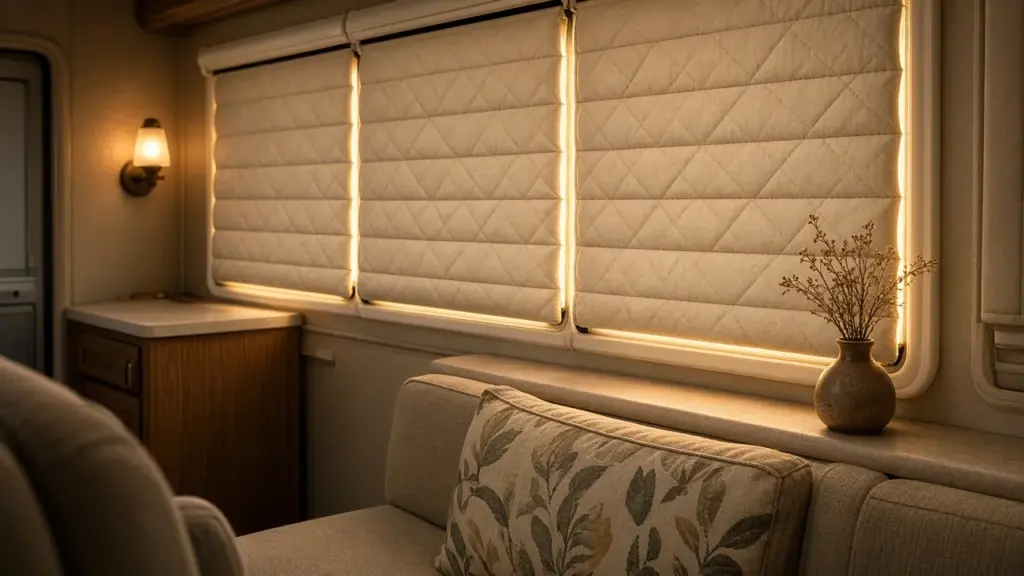
Windows are one of the biggest sources of heat gain in an RV. On a sunny Texas afternoon, sunlight streaming through glass can overwhelm even a strong air conditioner. Good window coverings and insulation make a big difference in comfort, energy use, and how hard your AC has to work. The right choices also protect interiors from fading and help with privacy.
This guide explains how window coverings and insulation help control heat in an RV. For a year-round weather overview, see our guide on Texas weather and your RV.
Why Windows Matter So Much
RV windows are often single-pane or lightly insulated. They let in sunlight and heat and let cool air escape. Large windows and windshields on motorhomes can be especially challenging. Blocking heat at the windows is one of the most effective ways to keep an RV cool.
Park Rules on Window Coverings
At Magnolia’s Finest, foil on windows is not allowed, and window AC units are not allowed. Foil can look unsightly and can trap heat against glass. Instead, residents use shades, curtains, and insulated coverings designed for RVs.
Reflective Shades
Reflective shades designed for RVs bounce sunlight away before it heats the interior. Many are cut to fit specific windows and attach with suction cups or clips. They are especially helpful on windshields and large side windows.
Insulated Curtains
Thermal or blackout curtains add a layer of insulation. They help block heat in summer and retain warmth in winter. Blackout curtains are also helpful for daytime sleepers.
Cellular Shades
Cellular or honeycomb shades trap air in their structure, providing insulation. Some RVs come with day-night shades that offer privacy and light control.
Window Film
Some residents use approved window films that reduce heat and UV while allowing light. Check with management before applying film, and never use foil.
Exterior Shade Screens
Exterior shade screens block sun before it hits the glass, which can be more effective than interior coverings. Ask management before installing exterior screens, since items on the outside of your RV may be subject to park rules.
Seal Leaks Around Windows
Leaky window seals let hot, humid air in. Inspect seals and condition rubber regularly. Sun damage can harden seals over time; our post on sun damage to RV roofs, seals, and tires explains how to spot wear.
Roof Vent Insulation
Roof vents and skylights let in a lot of heat. Vent insulators or covers can reduce heat gain while still allowing ventilation when needed.
Placement and Timing
Close shades on the sunny side of the RV during the hottest part of the day. Open shades on the shady side for natural light. Adjust coverings as the sun moves.
Covered Sites
Covered sites reduce heat on your roof and upper walls. At our park, 8 of our 10 sites are covered, and all sites are on cement pads. Combining cover with good window coverings makes a noticeable difference.
Air Conditioning Efficiency
Blocking heat at the windows helps your AC keep up. Keep AC filters clean and coils maintained. A well-insulated RV cycles the AC less often, reducing wear and energy use.
Humidity Control
Keeping the RV cool also helps control humidity. Our post on humidity and mold prevention in a Gulf Coast RV explains how to manage moisture, including condensation on windows.
Winter Use
Window coverings also help in winter. Insulated curtains reduce heat loss during cold snaps. Space heaters are not allowed at our park, so keeping heat in with good coverings helps your furnace work efficiently.
Pets and Heat
Pets inside RVs depend on a cool interior. Window coverings help keep temperatures safe while you are away. Our post on exercising dogs in the Texas heat covers heat safety for pets, and remember the park is not responsible for pets left inside RVs.
Storm Season
During storms, secure window coverings and check seals afterward. Our post on spring storm season checklist covers preparation.
Choosing Coverings for Different Windows
Not every window needs the same treatment. The windshield of a motorhome often benefits most from a fitted reflective shade, since it is large and angled toward the sun. Bedroom windows may need blackout curtains for sleep. Kitchen windows might use light-filtering shades that let in daylight while cutting glare. Small bathroom windows can use privacy film or simple shades. Matching coverings to each window’s purpose gives you the best balance of comfort, light, and privacy.
Measuring and Fitting
Well-fitted coverings work better than loose ones. Measure each window carefully, including the frame, before buying. Gaps around the edges let heat through. Custom-cut shades cost more but often perform better than generic sizes. Secure coverings so they do not sag or fall, and check fittings periodically.
Budget-Friendly Options
Effective heat control does not have to be expensive. Start with the windows that get the most afternoon sun, and add coverings to others over time. Inexpensive blackout curtains and reflective windshield shades provide a big improvement for a modest cost.
Doors and Entry Areas
Entry doors, especially those with windows, can let in a surprising amount of heat. A fitted shade or curtain on the door window helps. Check the door’s weatherstripping for gaps, since hot air can leak in around a poorly sealed door. Keep the door closed as much as possible on hot afternoons, and consider a screen door so you can ventilate in the evening without letting in insects.
Flooring and Heat
Sunlight falling on floors heats them, and that heat radiates into the RV. Rugs can help insulate floors from heat coming up from below, and keeping shades drawn during the day reduces how much the floor absorbs. In winter, rugs also help keep floors warmer.
Measuring Results
A simple indoor thermometer helps you see what works. Note the inside temperature on a hot afternoon before and after adding coverings. Many residents are surprised by how many degrees good shades can save. Tracking results also helps you decide which windows to upgrade next.
Ventilation at Night
When evenings cool off, especially in spring and fall, open windows and run roof vent fans to push hot air out. Close up again before the morning sun heats the RV. This simple rhythm can reduce how long your AC needs to run.
Small Steps Add Up
Each window you cover and each seal you fix reduces heat a little. Together, these small improvements make a big difference in summer comfort.
Frequently Asked Questions
Can I put foil on my RV windows at Magnolia’s Finest?
No. Foil on windows is not allowed. Use reflective shades, curtains, or other approved coverings.
Can I use a window AC unit?
No. Window AC units are not allowed at our park.
Do covered sites help with heat?
Yes. Covered sites reduce heat on your roof and upper walls. Eight of our 10 sites are covered.
Do window coverings help in winter?
Yes. Insulated curtains reduce heat loss during cold weather.
Stay Cool in Magnolia
Magnolia’s Finest RV Park offers covered cement-pad sites in a small, gated long-term community. Explore our amenities, read the FAQ, or check availability.
Check Availability or call or text (281) 205-1959
Magnolia’s Finest RV Park · 32020 Old Hempstead Rd, Magnolia, TX 77355 · Contact us