
Choosing and Using a Dehumidifier in an RV
September 1, 2026 · By Magnolia RV Park
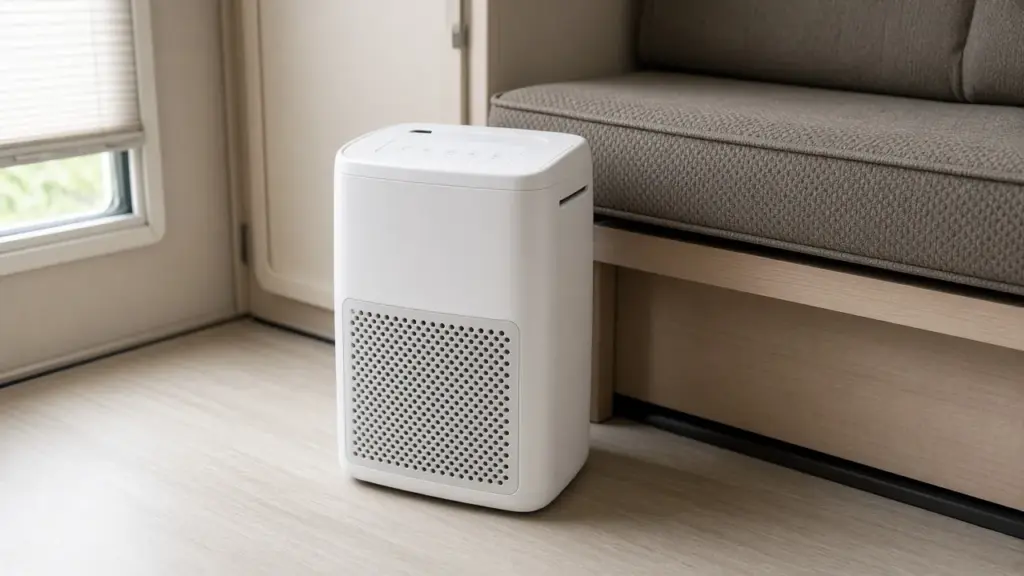
Humidity is a constant companion in Southeast Texas. For RV residents, high humidity can mean condensation on windows, damp bedding, musty smells, and even mold. Because RVs are small, tightly sealed spaces, moisture from cooking, showering, and breathing builds up quickly. A dehumidifier is one of the most effective tools for keeping your RV dry and comfortable.
This guide covers how to choose and use a dehumidifier in an RV. For a broader look at the local climate, see our pillar, Texas Weather and Your RV: A Year-Round Guide.
Why Humidity Is a Problem in RVs
RVs have limited space and airflow. Everyday activities add moisture to the air:
- Cooking, especially boiling water
- Showering
- Washing dishes
- Breathing, especially with multiple people and pets
- Drying clothes indoors
When warm, moist air meets cool surfaces, condensation forms. Over time, excess moisture can lead to:
- Mold and mildew
- Musty odors
- Damaged wood, fabric, and electronics
- Peeling wallpaper or trim
- Health concerns, especially for people with allergies or asthma
Signs You Need a Dehumidifier
- Condensation on windows, especially in the morning
- Musty smells
- Damp bedding or clothing
- Visible mold or mildew
- Water droplets on walls or ceilings
- A sticky, clammy feel indoors
Types of Dehumidifiers
Compressor Dehumidifiers
These work like small air conditioners, pulling moisture from the air using a cooling coil. They are effective in warm, humid conditions, making them a good fit for much of the year in Southeast Texas.
Desiccant Dehumidifiers
These use a moisture-absorbing material to pull water from the air. They can work well in cooler conditions and tend to be quieter, but may use more energy in some cases.
Moisture Absorbers
Small, non-electric moisture absorbers use materials that absorb water. They are useful in closets and cabinets but are not a substitute for a dehumidifier in the main living area.
Choosing the Right Size
Dehumidifiers are rated by how much moisture they remove per day. For most RVs, a small or compact unit is sufficient. Consider:
- The size of your RV
- How many people and pets live there
- How humid your climate is
- Whether you have persistent moisture problems
A unit that is too small will struggle, while one that is too large takes up valuable space.
Features to Look For
- Auto shutoff when the water tank is full
- Continuous drain option for connecting a hose
- Humidistat to set a target humidity level
- Quiet operation, especially for sleeping areas
- Compact size for RV living
- Energy efficiency
Placement Tips
- Place the dehumidifier in a central location or where moisture is worst, such as near the bathroom or kitchen
- Keep it away from walls and furniture for good airflow
- Close windows and doors while it runs
- Make sure it is stable and will not tip over
Keep the dehumidifier inside your RV. Items cannot be stored on or under the site at our park.
Emptying and Draining
Empty the water tank regularly, or use a continuous drain hose if your model allows. Ask management about where drain water can go, since our park uses a septic system and has rules about site use.
Maintenance
- Clean or replace the filter regularly
- Wipe out the water tank to prevent mold
- Check the coils for dust buildup
Working With Your Air Conditioner
Your RV’s air conditioner also removes some moisture from the air. However, in very humid conditions, a dehumidifier can supplement it. Reducing humidity can make your RV feel cooler, which may reduce air conditioner strain. Our post on reducing RV air conditioner strain in Texas heat covers other tips. Remember that window AC units are not allowed at our park.
Other Ways to Reduce Humidity
- Run exhaust fans when cooking and showering
- Crack a roof vent to let moist air escape
- Use the park’s laundry room to dry clothes instead of hanging them inside
- Wipe condensation from windows
- Keep air circulating with fans
After Storms and Leaks
After a storm or leak, a dehumidifier helps dry out affected areas quickly. Our post on after the storm: inspecting your RV for damage covers what to check. If you evacuated, humidity may have built up while your RV was closed; our post on evacuating with your RV vs. leaving it behind discusses preparing an RV you leave behind.
Pets and Humidity
Pets add moisture and can contribute to odors. A dehumidifier can help keep your RV fresh. If your dog uses a crate, make sure the area stays dry and well ventilated; our post on crate training for RV life has placement tips.
Finding the Right Humidity Level
Many experts suggest keeping indoor humidity roughly between 30 and 50 percent for comfort and to discourage mold growth. A small, inexpensive hygrometer lets you monitor humidity inside your RV. Place it in your living area and check it at different times of day. You may notice humidity rising after showers, cooking, or rainy days. Using a dehumidifier with a built-in humidistat allows you to set a target level so the unit runs only when needed, saving energy and reducing noise.
Avoid drying the air too much, especially in winter, since very dry air can cause discomfort, static electricity, and dry skin. The goal is balance.
Seasonal Use
In Southeast Texas, humidity is high for much of the year, but needs change with the seasons. During summer, your air conditioner removes some moisture, but a dehumidifier may still help, especially during rainy periods. In spring and fall, when temperatures are mild and the air conditioner runs less, humidity can build up quickly, making a dehumidifier especially useful. During winter cold snaps, condensation on windows can increase as warm indoor air meets cold glass, and a dehumidifier can help reduce it.
Energy Use
Dehumidifiers use electricity, so consider energy use when choosing a model. Look for energy-efficient units and use a humidistat to avoid running the dehumidifier constantly. If breakers trip when you run the dehumidifier along with other appliances, try staggering use.
Protecting Stored Items
Moisture can damage clothing, documents, and electronics stored in closets and cabinets. Use small moisture absorbers in enclosed spaces and keep important papers in waterproof containers.
Signs Your Efforts Are Working
After a few weeks of using a dehumidifier and good ventilation habits, you should notice changes. Windows should have less condensation in the morning, musty smells should fade, and bedding and towels should feel drier. Your RV may even feel cooler and more comfortable. If problems persist despite regular dehumidifier use, look for a hidden leak or ventilation issue that may be adding moisture.
Frequently Asked Questions
Do I need a dehumidifier in my RV?
If you notice condensation, musty smells, or mold, a dehumidifier can help, especially in Southeast Texas humidity.
What type of dehumidifier is best for an RV?
Compressor dehumidifiers work well in warm, humid conditions. Choose a compact unit with auto shutoff.
Where should I put my dehumidifier?
Inside your RV, in a central spot or where moisture is worst, with good airflow.
Where can I drain dehumidifier water?
Ask management, since our park uses a septic system and has site-use rules.
Stay Comfortable in Magnolia
Explore our amenities, read our FAQ, or check availability.
Check Availability or call or text (281) 205-1959
Magnolia’s Finest RV Park · 32020 Old Hempstead Rd, Magnolia, TX 77355 · Contact us