
Crate Training for RV Life
August 25, 2026 · By Magnolia RV Park
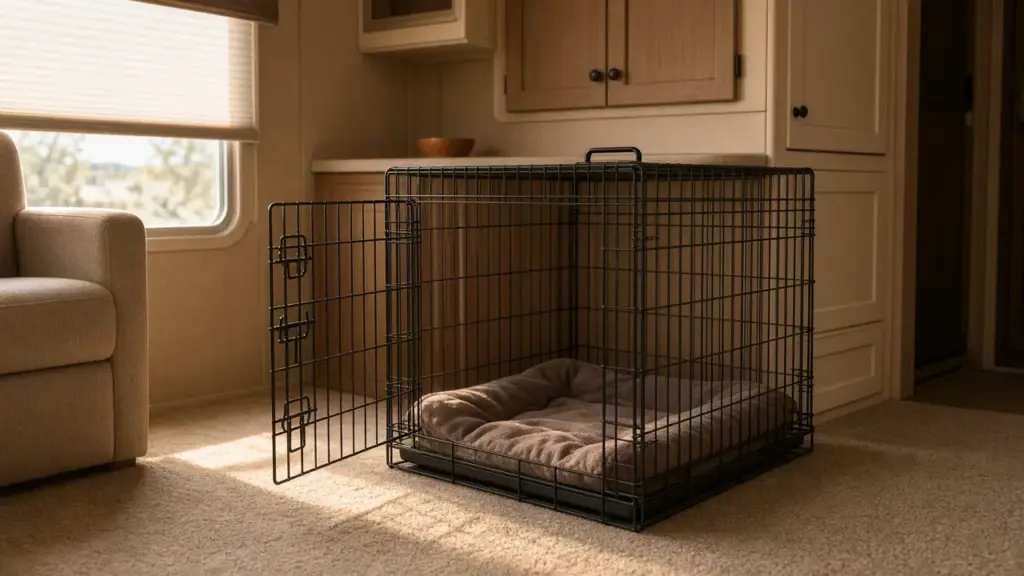
A crate can be one of the most useful tools for dog owners living in an RV. It gives your dog a safe, cozy space of their own, helps with house training, keeps them secure while you are away, and makes travel and emergencies easier. With patience and positive training, most dogs come to see their crate as a comfortable retreat rather than a punishment.
This guide covers how to crate train a dog for RV life. For a complete overview of pets in long-term RV living, see our pillar, Long-Term RV Living With Dogs and Cats: A Practical Guide.
Why Crate Training Helps in an RV
RVs are small spaces, and dogs benefit from having a defined area that belongs to them. A crate can:
- Provide a safe, quiet place to rest
- Help with house training
- Prevent chewing and accidents when you cannot supervise
- Keep your dog secure during travel
- Make evacuations faster and safer
- Reduce anxiety during storms or unfamiliar situations
Choosing the Right Crate
Size
Choose a crate large enough for your dog to stand, turn around, and lie down comfortably. For puppies, choose a crate with a divider so you can adjust the space as they grow.
Type
- Wire crates offer good ventilation and visibility and often fold flat.
- Plastic crates are enclosed and cozy, and are often used for travel.
- Soft-sided crates are lightweight but best for calm dogs who do not chew.
In an RV, consider how much space you have and where the crate will go.
Placing the Crate
Choose a spot that is:
- Away from direct sunlight and heat sources
- Out of the main walkway
- Near family activity so your dog does not feel isolated
- Well ventilated
Southeast Texas heat is a major concern. Make sure the crate is in a cool area and that your RV’s air conditioning keeps it comfortable. Window AC units are not allowed at our park, so rely on your built-in system.
Building Positive Associations
The key to crate training is making the crate a positive place.
- Introduce slowly. Leave the door open and let your dog explore.
- Use treats and toys. Toss treats inside and reward your dog for going in.
- Feed meals in the crate. This builds positive associations.
- Start with short periods. Close the door briefly while you are nearby, then gradually increase the time.
- Stay calm. Keep departures and arrivals low-key.
Never use the crate as punishment.
Managing Time Alone
Dogs should not spend excessive time in a crate. Puppies especially need frequent bathroom breaks. If you work long hours, arrange for someone to let your dog out or adjust your schedule.
When leaving your dog in the RV, make sure the temperature is safe. Consider a temperature monitor that sends alerts to your phone. The park is not responsible for pets left in the RV.
Crates and Barking
Some dogs bark or whine in their crates, especially at first. Gradual training helps. Our post on barking and quiet hours offers tips for keeping noise down. Quiet hours at our park run from 8 pm to 8 am.
Crates for Travel
When moving your RV or traveling, a secured crate keeps your dog safe. Never let pets ride loose in a towed trailer. Secure the crate in your vehicle so it does not shift.
Crates in Emergencies
During storms or evacuations, a crate-trained dog is easier to move quickly and safely. Keep your crate ready during hurricane season, which runs from June 1 to November 30. Our posts on pets during storms and evacuations and planning ahead for pet emergencies cover preparation.
After a storm, your dog may feel more secure in their crate while you inspect your RV. Our post on after the storm: inspecting your RV for damage walks through the process.
Crate Training Puppies
Puppies learn quickly with consistency. Take them out right after they leave the crate, praise them for going outside, and gradually increase crate time as they grow.
Crate Training Older Dogs
Older dogs can learn to use a crate too, though it may take longer. Be patient and move at your dog’s pace.
Park Pet Policies
At our park, each site may have up to 2 pets, and aggressive breeds are not allowed. Dogs live primarily inside, are leashed outside, and are never left outside unattended. Owners pick up after their pets. Crates must be kept inside the RV, since items cannot be stored on or under the site.
Making the Crate Comfortable
Add a comfortable bed or blanket, a safe chew toy, and access to water if appropriate. Some dogs like a crate cover that creates a den-like feel. Make sure it does not block airflow.
Common Crate Training Mistakes
A few common mistakes can slow progress. Moving too fast is one of the biggest. If you close the door and leave for hours before your dog is comfortable, they may become anxious and associate the crate with stress. Another mistake is letting your dog out every time they whine, which can teach them that whining works. Instead, wait for a moment of quiet before opening the door, as long as you are confident they do not need a bathroom break.
Using the crate only when you leave can also create negative associations. Encourage your dog to use the crate at other times too, such as for naps or while you are relaxing nearby. This helps the crate feel like a normal part of life rather than a signal that you are going away.
Signs Your Dog Is Comfortable
Over time, watch for signs that crate training is working. A comfortable dog may walk into the crate on their own, nap there without being asked, and settle quickly when the door is closed. They may even choose the crate as a retreat when the RV gets busy or noisy. These are signs that your dog sees the crate as their personal space.
If your dog shows signs of distress, such as excessive drooling, frantic scratching at the door, or trying to escape, slow down and go back to shorter sessions. Some dogs have separation anxiety that requires additional help. Talk with your veterinarian or a professional trainer if your dog continues to struggle.
Crates and Multiple Pets
If you have two dogs, each should have their own crate. Sharing a crate can lead to conflict and does not give each dog a personal retreat. In a small RV, plan space for both crates, or consider a crate and a gated area.
Frequently Asked Questions
How long can my dog stay in a crate?
It depends on age and needs. Puppies need frequent breaks, and adult dogs should not spend excessive time crated.
Where should I place the crate in my RV?
In a cool, well-ventilated spot away from direct sun and the main walkway.
Can I keep the crate outside?
No. Items cannot be stored on or under the site, and dogs are never left outside unattended.
How do I stop my dog from barking in the crate?
Build positive associations gradually, keep departures calm, and provide toys.
Bring Your Dog Home to Magnolia
Read our FAQ, review our park rules, or check availability.
Check Availability or call or text (281) 205-1959
Magnolia’s Finest RV Park · 32020 Old Hempstead Rd, Magnolia, TX 77355 · Contact us