
Pets During Storms and Evacuations
August 15, 2026 · By Magnolia RV Park
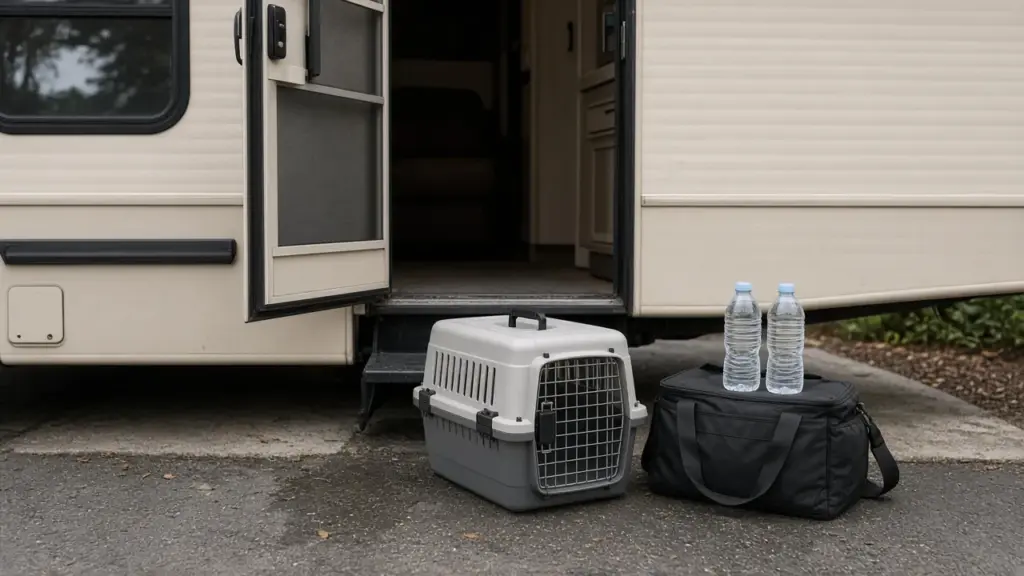
Southeast Texas storms can be intense, from summer thunderstorms to hurricanes during the season that runs from June 1 to November 30. For pets, storms can be frightening, with loud thunder, flashing lightning, and changes in air pressure. For RV residents, storms may also mean evacuating with pets on short notice. Planning ahead keeps your pets safe and makes stressful situations easier to manage.
This guide covers how to care for pets during storms and evacuations. For a complete overview of pets in long-term RV life, see our pillar, Long-Term RV Living With Dogs and Cats: A Practical Guide.
Why Storms Are Hard on Pets
Many pets are sensitive to storms. Thunder can be much louder to their ears than to ours. Some pets sense changes in barometric pressure before a storm arrives. RVs can amplify storm noise, with rain drumming on the roof and wind rocking the coach.
Signs of storm anxiety include:
- Pacing or restlessness
- Panting or drooling
- Trembling or hiding
- Whining or barking
- Trying to escape
- Destructive behavior
Helping Pets Stay Calm During Thunderstorms
Create a Safe Space
Set up a quiet, cozy spot where your pet can retreat. A covered crate, a closet, or a corner with blankets can help pets feel secure.
Reduce Noise
Close windows and blinds. Play white noise, a fan, or calm music to mask thunder.
Stay Calm Yourself
Pets pick up on your emotions. Speak in a calm voice and keep your routine as normal as possible.
Try Calming Aids
Some pets benefit from anxiety wraps, calming treats, or pheromone products. Ask your vet about options, especially for pets with severe anxiety.
Keep Pets Inside
Keep pets indoors during storms. At our park, dogs live primarily inside and are never left outside unattended. A frightened pet may bolt if startled, so keep leashes secure during bathroom breaks.
Preparing for Hurricane Season
Before hurricane season begins, prepare your pets:
- Make sure pets are microchipped and wear ID tags
- Update your contact information with the microchip company
- Keep vaccination records current and accessible
- Get pets comfortable with their carriers or crates
- Build a pet emergency kit
Pet Emergency Kit
Include:
- Food and water for several days
- Bowls
- Medications
- Leash, collar, and harness
- Carrier or crate
- Waste bags and cat litter supplies
- Vaccination and medical records
- Recent photos of your pet
- Comfort items such as a favorite blanket or toy
Our post on planning ahead for pet emergencies in an RV covers first aid and vet planning.
Evacuating With Pets
Never leave pets behind during an evacuation. If it is not safe for you, it is not safe for them.
- Decide early whether you will evacuate and where you will go
- Identify pet-friendly hotels, shelters, or friends and family who can host you
- Leave early to avoid heavy traffic and worsening weather
- Keep pets secured in carriers or on leashes during travel
- Bring your pet emergency kit
Traveling With Pets in an Evacuation
Evacuation traffic can be slow and stressful. Keep pets comfortable:
- Provide water during stops
- Never leave pets in a hot vehicle
- Take bathroom breaks in safe areas
- Keep pets secured so they cannot escape when doors open
Puppies and Senior Pets
Young and older pets may need extra care. Puppies may be more anxious and prone to accidents, while senior pets may have medical needs. Our post on raising a puppy in an RV covers puppy care.
After the Storm
After a storm, the environment may be different. Downed branches, debris, standing water, and displaced wildlife can pose hazards. Keep pets leashed and watch where they walk. Snakes and other animals may be displaced by flooding. Our post on snakes and wildlife pet safety in pine country explains what to watch for.
Check your site for debris before letting pets out. The park maintains the grounds, and clear sites help; our post on lawn care and landscaping on an RV site explains site expectations.
Heat After Storms
Power outages often follow hurricanes, and heat can be dangerous for pets. Have a plan to keep pets cool if the air conditioning is off, such as relocating temporarily. The park is not responsible for pets left in the RV.
Park Pet Policies
At our park, each site may have up to 2 pets, and aggressive breeds are not allowed. Dogs live primarily inside, are leashed outside, and are never left outside unattended. Owners pick up after their pets.
Cats Need Special Planning
Cats often react to storms by hiding in the smallest, hardest-to-reach places. In an RV, that might mean behind a couch, under a bed, or inside a cabinet. This can make evacuation difficult if you need to leave quickly. When a storm is forecast, keep your cat in a smaller area of the RV where you can easily reach them, and have the carrier ready with the door open and a familiar blanket inside.
Practice carrier training well before storm season by leaving the carrier out as a comfortable resting spot and rewarding your cat for going in. Bring a small litter box, litter, and food for the trip. Cats may refuse to eat or use the litter box during travel, so keep an eye on them and give them time to settle once you reach your destination.
Working With a Pet Sitter or Neighbor
If you work long shifts or travel for work, a storm could arrive while you are away. Arrange a trusted neighbor, friend, or pet sitter who can check on your pets or evacuate them if needed. Share your pet’s routine, medications, emergency kit location, and vet information. Make sure they know how to reach you and what your evacuation plan is. Having a backup person gives you peace of mind during storm season.
Keeping Records Accessible
Store your pet’s records on your phone and in a waterproof folder. Include photos in case your pet gets lost, along with microchip information. If you and your pet are separated during a storm, clear photos and records make reunion much more likely.
Reassurance After the Storm
Pets may remain anxious for a while after a storm passes. Return to normal routines as quickly as possible, offer extra attention, and give them time to adjust. Watch for injuries or signs of illness, and contact your vet if anything seems wrong.
Know Your Pet’s Triggers
Every pet reacts differently. Some dogs only fear thunder, while others react to wind or rain on the roof. Paying attention to what upsets your pet helps you prepare the right comfort measures. If anxiety is severe or getting worse, talk with your veterinarian about longer-term solutions, including behavior training and medication options that may help your pet cope.
Frequently Asked Questions
How can I calm my dog during a thunderstorm?
Create a safe space, reduce noise, stay calm, and ask your vet about calming aids.
Should I bring my pets if I evacuate?
Yes. Never leave pets behind during an evacuation.
What should be in a pet emergency kit?
Food, water, medications, a leash, a carrier, waste supplies, records, photos, and comfort items.
How many pets are allowed per site?
Up to 2 pets per site, and aggressive breeds are not allowed.
Keep Your Pets Safe in Magnolia
Review our park rules, read our FAQ, or check availability.
Check Availability or call or text (281) 205-1959
Magnolia’s Finest RV Park · 32020 Old Hempstead Rd, Magnolia, TX 77355 · Contact us