
Finding RV Plumbing Leaks Early
June 23, 2026 · By Magnolia RV Park
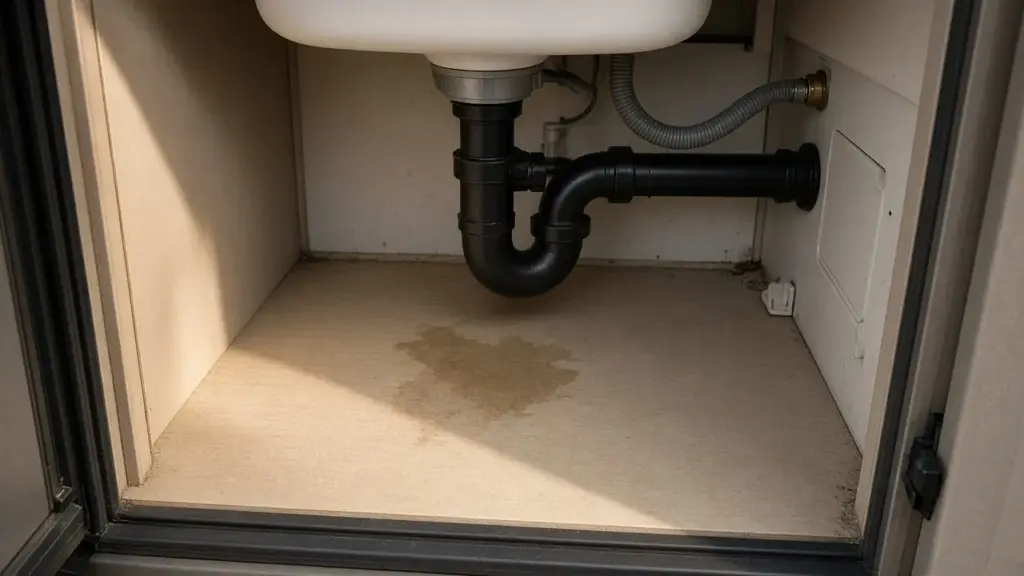
Water is one of the most destructive forces an RV can face. A small plumbing leak can go unnoticed for weeks, soaking into floors, walls, and cabinets and causing rot, mold, and expensive repairs. For full-time residents, whose plumbing runs every day, catching leaks early is one of the most valuable maintenance habits you can build.
This guide covers where RV plumbing leaks commonly happen, how to spot them early, and how to prevent them. It fits into our broader RV maintenance schedule for full-time residents.
Why RV Plumbing Is Prone to Leaks
RV plumbing systems are designed to be lightweight and flexible. They often use plastic fittings, flexible lines, and compact connections. These systems handle vibration during travel and temperature swings, and over time fittings can loosen, seals can wear, and lines can crack.
Full-time use adds wear. Faucets, toilets, water pumps, and water heaters run daily. Freeze events, even occasional ones in Southeast Texas, can crack lines or fittings if plumbing is not protected.
Common Leak Locations
Check these areas regularly:
- Under sinks: Look at supply lines, faucet connections, and drain traps.
- Behind and under the toilet: Check the water supply connection and the seal at the base.
- Around the shower or tub: Look for failed caulk and leaks at the drain and fixtures.
- Water heater: Check connections, the pressure relief valve, and the drain plug.
- Water pump: Inspect fittings and the pump housing.
- Water filter housings: Check seals and connections.
- Fresh water inlet: Where your hose connects to the RV.
- Outdoor shower or exterior faucets, if equipped.
- Low-point drains: Make sure valves are closed and caps are secure.
- Holding tank valves and connections: Check for drips at the sewer outlet.
Early Warning Signs
Leaks often reveal themselves in subtle ways:
- Damp or discolored flooring or carpet
- Soft spots in floors or walls
- Musty odors
- Water stains inside cabinets
- Mold or mildew in unexpected places
- The water pump cycling on when no faucets are running
- Water pooling under the RV
- A higher-than-normal water bill, if water is metered
If you notice any of these signs, investigate promptly.
The Pump Test
If your RV has a fresh water tank and pump, a simple test can reveal hidden leaks:
- Fill the fresh water tank.
- Disconnect from city water.
- Turn on the water pump and let the system pressurize.
- Make sure all faucets are off.
- Listen for the pump. If it cycles on periodically when no water is being used, there may be a leak somewhere.
This test works because a leak causes pressure to drop, which triggers the pump.
Regular Visual Checks
Make leak checks part of your monthly routine:
- Open cabinets under sinks and look for moisture
- Feel around connections with a dry paper towel
- Check behind the toilet and around the shower
- Inspect the water heater compartment
- Look under the RV for drips or puddles
A flashlight and a dry paper towel are simple tools for spotting slow leaks.
Protect Plumbing From Freezing
Southeast Texas winters are usually mild, but hard freezes do happen. Frozen water expands and can crack lines, fittings, and fixtures. Protect your plumbing during freezes by:
- Insulating or heating exposed hoses
- Using your RV’s furnace to warm ducted underbelly areas
- Keeping cabinet doors open to let warm air reach pipes
- Disconnecting and draining the hose during hard freezes, if needed
Space heaters are not allowed at our park, so rely on your RV’s built-in heating and insulation.
Water Pressure and Regulators
High water pressure can stress RV plumbing and cause leaks. Use a water pressure regulator at the spigot to protect your system. Check the regulator periodically to make sure it is working properly.
Report Park Hookup Issues
If you notice a leak at the park’s water spigot or sewer inlet, report it to management rather than trying to fix it yourself. Tampering with hookups is not allowed at our park. Residents can use the maintenance request form on the Residents page or text (281) 205-1959.
Septic-Safe Practices
Our park uses a septic system. Using septic-safe toilet paper and cleaning products, and avoiding grease and wipes down drains, protects both the park’s system and your RV’s plumbing.
Related Areas to Check
Leaks do not only come from plumbing. Roof seals, windows, and slide-outs can let rainwater in. Our post on slide-out maintenance covers slide seals. After storms, check for damage from falling limbs; see our post on falling limbs and trees.
If you are preparing to move, check plumbing along with running gear. Our posts on travel trailer bearings and brakes and fifth wheel hitch and landing gear care cover other pre-move checks.
When to Call a Professional
Minor fixes like tightening a fitting or replacing a faucet washer may be simple. But if you find water damage, cannot locate a leak, or need to replace lines inside walls or floors, call a qualified RV technician. Extensive mechanic work is not allowed at our park, so plan major repairs accordingly.
Building a Leak-Check Habit
The best defense against water damage is regular attention. Many residents tie leak checks to another monthly task, such as testing detectors or paying rent, so they do not forget. A quick five-minute walk through the RV, opening cabinets and looking under fixtures, is often enough to catch a problem early.
Keep a small kit on hand with a flashlight, paper towels, a basic wrench, plumber’s tape, and a few common replacement parts for your RV. Having supplies ready makes it easy to handle small fixes right away rather than letting a drip continue for days.
What to Do When You Find a Leak
If you discover a leak, act quickly to limit damage. Turn off the water supply at the spigot or shut off the water pump. Dry the area with towels and open cabinets or windows to help it air out. Identify the source if you can, and take photos for your records or insurance.
Small leaks at accessible fittings may be fixed by tightening a connection or replacing a washer. If water has soaked into floors or walls, run fans or a dehumidifier to dry the area thoroughly, and watch for signs of mold in the days that follow. Hidden moisture can continue causing damage long after the leak is stopped.
Keep Records
Note where and when leaks occur and what was done to fix them. Records help you spot recurring problems and give technicians useful history.
Frequently Asked Questions
How can I tell if my RV has a plumbing leak?
Look for damp floors, soft spots, musty odors, water stains, and a water pump that cycles when no faucets are on.
Where do RV plumbing leaks usually happen?
Under sinks, behind toilets, around showers, at the water heater, pump, filter housings, and fresh water inlet.
Can I fix a leak at the park’s water spigot?
No. Report it to management. Tampering with hookups is not allowed.
How do I protect RV plumbing from freezing?
Insulate or heat exposed hoses, use your furnace, open cabinet doors, and disconnect hoses during hard freezes if needed.
Keep Your Home Dry at Magnolia’s Finest
Magnolia’s Finest RV Park offers cement-pad sites, most of them covered, in a small, gated long-term community. Review our park rules, see our amenities, or check availability.
Check Availability or call or text (281) 205-1959
Magnolia’s Finest RV Park · 32020 Old Hempstead Rd, Magnolia, TX 77355 · Contact us