
Fifth Wheel Hitch and Landing Gear Care
May 31, 2026 · By Magnolia RV Park
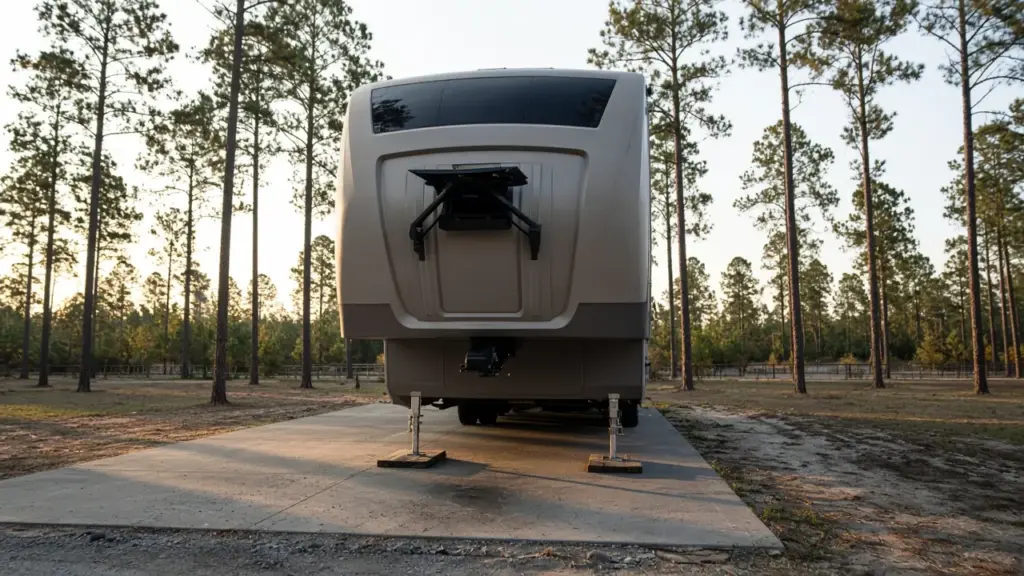
Fifth wheel trailers are popular with full-time residents because they offer spacious layouts, high ceilings, and a comfortable living setup. When a fifth wheel sits on a long-term site for months, its landing gear supports the front of the trailer day after day, and the hitch and pin box wait for the next move. These components need regular care to stay safe and reliable.
This guide covers fifth wheel hitch and landing gear care for residents who are parked long-term. It fits into our broader RV maintenance schedule for full-time residents.
Why These Components Matter
The landing gear holds up the front of your fifth wheel when it is not connected to your truck. If landing gear fails, the front of the trailer can drop, causing serious damage and safety risks. The hitch and pin box connect your trailer to your truck when you move, and problems with either can lead to a dangerous situation on the road.
Even if you do not plan to move soon, circumstances can change. A new job, a family need, or an approaching storm may require you to hitch up quickly. Keeping these components in good shape ensures you are ready when that day comes.
Understanding Landing Gear
Most fifth wheels have two front landing gear legs that extend and retract, usually powered by an electric motor. Some have manual crank systems. The legs typically include inner and outer tubes, gears, and a drive shaft that connects both legs so they move together.
Some fifth wheels also have rear stabilizer jacks or auto-leveling systems. Stabilizers reduce movement but are not designed to lift the trailer. Always follow your manufacturer’s guidance about which jacks can bear weight.
Inspect Landing Gear Regularly
Once a month, take a few minutes to inspect your landing gear:
- Look for bending or damage on the legs and mounting brackets.
- Check for rust or corrosion, especially in humid Southeast Texas.
- Inspect foot pads for cracks or damage.
- Listen when operating. Grinding, clicking, or straining noises can indicate problems.
- Check that both legs move evenly.
- Inspect wiring to the motor for damage or chewing by rodents.
If you notice any problems, have them evaluated by a qualified technician before they get worse.
Lubricate Moving Parts
Landing gear needs lubrication to operate smoothly. Many manufacturers recommend lubricating the inner legs and gearboxes periodically. Check your owner’s manual for the specific lubricant and schedule.
A common approach is to extend the legs fully, apply the recommended lubricant to the inner tubes, then retract and extend them a few times to spread it. Wipe away excess lubricant, which can attract dirt and debris.
Use Solid Support
On a long-term site, the surface under your landing gear matters. Our park’s sites are on cement pads, which provide a stable, level surface that does not shift in wet weather. That is a big advantage over dirt or gravel, where legs can sink after heavy rain.
Some residents use pads or blocks under landing gear feet to spread the load or reduce extension. Keep in mind that items cannot be stored on or under the site at our park, so check with management about what is acceptable under your landing gear and stabilizers.
Keep the Pin Box and King Pin in Shape
The king pin on your trailer’s pin box connects to your truck’s hitch. Inspect it periodically for:
- Wear, grooves, or damage on the king pin
- Cracks or damage on the pin box
- Loose or missing bolts
- Rust or corrosion
When parked, clean old grease off the king pin and consider covering it with a pin box cover or applying a light protective coating to prevent rust. Before hitching, apply fresh lubricant according to your hitch manufacturer’s recommendations, or use a lube plate if your hitch design calls for one.
Maintain the Truck Hitch
Your truck’s fifth wheel hitch also needs care:
- Keep the hitch clean and free of debris
- Lubricate the jaws and moving parts as recommended
- Check mounting bolts and rails for tightness
- Inspect for cracks, wear, or damage
- Cover the hitch when not in use to protect it from weather
A professional inspection of the hitch periodically, especially before a long trip, is a good idea.
Exercise the System
Components that sit unused can stiffen or corrode. Periodically operate your landing gear through its range of motion, following safety precautions. This helps distribute lubricant and reveals problems early. If you rarely move your fifth wheel, consider practicing a hitch-up occasionally with a technician’s guidance, so you are confident when it matters.
Our post on exercising a motorhome engine and generator covers similar ideas for motorized rigs.
Batteries and Power
Electric landing gear depends on your trailer’s 12-volt battery. A weak battery can leave the legs unable to extend or retract. Keep batteries charged and connections clean. Our post on RV furnace maintenance explains other systems that rely on 12-volt power.
Slide-Outs and Weight Distribution
Slide-outs affect weight distribution on your fifth wheel. When slides are extended, weight shifts, which can affect landing gear and stabilizers. Follow your manufacturer’s guidance for leveling and slide operation. Our post on slide-out maintenance covers seals, lubrication, and alignment.
Safety First
When working on landing gear or hitches:
- Never get under a trailer supported only by landing gear or jacks
- Chock wheels before operating landing gear
- Follow manufacturer instructions carefully
- Keep children and pets away during operation
Extensive mechanic work is not allowed at our park. Routine inspection and lubrication are fine, but plan major repairs with a qualified technician.
Propane tanks on many fifth wheels are mounted near the front. While inspecting landing gear, it is a good time to check propane connections too. Our post on propane tank safety and leak checks explains how.
Preparing for Storm Season
Hurricane season runs from June 1 to November 30. Before storm season, make sure your landing gear, hitch, and truck are ready in case you need to evacuate. Practice hitching up, check tire pressure on both truck and trailer, and keep your truck fueled.
Keep Records
Write down when you lubricate, inspect, and service your landing gear and hitch. Records help you stay on schedule and give technicians useful history when problems arise.
Monthly Checklist
- Inspect landing gear for damage, rust, and even operation
- Lubricate as recommended
- Inspect king pin and pin box
- Check truck hitch and mounting
- Test battery and electrical connections
- Look for signs of rodents around wiring
Frequently Asked Questions
How often should I lubricate fifth wheel landing gear?
Follow your owner’s manual. Many owners lubricate periodically and inspect monthly when parked long-term.
Can I put blocks under my landing gear at the park?
Check with management. Items cannot be stored on or under the site at our park.
Why won’t my electric landing gear work?
A weak battery, wiring damage, or mechanical issues can cause problems. Check the battery first and consult a technician if needed.
Can I do major hitch repairs at my site?
Routine maintenance is fine, but extensive mechanic work is not allowed. Plan major repairs with a professional.
Park Your Fifth Wheel at Magnolia’s Finest
Magnolia’s Finest RV Park offers cement-pad sites in a small, gated long-term community. Review our park rules, see our amenities, or check availability.
Check Availability or call or text (281) 205-1959
Magnolia’s Finest RV Park · 32020 Old Hempstead Rd, Magnolia, TX 77355 · Contact us