
Helping Dogs Settle Into Living Primarily Inside an RV
November 26, 2025 · By Magnolia RV Park
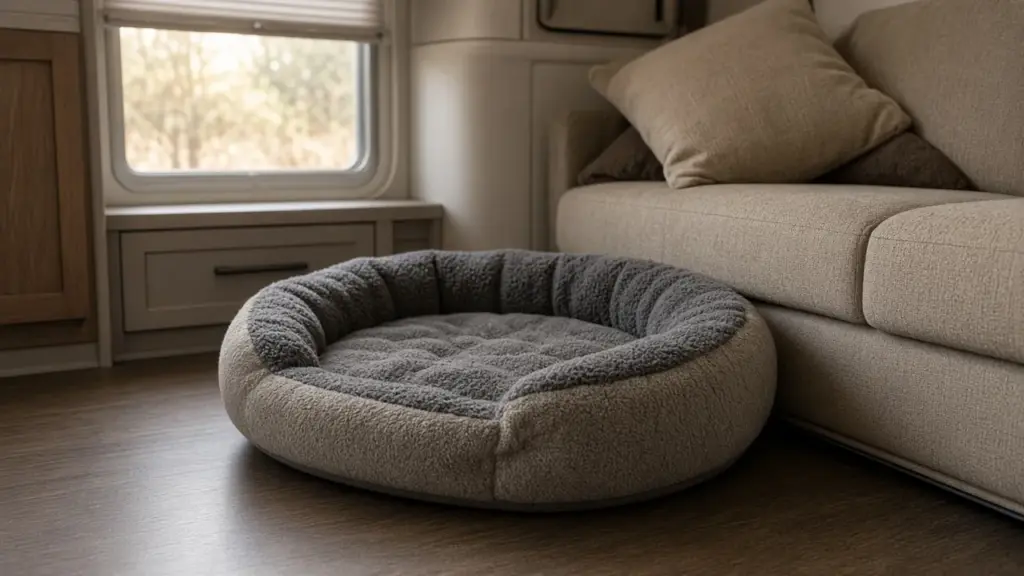
Many long-term RV parks, including ours, require dogs to live primarily inside the RV rather than in outdoor pens or tied out on the site. For dogs used to a backyard, this can be a big change. Most dogs adapt well with the right setup, routine, and exercise.
This guide shares practical ways to help a dog settle into living primarily inside an RV. For a broader look at pets on the road, see our pillar on long-term RV living with dogs and cats.
Why Parks Ask Dogs to Live Inside
Rules that keep dogs mostly indoors exist for good reasons:
- Safety for residents, visitors, and other pets
- Noise control, since outdoor dogs often bark at passersby
- Cleanliness of shared areas
- Dog welfare, especially in Texas heat
- Protection from wildlife and traffic
At our park, dogs live primarily in the RV, must be leashed whenever outside, and may never be left outside unattended. Up to two pets are allowed, and aggressive breeds are not. Our post on why RV parks restrict aggressive breeds explains breed policies.
Create a Dedicated Space
Dogs feel secure when they have a place that is theirs. In an RV, that might be:
- A crate with a comfortable pad
- A dog bed tucked under a dinette or beside the sofa
- A corner with a washable blanket
Choose a spot away from the door and high-traffic areas, so your dog can rest without being in the way. Keep favorite toys nearby.
Build a Consistent Routine
Routine helps dogs adjust to new surroundings. Keep regular times for:
- Morning and evening walks
- Meals
- Play and training
- Bedtime
If you work away from the park, plan a routine that includes a walk before you leave and as soon as you return. Consider a midday dog walker for long workdays.
Exercise Every Day
A tired dog is a calm dog. Since your dog will not have a yard, walks and outings matter more:
- Leashed walks around the park following the rules
- Longer walks at nearby outdoor areas, following their rules
- Play sessions inside the RV with toys
- Training sessions, which exercise the mind
Our post on leash rules and dog walking at an RV park covers courteous walking in a shared space. Nearby options for longer walks include W.G. Jones State Forest, Lake Conroe, and Sam Houston National Forest.
Mental Enrichment Inside
Mental exercise can tire dogs as much as physical activity:
- Puzzle feeders and slow bowls at mealtime
- Snuffle mats for sniffing games
- Chew toys appropriate for your dog’s size
- Short training sessions for new tricks
- Hide-and-seek with treats or toys
Rotate toys every few days to keep them interesting.
Manage the Door and Windows
RV dogs often become alert to every sound outside. To reduce barking and stress:
- Close blinds during busy times if your dog barks at movement
- Teach a “quiet” cue and reward calm behavior
- Use a baby gate or crate to prevent door rushing
- Practice calm exits: your dog waits until leashed and invited out
Excessive barking can bother neighbors, especially in a small park. At our park, quiet hours run from 8 p.m. to 8 a.m.
Temperature Safety
Texas heat can be dangerous for dogs inside an RV. The park is not responsible for pets left in the RV, so owners must plan carefully:
- Keep the air conditioner in good working order
- Keep AC filters clean
- Use a temperature monitor that sends alerts to your phone
- Have a backup plan if power fails while you are away
- Close blinds on sunny sides
Covered sites can help reduce heat buildup. At our park, eight of ten sites are covered.
Potty Breaks and Waste
Without a yard, potty breaks happen on walks. Plan regular breaks, especially for puppies and senior dogs. Always pick up waste immediately; it is required at our park and keeps shared spaces clean.
Helping Anxious Dogs
Some dogs find RV life stressful at first. Signs include pacing, panting, whining, or destructive behavior. To help:
- Keep routines consistent
- Provide a covered crate as a safe den
- Use calming background noise such as a fan or soft music
- Increase exercise
- Consult a veterinarian or professional trainer if anxiety persists
Planning for Two Dogs
If you have two dogs, give each its own resting space and feed them separately to prevent conflict. Our post on two-pet limits at RV parks discusses household planning for multiple pets.
Keep Records Ready
Keep vaccination records, licenses, and photos of your dog in a folder. Parks often ask for this information during applications, and it is useful for emergencies. Our post on what to have ready before you apply includes pet documentation in its checklist.
Keeping the RV Clean With a Dog Inside
Dogs living indoors mean more hair, dirt, and odor in a small space. A few habits help:
- Vacuum frequently, especially in high-traffic areas
- Wipe paws after walks, particularly after rain
- Wash dog bedding regularly; our on-site laundry makes this easier, but remember pets are not allowed in the laundry room
- Clean AC filters more often, since pet hair clogs them
Adjusting Over Time
Most dogs adjust to RV living within a few weeks. Watch for signs of contentment: relaxed body language, good appetite, and restful sleep. If your dog is still struggling after a month, talk with your veterinarian or a trainer.
A Sample Daily Routine
Here is how a typical day might look for a working resident with a dog. Early morning: a brisk leashed walk and a potty break, followed by breakfast in a puzzle feeder. Before leaving for work: a short play session, blinds closed on the sunny side, AC set, and the temperature monitor checked. Midday: a dog walker or neighbor you trust takes the dog out, if needed. Evening: a longer walk before quiet hours, dinner, a short training session, and settling into the dog’s bed. Consistency like this helps dogs relax into RV life.
Training Goals for RV Dogs
A few simple skills make indoor RV life smoother for everyone. Work on them in short, positive sessions:
- Place or bed: your dog goes to its spot and relaxes on cue, useful during meals or when the door opens.
- Wait at the door: your dog stays inside until leashed and invited out.
- Leave it: helpful for dropped food indoors and interesting smells outside.
- Quiet: rewarding calm silence after a bark or two.
- Settle: lying down calmly while you work or relax.
Use treats, praise, and patience. Practicing these skills a few minutes a day builds a calm, confident dog that is easy to live with in a small space.
Frequently Asked Questions
Can dogs be happy living mostly inside an RV?
Many dogs adapt well with a dedicated space, consistent routines, daily exercise, and mental enrichment.
Can my dog stay outside on the site at Magnolia’s Finest?
No. Dogs live primarily inside the RV, must be leashed outside, and may never be left outside unattended.
How do I keep my dog safe in the RV during Texas summers?
Maintain the AC, use a temperature monitor with phone alerts, close blinds, and have a backup plan for power outages.
What if my dog barks at everything outside?
Close blinds during busy times, teach a quiet cue, increase exercise, and reward calm behavior.
A Pet-Friendly Home Base
Magnolia’s Finest welcomes friendly pets within clear rules in a small gated park in Magnolia, TX. Review our park rules and FAQ page to see if our park fits your household.
Check Availability or call or text (281) 205-1959
Magnolia’s Finest RV Park · 32020 Old Hempstead Rd, Magnolia, TX 77355 · Contact us