
Cooking in an RV Kitchen Every Day
April 19, 2026 · By Magnolia RV Park
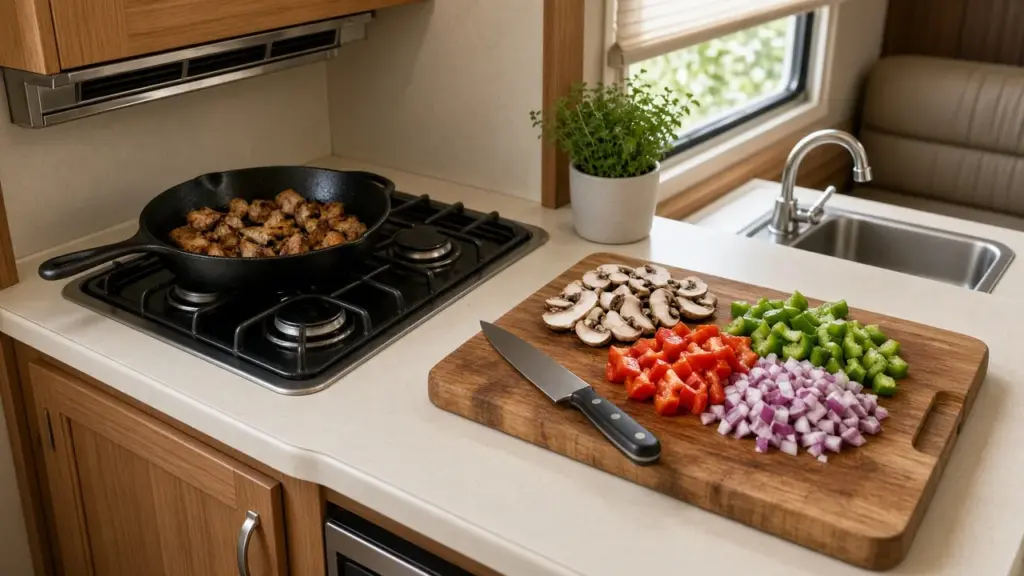
Cooking in an RV kitchen every day is different from making a quick meal on a weekend trip. When the RV is your home for months, the galley becomes the place where you save money, eat well, and keep a normal routine. A small kitchen can absolutely handle daily cooking, but it rewards planning, the right tools, and a few habits that keep heat, odors, and clutter under control.
This guide covers what we have learned from long-term residents about making an RV kitchen work day after day. For the bigger picture of staying in one place for months, start with our pillar, Monthly RV Living: The Complete Guide.
Why Daily Cooking Matters on a Long Stay
Eating out every night adds up quickly, and it rarely feels like home. Residents who cook most meals tend to spend less, eat better, and settle into the area faster. If you are still deciding how long a long-term stay really is, know that daily cooking becomes more valuable the longer you stay. A consistent cooking routine also gives structure to the day, which matters when you are working long shifts or adjusting to a new town.
The trick is accepting that an RV kitchen is not a house kitchen. Counter space is limited, the oven may be small or missing, the refrigerator is compact, and every item needs a place. Once you plan around those limits instead of fighting them, daily cooking becomes easy and even enjoyable.
Plan Meals Around Your Space
Meal planning is the single most useful habit for RV cooking. When you know what you will cook this week, you buy only what fits in the refrigerator and pantry, you waste less food, and you avoid the evening scramble.
Many residents plan around a few flexible base meals: a sheet-pan or skillet dinner, a slow-cooker meal, a big salad or grain bowl, and a pasta or rice dish. Cooking once and eating twice is a strong strategy. Make a larger batch, then turn leftovers into lunches or a second dinner with a different sauce or side.
Keep a running list on your phone or a small whiteboard inside a cabinet door. When you use the last of something, write it down right away. In a small pantry, running out of a staple is easy to miss until you need it.
Choose Appliances That Earn Their Space
Every appliance in an RV kitchen has to justify the room it takes. Before buying, ask whether you will use it several times a week and whether it can replace something else.
Popular choices among full-time residents include:
- A slow cooker or multi-cooker. It makes soups, stews, beans, and roasts with little heat and little attention, and it can cook while you are at work.
- An air fryer or countertop convection oven. It handles many jobs of a full oven while heating the RV far less.
- A good nonstick or cast-iron skillet. One reliable pan covers most stovetop cooking.
- An electric kettle. It is fast for coffee, tea, oatmeal, and instant meals.
Be thoughtful about electrical load. Running several high-draw appliances at once, especially with the air conditioner going, can trip a breaker. Stagger your appliance use and learn which combinations your rig handles. Electric service is confirmed per site, so ask about your site before you plan around heavy appliance use.
Keep Heat Out of the RV in Summer
In Southeast Texas, cooking inside can raise the temperature of an RV fast. On hot days, lean on appliances that produce less heat, cook during cooler hours, and use the vent fan over the stove every time you cook. If a park-provided hookup or outlet ever acts up, follow the steps in our post on reporting maintenance issues rather than troubleshooting it yourself.
Cold meals are underrated in summer. Salads, wraps, grain bowls, and chilled noodle dishes need little or no cooking. Prep ingredients in the morning or evening, store them in containers, and assemble meals quickly when you get home. Our guide to window coverings and insulation for heat control pairs well with these habits.
Organize a Small Kitchen
Organization makes a small kitchen feel larger. Store the items you use daily within easy reach and put occasional items higher or deeper. Nesting bowls, collapsible colanders, stackable containers, and magnetic knife strips all save space.
Secure items that could shift if you ever move the RV, and use shelf liners and tension rods to keep things from sliding. Clear bins help you see what you have at a glance. For more ideas, see our posts on making a small RV feel bigger and storage solutions for full-time residents.
Keep counters as clear as possible. A cutting board that fits over the sink or stove cover adds workspace, and a small folding table can serve as a prep station when needed.
Grocery Shopping for Small Storage
Shopping habits change in an RV. Buy smaller packages of perishables more often rather than bulk items that will not fit. Shelf-stable staples such as rice, pasta, canned beans, oats, and spices are worth keeping stocked, but rotate them so nothing expires at the back of a cabinet.
Our park is in Magnolia, and residents have shopping options along FM 1774, FM 1488, and toward Tomball on SH 249. A weekly trip plus a quick midweek stop for fresh produce works well for many residents.
Unpack groceries right away and repackage bulky items into smaller containers. Removing extra cardboard reduces clutter and gives pests fewer places to hide.
Manage Odors and Moisture
Cooking creates moisture and smells that linger in a small space. Run the range hood fan and crack a window or roof vent while cooking, especially when boiling water or frying. Excess humidity can lead to condensation and mildew, which is a real concern in the humid Houston area.
Wipe up spills promptly, empty the trash often, and store food in sealed containers. These habits also help keep ants and roaches away.
Septic-Safe Cleanup
Our park runs on a septic system, so what goes down the drain matters. Scrape plates into the trash before washing, never pour cooking grease down the sink, and use septic-safe dish soap and cleaning products. Let grease cool in a can or jar, then throw it away with regular trash.
Using a sink strainer keeps food scraps out of your gray tank and the septic system. Washing dishes in a basin rather than under running water also saves water and reduces the load on your tanks.
Cooking Outside
Some residents enjoy cooking outside on nice days. If you do, keep it simple and tidy, follow the park rules, and never leave cooking unattended. Remember that items cannot be stored on or under the site, so put portable equipment away after use. Check with management about what is allowed at your site before bringing outdoor cooking gear.
Building Routines That Last
The residents who enjoy RV cooking the most usually have simple routines. They plan meals on the weekend, prep a few ingredients ahead, clean as they go, and reset the kitchen every night. Ending the day with a clean counter and an empty sink makes the next morning much easier.
It also helps to rotate a set of favorite meals. You do not need a new recipe every night. A dependable list of ten or fifteen dinners you enjoy and know how to cook in your space removes most of the decision-making, and you can add something new when you have time.
Handling Busy Workweeks
If you work long hours, the kitchen needs to support you rather than add stress. Batch cooking on a day off pays off all week. Cook a pot of rice or grains, roast a tray of vegetables, and prepare a protein or two. Store portions in stackable containers so lunches and dinners come together in minutes. Breakfast can be as simple as overnight oats or eggs cooked the night before.
A slow cooker can start in the morning and have dinner ready when you walk in the door. Pair it with a simple salad or bread and you have a real meal without turning on the stove after a long day. Residents on work assignments often tell us that a reliable routine like this is what keeps them from spending their paycheck on takeout.
Frequently Asked Questions
Can you cook full meals in an RV kitchen every day?
Yes. With meal planning, a few versatile appliances, and good organization, many full-time residents cook nearly every meal at home.
What appliances are most useful for daily RV cooking?
A slow cooker or multi-cooker, an air fryer or countertop convection oven, one good skillet, and an electric kettle cover most needs.
How do I keep my RV cool while cooking?
Use low-heat appliances, cook during cooler hours, run the vent fan, and plan cold meals on the hottest days.
Can I pour grease down the sink?
No. Our park is on a septic system. Let grease cool in a container and throw it in the trash, and use septic-safe products.
Does the park provide specific utility service for cooking appliances?
Utilities and electric service are confirmed per site. Call or text (281) 205-1959 to ask about a specific site.
Make Magnolia Your Home Base
Magnolia’s Finest RV Park is a small, gated long-term community with covered sites on cement pads. See sites and rates, learn about long-term RV living in Magnolia, or check availability.
Check Availability or call or text (281) 205-1959
Magnolia’s Finest RV Park · 32020 Old Hempstead Rd, Magnolia, TX 77355 · Contact us