
Sleeping Better in an RV: Mattresses, Noise, and Light
September 17, 2026 · By Magnolia RV Park
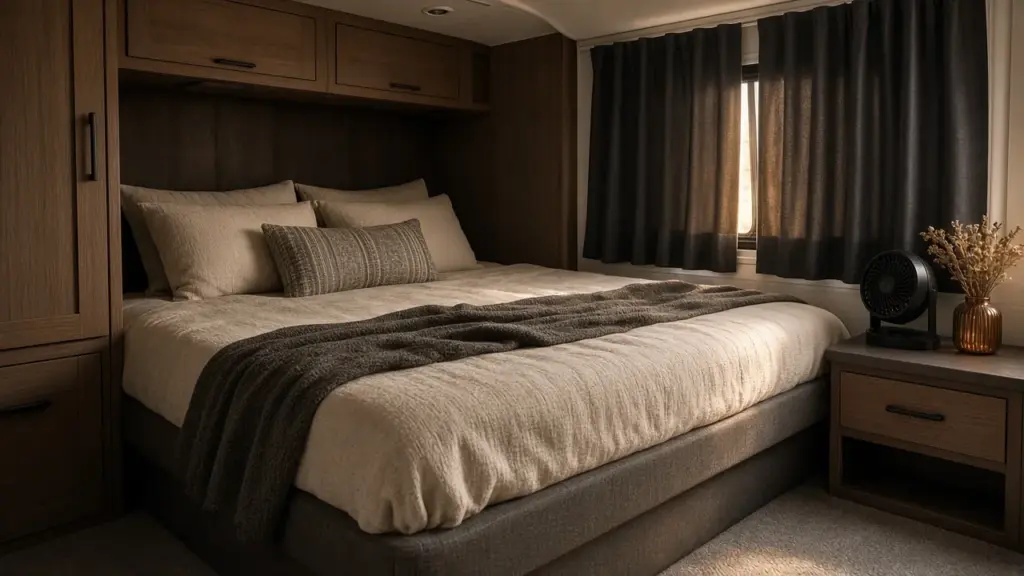
Good sleep is one of the most important parts of comfortable long-term RV living. When you stay somewhere for months instead of a few nights, a lumpy mattress, a stuffy bedroom, or early morning light can wear on you. Fortunately, most sleep problems in an RV have simple, affordable fixes.
This guide covers the main factors that affect sleep in an RV and what you can do about each one. For more on settling into a long stay, see our pillar, Monthly RV Living: The Complete Guide to Staying Months, Not Nights.
Start With the Mattress
Many RVs come with thin, basic mattresses designed for occasional weekend use. For full-time or long-term living, upgrading the mattress is often the single biggest improvement you can make.
Know Your Size
RV mattresses often come in special sizes, such as short queen or RV king, which are shorter or narrower than standard household mattresses. Measure your bed platform carefully before buying. Also check the height clearance above the bed, especially in slide-outs or bunk areas, so a thicker mattress does not block cabinets or slide movement.
Toppers as a Budget Option
If a new mattress is not in the budget, a quality foam topper can make a big difference. Toppers can be trimmed to fit unusual sizes and are easy to remove for cleaning.
Ventilation Under the Mattress
RV beds often sit on solid platforms, and in humid Southeast Texas, moisture can build up underneath. That can lead to mildew. Lift the mattress periodically to air it out, or consider a breathable mat underneath to allow airflow. Our post on living in an RV during a home renovation or insurance repair touches on making a temporary RV feel like home, and good bedding is a big part of that.
Pillows and Bedding
Bring the pillows you love from home. Choose breathable sheets, such as cotton or linen, for warm Texas nights, and keep a warmer blanket handy for cool winter snaps. Layering bedding makes it easy to adjust to temperature changes through the night.
Temperature Control
RVs heat up and cool down faster than houses. A comfortable bedroom temperature is key to good sleep.
- Use your RV’s built-in air conditioning and heating system, and keep it well maintained.
- Close blinds during the day to reduce heat buildup.
- Use a small fan for air circulation.
- Choose bedding that can be layered or removed.
Remember that window AC units and space heaters are not allowed at our park, so rely on your RV’s built-in systems and good insulation practices. Choosing a covered site can also help reduce heat from direct sun.
Managing Light
Light can disrupt sleep, especially in the early morning. RV windows and skylights let in plenty of light.
- Install blackout curtains or shades.
- Use a sleep mask.
- Cover small LED lights on appliances or electronics.
Note that foil on windows is not allowed at our park. Use proper curtains, shades, or reflective window treatments made for RVs instead.
Managing Noise
RV walls are thinner than house walls, so outside sounds carry more easily. At our park, quiet hours run from 8 pm to 8 am, which helps. Still, rain on the roof, early traffic, or a neighbor’s dog can wake light sleepers.
- Use a white noise machine or a fan.
- Try earplugs designed for sleep.
- Place soft items, like rugs and curtains, to absorb sound inside the RV.
Our park is a small community with ten sites, which makes for a quieter environment than large, busy parks.
Your Site Matters
Where your RV sits affects sleep, too. A level RV on a solid surface feels more stable and quiet. All of our sites have cement pads, which provide a level, stable base. Our post on concrete RV pads for long stays explains why pads matter for comfort.
RV Condition and Comfort
Newer RVs often have better insulation, quieter systems, and more comfortable layouts. That is one reason many parks set age limits. Our post on why RV parks set age limits explains how RV condition affects comfort and safety. At our park, RVs must be fully self-contained, in good condition, and 15 years old or newer.
Evening Routines
Good sleep often starts before bedtime. Build a simple routine that signals your body it is time to rest.
- Dim lights in the evening.
- Limit screen time before bed.
- Keep a consistent bedtime and wake time.
- Avoid heavy meals and caffeine late in the day.
Clutter and Calm
A cluttered bedroom can make it harder to relax. Keep the sleeping area tidy, store items in cabinets, and make your bed a calm space. Since items cannot be stored outside on the site, plan interior storage carefully. Our post on outdoor living on a small RV pad explains how to keep outdoor gear stowed, which also helps free up interior space.
Humidity and Air Quality
Humid air can make it harder to sleep and can lead to mildew on bedding. Run your air conditioning, use a dehumidifier if needed, and ventilate the RV during cooler, drier parts of the day. Wash bedding regularly. Our air-conditioned laundry room, with two washers and two dryers, makes it easy to keep sheets fresh.
Sleeping With Pets
Many residents share their bed with a dog or cat. If your pet keeps you awake, consider a dedicated pet bed or crate in the bedroom. A tired pet sleeps better, so a good evening walk can help.
Sleeping During Storms
Southeast Texas storms can be loud on an RV roof. White noise, earplugs, and a cozy blanket can help. Keep a flashlight and your phone nearby, and stay aware of weather alerts, especially during hurricane season from June 1 to November 30.
Shift Workers and Daytime Sleep
Many long-term residents work shifts. Sleeping during the day in an RV requires extra light and noise control. Blackout curtains, a sleep mask, earplugs, and white noise are especially useful. Let neighbors know your schedule if you are comfortable doing so.
Small Upgrades That Add Up
You do not need a full remodel to sleep well. A new pillow, blackout curtains, a quiet fan, and a good mattress topper can transform your sleep. Try one change at a time and notice what helps most.
Sleep also improves when your whole living space feels settled. Once your RV is level, your belongings have a place, and your daily routine is steady, rest tends to come more easily. Give yourself a couple of weeks to adjust after moving in, since new sounds and surroundings can take some getting used to.
Frequently Asked Questions
What is the best mattress upgrade for an RV?
A quality mattress in the correct RV size or a thick foam topper can make a big difference. Measure carefully before buying.
Can I use a space heater or window AC unit at the park?
No. Window AC units and space heaters are not allowed. Use your RV’s built-in systems.
Can I put foil on my windows to block light?
No. Foil on windows is not allowed. Use blackout curtains or RV window treatments instead.
What are the quiet hours at the park?
Quiet hours are from 8 pm to 8 am.
Rest Easy in Magnolia
Learn more about our long-term RV park in Magnolia, TX, view sites and rates, or check availability.
Check Availability or call or text (281) 205-1959
Magnolia’s Finest RV Park · 32020 Old Hempstead Rd, Magnolia, TX 77355 · Contact us