
Solar Panels for a Parked RV: Are They Worth It?
August 1, 2026 · By Magnolia RV Park
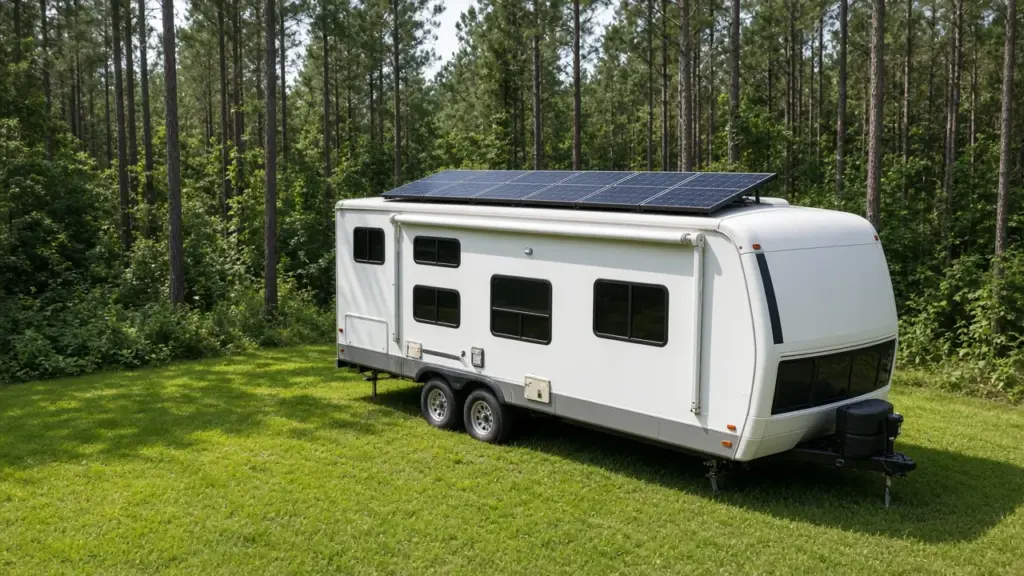
Solar power is popular among RVers, especially those who travel off-grid. Panels on the roof, a charge controller, and batteries can keep lights, fans, and electronics running without hookups or a generator. But if your RV is parked long-term at a site with electric hookups, are solar panels worth the investment?
This guide explores how RV solar works, what it can and cannot do for a parked RV, and factors to consider before buying. For a full explanation of park hookups, see our pillar, RV Hookups Explained: Electric, Water, and Sewer for Long Stays.
How RV Solar Works
A typical RV solar system includes:
- Solar panels that convert sunlight into electricity
- A charge controller that regulates power going to the batteries
- Batteries that store energy
- An inverter (optional) that converts battery power to household-style AC power
Solar panels charge your RV’s batteries during the day. You then use that stored power for 12-volt devices like lights, fans, and the water pump, or for AC devices through an inverter.
What Solar Can Power
Small to medium RV solar systems are good for:
- Lights
- Fans
- Water pump
- Phone and laptop charging
- Furnace fan
- Small electronics
Large systems with significant battery storage can power more, but running high-demand appliances like air conditioners on solar alone requires a very large, expensive system.
Solar for a Parked RV With Hookups
If your RV is connected to park electricity, your batteries are typically charged through your RV’s converter. In that case, solar may add limited day-to-day value. However, there are some situations where it can still help:
- Backup during outages. Solar can keep batteries charged if park power goes out, helping run lights, fans, and your furnace fan.
- Battery health. Keeping batteries topped up can help their longevity.
- Future travel. If you plan to travel or boondock later, solar adds flexibility.
Shade and Covered Sites
Solar panels need direct sunlight to produce meaningful power. At our park, 8 of our 10 sites are covered. Covers provide shade that keeps RVs cooler and protects roofs from sun and rain, but they also block sunlight from reaching roof-mounted solar panels. If solar is important to you, keep this in mind and ask management about site options.
Trees also create shade in pine country, which reduces solar output.
Park Rules to Consider
Before installing solar, consider park rules:
- No items on or under the site. At our park, items cannot be stored on or under the site. Freestanding or ground-mounted portable panels may conflict with this rule, so ask management first.
- No hookup tampering. Solar systems must never be connected to park electrical infrastructure.
- No extensive mechanic work. Major installations should be done at a shop, not on site.
Roof-mounted panels that are part of your RV are generally the simplest option, but always ask management if you have questions.
Costs
The cost of RV solar varies widely depending on system size, battery type, and installation. Batteries are often the most expensive component, especially lithium batteries. Professional installation adds cost but ensures safe wiring.
For a parked RV with hookups, the financial return on solar may be limited, since you are not replacing a significant power source. Consider your goals carefully before investing.
Solar vs. Generators
Solar is quiet and produces no exhaust, which is a major advantage over generators. Our post on generator etiquette at RV parks explains why generator noise and fumes can be a concern. For backup power during outages, a modest solar setup may be a quieter option, though it produces less power than most generators.
Solar and Emergency Preparedness
Some residents see solar as part of their emergency plan. A small solar setup or solar-powered battery bank can keep phones, radios, and lights running during outages. Our post on an emergency kit for RV residents covers other supplies to keep on hand.
Maintaining Solar Panels
Solar panels need occasional care:
- Keep panels clean of dust, pollen, and pine needles
- Inspect wiring and connections
- Check batteries regularly
- Monitor system performance
In pine country, needles and pollen can reduce panel efficiency, so regular cleaning matters.
Other Ways to Improve Efficiency
If your goal is to reduce energy use, consider simpler steps:
- Switch to LED lighting
- Use thermal curtains
- Seal drafts
- Turn off electronics when not in use
Water conservation also matters. Keeping systems efficient includes your water and sewer systems; our posts on sanitizing RV fresh water lines and tanks and keeping RV black tank odors under control cover related upkeep.
Utilities at Our Park
Utilities are confirmed per site at our park. Ask management about electrical service and billing for your site before making decisions about solar.
Understanding Your Power Needs
Before considering solar, it helps to understand how much power you actually use. Many RVers are surprised to learn how quickly air conditioning, microwaves, hair dryers, and electric water heaters consume energy compared with lights and phone chargers. In a Southeast Texas summer, air conditioning is usually the largest load by far, and it is also the hardest to run on solar.
A simple way to start is to list the devices you use daily and how long each runs. Look up their power ratings or use a plug-in meter for AC devices. This gives you a rough picture of your daily energy use. You may find that a small solar setup could easily cover your lights and electronics during an outage, but not your air conditioner. That knowledge helps you size a system realistically or decide that solar is not the right investment right now.
Battery Considerations
Batteries are the heart of any solar system. Traditional lead-acid batteries are less expensive upfront but heavier, and they should not be discharged too deeply. Lithium batteries cost more but are lighter, last longer, and can be discharged more deeply. Heat affects battery life, so in a hot climate, battery placement and ventilation matter. If you are upgrading batteries, consult a qualified technician to make sure your charger, converter, and wiring are compatible.
Making a Decision
For many long-term residents with hookups, solar is a nice-to-have rather than a necessity. It makes the most sense if you value quiet backup power, plan to travel off-grid in the future, or simply enjoy the independence it offers. If your main goal is saving money on a parked RV with hookups, other efficiency steps may deliver more benefit for less cost. Take time to weigh your priorities before investing.
Frequently Asked Questions
Are solar panels worth it for a parked RV with hookups?
It depends on your goals. Solar may offer limited day-to-day value with hookups but can help with backup power and future travel.
Do covered sites affect solar?
Yes. Covers provide shade, which reduces sunlight reaching roof-mounted panels.
Can I set up portable solar panels on my site?
Ask management first. Items cannot be stored on or under the site at our park.
Can solar power my air conditioner?
Only with a very large system. Most RV solar setups power smaller loads.
Learn More About Our Sites
Explore our amenities, read our FAQ, or check availability.
Check Availability or call or text (281) 205-1959
Magnolia’s Finest RV Park · 32020 Old Hempstead Rd, Magnolia, TX 77355 · Contact us