
Raising a Puppy in an RV
July 20, 2026 · By Magnolia RV Park
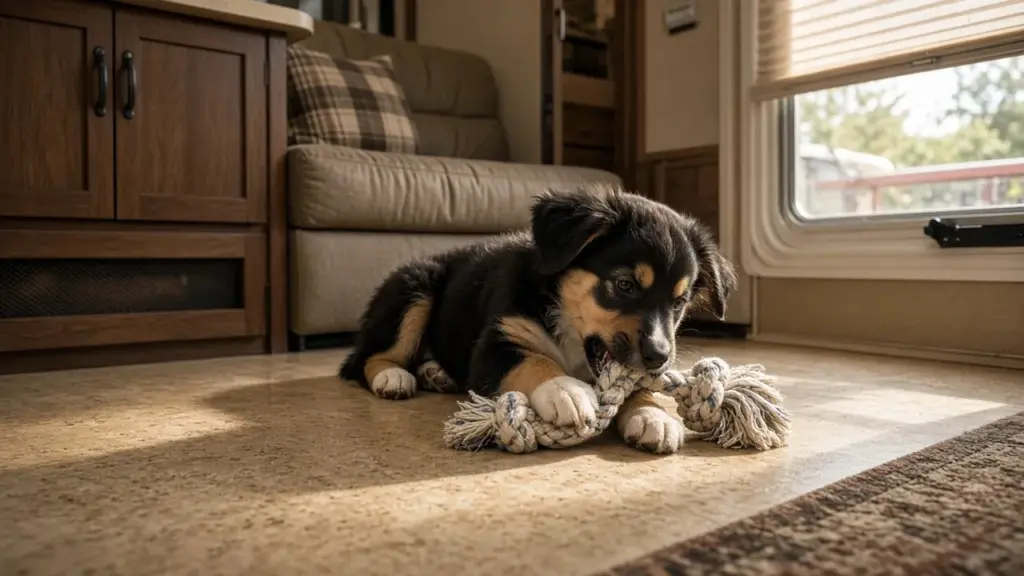
Bringing home a puppy is exciting. Puppies bring energy, joy, and companionship. They also bring chewing, accidents, and a lot of training. Raising a puppy in an RV has its own challenges, since space is limited and you share a community with neighbors. With planning, patience, and consistency, you can raise a happy, well-behaved dog in RV life.
This guide covers practical tips for raising a puppy in an RV. For a complete overview of pets in long-term RV life, see our pillar, Long-Term RV Living With Dogs and Cats: A Practical Guide.
Check the Rules First
Before bringing home a puppy, check your park’s pet policy. At our park:
- Each site may have up to 2 pets
- Aggressive breeds are not allowed
- Dogs live primarily inside
- Dogs must be leashed outside
- Dogs are never left outside unattended
- Owners must pick up after their pets
- Pets are not allowed in the laundry room
If you already have pets, make sure a puppy does not put you over the limit. Ask management if you have questions about breed or policies.
Puppy-Proofing Your RV
Puppies explore with their mouths. In an RV, many hazards are within reach.
- Secure electrical cords and cables
- Keep cleaning products and chemicals locked away
- Store food, medications, and trash securely
- Remove small items that could be swallowed
- Protect furniture and cabinets from chewing
- Keep shoes and clothing off the floor
Look at your RV from a puppy’s eye level and remove anything tempting or dangerous.
Creating a Puppy Space
A crate or small gated area gives your puppy a safe place to rest and helps with house training. Choose a spot away from the door and out of direct sun. Add a comfortable bed and a few safe chew toys.
Crates also help keep your puppy safe when you cannot supervise. Introduce the crate gradually and make it a positive place with treats and praise.
House Training
House training takes time and consistency. Tips:
- Take your puppy out frequently, especially after eating, drinking, playing, and waking up
- Use the same general area each time, following park rules
- Praise and reward your puppy for going outside
- Clean accidents with an enzyme cleaner to remove odors
- Keep a consistent schedule
Always keep your puppy on a leash outside and pick up waste immediately. Avoid neighboring sites and empty lots.
Chewing and Teething
Puppies go through a teething phase and will chew almost anything. Provide plenty of appropriate chew toys and rotate them to keep your puppy interested. Redirect chewing from furniture or cords to toys. Never leave your puppy unsupervised with items that could be dangerous.
Socialization
Socialization helps puppies grow into confident, well-mannered dogs. Expose your puppy to different people, sounds, and environments in a positive way. Around the park, introduce your puppy to neighbors and their pets slowly and respectfully. Always ask before letting your puppy approach another dog.
The park has resident animals, and some fencing is electric. Keep your puppy away from these areas. Our post on pets around park animals and fencing explains how to keep everyone safe.
Leash Training
Since dogs must be leashed outside, leash training is essential. Start early with short, positive sessions. Reward your puppy for walking calmly beside you. Avoid letting them pull or jump on people.
Never Leave Your Puppy Outside Alone
Dogs are never left outside unattended at our park. This rule protects your puppy, neighbors, and park animals. Puppies can get tangled, overheat, bark excessively, or escape. Our post on why pets can’t be left outside unattended at RV parks covers the reasons in detail.
Heat Safety
Puppies are sensitive to heat. Southeast Texas summers are hot and humid, so keep your RV cool with your built-in air conditioning. Window AC units are not allowed at our park. Walk your puppy during cooler parts of the day and watch for signs of overheating. Pavement and cement pads can burn tender paws.
Consider a temperature monitor if you leave your puppy in the RV. The park is not responsible for pets left in the RV.
Barking and Quiet Hours
Puppies may bark or whine, especially when left alone. Quiet hours at our park run from 8 pm to 8 am. Help your puppy learn to settle by gradually increasing time alone, providing toys, and making departures and arrivals calm.
Vet Care and Vaccinations
Take your puppy to a local vet for vaccinations, checkups, and parasite prevention. Southeast Texas has fleas, ticks, and mosquitoes, so preventive care is important. Keep vaccination records organized.
Exercise and Play
Puppies have lots of energy. Regular walks and play sessions help prevent destructive behavior. Mental stimulation, such as puzzle toys and training games, also helps tire them out.
Protecting Your RV
Puppies can scratch doors and chew trim and seals. Watch for damage around entry doors and slide-outs. Seal damage can lead to leaks, so check regularly; our post on keeping slide-out seals healthy explains what to look for.
Balancing a Puppy and a Senior Dog
If you already have an older dog, a puppy’s energy can be a lot. Give your senior dog a quiet place to rest and supervise interactions. Our post on senior pets and RV living has tips for caring for older companions.
Building a Daily Routine
Puppies do best with a predictable routine. Try to feed, walk, train, and put your puppy to bed at about the same times each day. A consistent schedule helps with house training, reduces anxiety, and makes it easier for your puppy to settle when you need quiet. If you work, plan how your puppy’s needs will be met during the day, whether that means coming home at lunch, arranging a trusted pet sitter, or adjusting your schedule during the early months.
Young puppies cannot hold their bladders for long, so expect frequent trips outside at first. As your puppy grows, the time between breaks will lengthen. Patience during this stage pays off with a well-trained adult dog.
Training Basic Commands
Start teaching basic commands like sit, stay, come, and leave it as soon as your puppy comes home. Short, positive sessions of a few minutes several times a day work well. These commands are especially useful in an RV park, where a reliable “leave it” can keep your puppy away from trash, wildlife, or electric fencing, and a solid “come” adds a layer of safety. Consider a local puppy training class for structured practice and socialization.
Frequently Asked Questions
Are puppies allowed at the park?
Yes, under our pet policy. Up to 2 pets per site, and aggressive breeds are not allowed.
Can my puppy be outside on a tie-out?
No. Dogs must never be left outside unattended.
How do I house train a puppy in an RV?
Take your puppy out frequently, use a consistent schedule, reward success, and pick up waste.
How can I keep my puppy from barking during quiet hours?
Gradually build time alone, provide toys, and keep departures calm.
Bring Your New Companion to Magnolia
Review our park rules, read our FAQ, or check availability.
Check Availability or call or text (281) 205-1959
Magnolia’s Finest RV Park · 32020 Old Hempstead Rd, Magnolia, TX 77355 · Contact us