
Sanitizing Your RV Fresh Water Lines and Tank
July 7, 2026 · By Magnolia RV Park
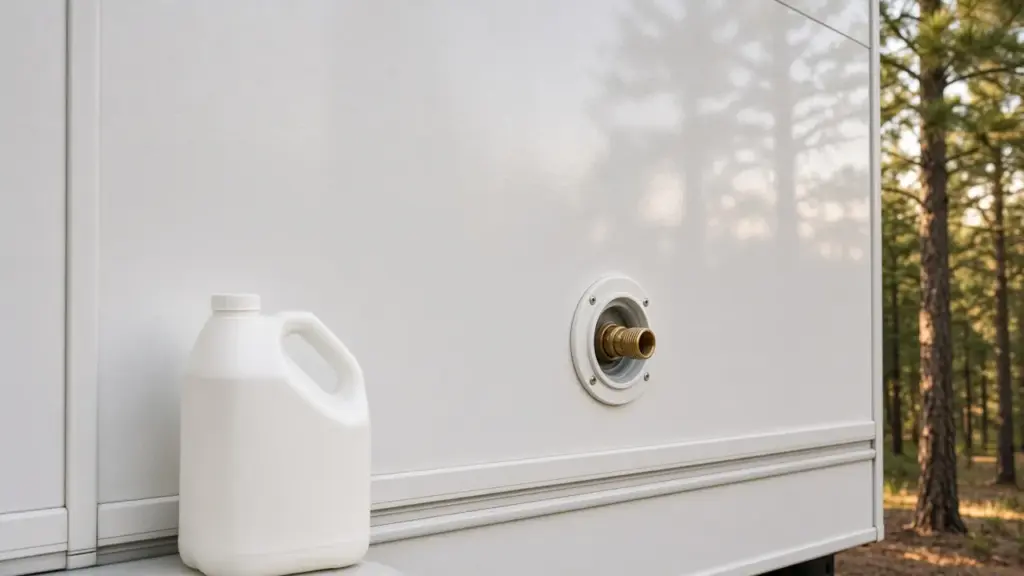
Clean water is essential for everyday life in an RV. You use it for drinking, cooking, washing dishes, and bathing. Over time, your fresh water tank and lines can build up bacteria, algae, and odors, especially in warm climates like Southeast Texas. Regular sanitizing keeps your water system clean and your water tasting fresh.
This guide walks through why sanitizing matters, how often to do it, and the steps involved. For an overview of how hookups work for long stays, see our pillar, RV Hookups Explained for Long Stays.
Why Sanitize Your Water System?
Even if you are connected to a water hookup, water sits in your lines, water heater, and sometimes your fresh tank. Standing water in warm temperatures can grow bacteria and biofilm. Signs your system needs attention include:
- Unpleasant taste or smell
- Cloudy water
- Slimy residue in faucets or showerheads
- Long periods since the last sanitizing
Sanitizing also makes sense when you first buy an RV, after it has been stored, or after any repair to the plumbing system.
How Often Should You Sanitize?
Many RV owners sanitize their fresh water system at least a few times a year. Follow your RV manufacturer’s recommendations. Long-term residents who rely mostly on a hookup may need to sanitize less often than travelers who fill their tank frequently, but it is still a good habit.
Consider sanitizing:
- When you move into a new site
- Every few months as routine maintenance
- If the water smells or tastes off
- After storage or long periods of non-use
- After plumbing repairs
What You’ll Need
- Unscented household bleach (check your RV manual for guidance)
- A clean measuring cup
- A funnel or clean container for adding solution
- A clean drinking water hose
- Access to your fresh water tank fill
- Time for the solution to sit, often several hours
Always read your RV owner’s manual first. Some manufacturers have specific instructions or recommend specific products, and some components, such as certain filters, need to be removed or bypassed.
Step-by-Step Sanitizing Process
1. Turn Off the Water Heater
Turn off the water heater and let it cool. Never drain a hot water heater. Once cool, drain it according to your manual.
2. Bypass or Remove Filters
Remove any inline water filters or put the water heater in bypass mode if your manual recommends it. Filters can be damaged by bleach, and you may want to replace them afterward.
3. Drain the Fresh Water Tank
Open the low-point drains and fresh tank drain to empty the system. Remember our park uses a septic system, so follow site guidance on where water can go. Ask management if you are unsure.
4. Mix the Sanitizing Solution
Mix bleach with water according to your manual. A commonly cited guideline is about a quarter cup of bleach per 15 gallons of tank capacity, but always follow your manufacturer’s directions.
5. Add the Solution to the Tank
Close the drains. Pour the solution into the fresh water tank through the fill, then fill the tank the rest of the way with fresh water.
6. Run Solution Through the Lines
Turn on the water pump and open each faucet, hot and cold, one at a time, until you smell bleach. Include the shower, outdoor shower if you have one, and toilet. Then close the faucets.
7. Let It Sit
Allow the solution to sit in the system for several hours, as recommended by your manual. Some owners let it sit overnight.
8. Drain and Flush
Drain the system completely. Refill the tank with fresh water and run all faucets until the bleach smell is gone. You may need to flush several times.
9. Reinstall Filters
Reinstall or replace filters and return the water heater to normal operation.
Being Mindful of the Septic System
Our park uses a septic system, so septic-safe practices are important. Large amounts of bleach can harm the natural bacteria in septic systems. Ask management before draining sanitizing solution so you do it in a way that protects the system. Use only septic-safe products in your RV.
Keeping Water Clean Between Sanitizing
- Use a dedicated drinking water hose and store it capped
- Use a water filter
- Keep your fresh water hose separate from sewer equipment
- Replace filters on schedule
- Do not leave water standing in the tank for long periods if you are not using it
Conserving water is also helpful; see our post on conserving water in an RV.
Understanding Your Hookups
Hookup types vary between parks and sites. Our post on full hookup vs. partial hookup RV sites explains the differences. Utilities are confirmed per site at our park, so ask management about specifics.
Other Utility Questions
If you are curious about how electricity is billed at parks, our post on electric metering at RV parks and questions to ask covers what to consider.
Scheduling Maintenance
If you live with a partner and both work, plan sanitizing for a shared day off since it takes several hours. Our post on scheduling as a working couple in an RV has tips for coordinating routines.
Caring for Your Water Heater
Your water heater holds several gallons of water that sit warm for long periods, which makes it a place where odors can develop. Many RV owners notice a sulfur or rotten egg smell from hot water, which can come from a reaction between the water and the heater’s components. Draining and flushing the water heater regularly helps. Some water heaters have an anode rod that should be inspected and replaced when worn, while others have linings that do not use one. Check your owner’s manual to understand your specific model.
Always turn off the heater and let it cool completely before draining. Opening a pressurized, hot tank can cause burns, so give it plenty of time.
Taking Care of Hoses and Connections
Your drinking water hose is the first part of your water system, and it deserves attention too. Replace hoses that are cracked, faded, or stiff, since damaged hoses can harbor bacteria and leak. Keep the ends capped when not connected, and never let them rest on the ground near sewer connections. A pressure regulator at the spigot protects your plumbing from high pressure, and many owners consider it a standard part of any hookup. Wipe down connection points with a sanitizing solution when you connect at a new site, and check fittings for drips regularly.
Asking for Help
If you are unsure about any step, ask a qualified RV technician or check your manufacturer’s guidance. A little help the first time makes future sanitizing simple and routine.
Frequently Asked Questions
How often should I sanitize my RV water system?
Many owners sanitize a few times a year. Follow your manufacturer’s recommendations.
Can I use regular bleach?
Many manuals recommend unscented household bleach. Always follow your RV manual.
Is bleach safe for the park’s septic system?
Large amounts of bleach can harm septic systems. Ask management before draining sanitizing solution.
How do I get rid of the bleach smell?
Flush the system with fresh water several times until the smell is gone.
Enjoy Clean Water in Magnolia
Magnolia’s Finest RV Park is a small, gated long-term community. Explore our amenities, read our FAQ, or check availability.
Check Availability or call or text (281) 205-1959
Magnolia’s Finest RV Park · 32020 Old Hempstead Rd, Magnolia, TX 77355 · Contact us