Conserving Water in an RV
June 24, 2026 · By Magnolia RV Park
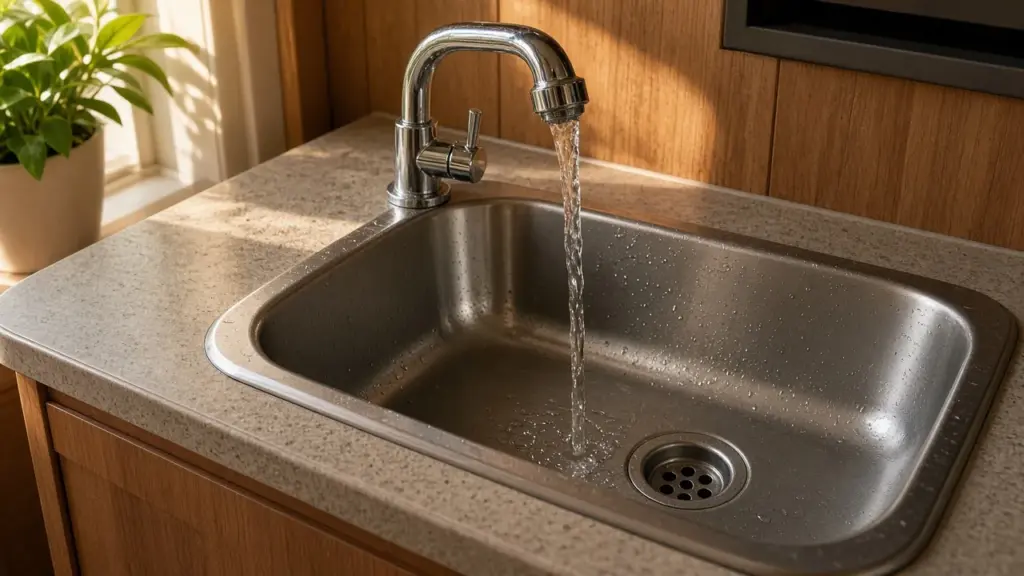
When you are connected to a water hookup at a long-term site, it can be easy to forget about water use. But conserving water still matters. It reduces strain on your RV’s tanks and plumbing, helps protect the park’s septic system, lowers costs where water is metered, and is simply a responsible habit in a shared community.
This guide covers practical ways to conserve water in an RV while living on a long-term site. For a broader look at RV utilities, start with our pillar, RV Hookups Explained: Electric, Water, and Sewer for Long Stays.
Why Water Conservation Matters on a Long-Term Site
Protecting the Septic System
Our park uses a septic system. Every gallon of water that goes down your drains ends up in that system. Excessive water use can overload a septic system and affect its performance. Conserving water, along with using septic-safe products, helps keep the system working well for all residents.
Managing Your Tanks
Even when connected to sewer, your gray and black tanks fill as you use water. Using less water means fewer dumps and less wear on valves and hoses.
Controlling Costs
Utilities are confirmed per site at our park. If water is metered or billed separately at a park, conserving water can directly reduce your costs.
Being a Good Neighbor
In a shared community, responsible water use benefits everyone.
Shower Smarter
Showers are one of the biggest water users in an RV.
- Take shorter showers. Even a few minutes less makes a difference.
- Install a low-flow showerhead. Many RV showerheads have a shutoff button that pauses water while you lather.
- Turn off water while shampooing or shaving.
- Catch cold water while waiting for hot water and use it for plants, cleaning, or pet bowls.
Wash Dishes Efficiently
- Scrape plates into the trash before washing.
- Use a basin to wash dishes instead of running water continuously.
- Rinse in a second basin or with a quick spray.
- Wash full loads of dishes at once rather than a few items at a time.
Scraping plates also keeps food and grease out of the septic system.
Toilet Tips
- Use only the water needed to flush.
- Use septic-safe, RV-appropriate toilet paper.
- Never flush wipes, paper towels, or other items.
Fix Leaks Promptly
A dripping faucet or a leaking fitting can waste a surprising amount of water over time. Check for leaks regularly and fix them quickly. Our post on finding RV plumbing leaks early explains where to look.
Laundry and Water
Laundry uses a lot of water. Wash full loads when possible and choose appropriate water levels. At our park, the laundry room has two washers and two dryers in an air-conditioned space. Using septic-safe detergent protects the system.
Outdoor Water Use
Outdoor water use at RV parks is often limited. At our park, vehicle washing is not allowed, and the park handles lawn care, so residents do not need to water grass. Keep hoses in good condition and disconnect them properly to avoid leaks.
Water Heater Efficiency
Waiting for hot water wastes water. Insulating hot water lines and keeping the water heater in good condition can reduce wait times. Some residents use a small container to catch cold water while waiting.
Our post on electric heat vs. propane furnace touches on how propane and electric appliances affect utility use, including water heaters that can run on either.
Water Quality and Filters
Using a water filter improves taste and protects your RV’s plumbing and appliances from sediment. Replace filters as recommended. Good water quality can also encourage you to drink tap water instead of buying bottled water.
Winter Considerations
During freezes, you may need to disconnect your hose and rely on your fresh tank. Knowing how to conserve water helps you stretch your fresh water supply during those periods.
Related Utility Habits
Conserving water pairs well with conserving electricity. Our post on electric metering at RV parks explains how to understand and manage electric use. Safe electrical practices matter too; our post on RV electrical adapters covers using adapters properly.
Storm Season and Water
During hurricanes and major storms, water service can be disrupted, and boil-water notices may be issued. Keep a supply of drinking water on hand during storm season, and fill your fresh tank before a major storm. Knowing how to conserve water helps your supply last longer if service is interrupted. Hurricane season runs from June 1 to November 30.
Building Water-Saving Habits
Water conservation works best when it becomes automatic. Start with one or two habits, such as shorter showers and washing dishes in a basin, and add more over time. Many full-time residents find that after a few weeks, conserving water feels natural and requires no extra thought.
Keeping track of how often you dump your tanks can be a useful way to measure progress. If you notice your gray tank filling more slowly, your new habits are working. The same habits come in handy if you ever travel to a site without full hookups or need to rely on your fresh tank during a freeze.
Understanding a Septic System
Many RV residents are used to city sewer systems and have never lived with septic. A septic system treats wastewater on site. Solids settle in a tank, and liquid flows into a drain field where it is filtered through the soil. The system depends on healthy bacteria to break down waste and on the drain field not being overwhelmed with too much water at once.
That is why water use and product choices matter. Large volumes of water in a short time, harsh chemicals that kill helpful bacteria, and non-biodegradable items can all cause problems. When every resident uses water thoughtfully and follows septic-safe practices, the system works well for years.
Spreading Out Water Use
Spreading out high water use helps the septic system. For example, avoid running several loads of laundry, taking long showers, and dumping tanks all within the same hour. Spacing these activities out gives the system time to process water. It is a small habit that makes a real difference in a shared system.
Teaching Everyone in the Household
If you share your RV with a partner or family member, make sure everyone understands why conserving water and using septic-safe products matter. Consistent habits across the household are what make the difference.
Frequently Asked Questions
Why should I conserve water if I have a hookup?
Conserving water protects the park’s septic system, reduces tank use, may lower costs, and is responsible in a shared community.
How can I use less water in the shower?
Take shorter showers, install a low-flow showerhead with a shutoff button, and turn off water while lathering.
Can I wash my vehicle at the park?
No. Vehicle washing is not allowed at our park.
What should I do if I find a leak at the park’s spigot?
Report it to management. Tampering with hookups is not allowed.
Live Responsibly at Magnolia’s Finest
Magnolia’s Finest RV Park is a small, gated long-term community with covered sites on cement pads. Read our FAQ, see our amenities, or check availability.
Check Availability or call or text (281) 205-1959
Magnolia’s Finest RV Park · 32020 Old Hempstead Rd, Magnolia, TX 77355 · Contact us