
Feeding and Storing Pet Food in an RV
June 3, 2026 · By Magnolia RV Park
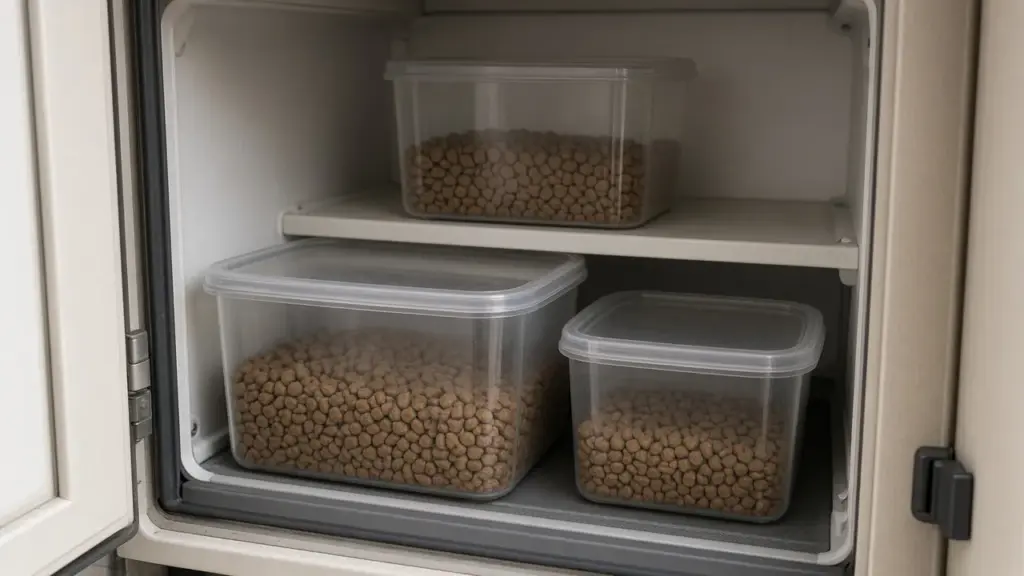
Feeding your pets in an RV sounds simple, but a small space, limited storage, and Southeast Texas heat and humidity add a few challenges. Large bags of kibble take up precious room, open food attracts ants and roaches, and humidity can spoil food faster than you expect. A good system keeps your pets healthy, your RV clean, and pests away.
This guide covers practical ways to feed pets and store pet food in an RV. For a broader look at life with animals in an RV, start with our pillar, Long-Term RV Living With Dogs and Cats: A Practical Guide.
Why Pet Food Storage Matters in an RV
In a house, a bag of dog food can sit in a pantry or garage without much thought. In an RV, pet food competes with everything else for space, and it is stored much closer to your living area. Improperly stored food can:
- Attract ants, roaches, and rodents
- Go stale or rancid in heat and humidity
- Develop mold in damp conditions
- Create odors in a small space
Taking a few simple steps protects both your pets and your home.
Choose Airtight Containers
The most important step is storing food in airtight containers. Good containers:
- Keep out pests
- Preserve freshness
- Contain odors
- Fit your available storage space
Many owners keep food in its original bag, then place the bag inside an airtight container. This preserves the lot number and expiration date in case of a recall. Wash and dry containers between bags to remove oils and crumbs.
Choose container sizes that fit your cabinets or a corner of your RV. Stackable or slim containers can fit into tight spots.
Buy the Right Amount
Large bags of food may cost less per pound, but they take up space and may go stale before you finish them, especially in humid weather. Consider buying smaller bags more often, or dividing large bags into smaller airtight containers and storing the extra in a cool, dry spot.
Check expiration dates and watch for changes in smell or appearance. Throw out food that smells off or shows signs of mold.
Keep Food Cool and Dry
Heat and humidity degrade pet food. In Southeast Texas, storage areas like exterior compartments can get very hot in summer. Store food inside the air-conditioned living area when possible, away from the stove, direct sunlight, and heat sources.
Wet or canned food should be refrigerated after opening and used within the time recommended on the label. Cover opened cans with a lid to keep them fresh and reduce odors.
Set Up a Feeding Station
A dedicated feeding spot keeps mess contained:
- Place bowls on a washable mat or tray
- Choose a spot out of the main walkway
- Use non-slip or weighted bowls
- Consider raised or collapsible bowls to save space
Our post on pet hair and odor control in small spaces includes tips for keeping feeding areas clean.
Keep Bowls Inside
At our park, dogs live primarily inside, are leashed outside, and are never left outside unattended. Keeping food and water bowls inside also prevents attracting insects, wildlife, and park animals. It helps with mosquitoes too, since water left in outdoor bowls can become a breeding site.
Clean Bowls Daily
Wash food and water bowls daily with hot, soapy water. Pet bowls can harbor bacteria and attract ants if food residue is left behind. Use septic-safe dish soap, since our park uses a septic system.
Prevent Pests
Pet food is a magnet for pests. To keep them away:
- Store all food in airtight containers
- Pick up uneaten food after meals
- Wipe up spills and crumbs right away
- Keep the feeding area clean
- Take out trash regularly
If ants find your pet’s bowl, a moat-style bowl can help. Avoid using pest products near pet food and bowls.
Feeding Routines
Consistent feeding times help pets feel secure, especially after a move. Measure portions to prevent overeating, which is easy to do when pets are less active in a small space. Talk with your veterinarian about the right amount and type of food for your pet.
If you work long shifts, plan feeding times that fit your schedule. Automatic feeders can help, but monitor them to make sure they work reliably.
Treats and Chews
Treats should be stored like regular food, in airtight containers. Be careful with chews that leave crumbs or residue, which can attract pests. Keep treats out of reach of pets who might help themselves.
Our park has resident animals and a treat bin at the gate for them. Keep your pets’ food separate, and follow any instructions from management about the park animals.
Traveling With Pet Food
When moving or traveling, pack enough food for the trip plus a few extra days. Bring bowls, water, and any medications. Changing foods suddenly can upset your pet’s stomach, so bring their regular food or transition gradually.
Planning Your Pet Household
Feeding and storing food for more than one pet takes more space and planning. Our park allows up to 2 pets per site. Our post on two-pet limits at RV parks explains how to plan your household. Keeping health and feeding information organized also helps; see our post on pet records to have ready.
Water Matters as Much as Food
Fresh water is essential, especially in Southeast Texas heat. Pets living in an RV can become dehydrated quickly if the air conditioning fails or if water bowls tip over while you are away. Use a sturdy, non-tip bowl or a pet water fountain, and refill it with fresh water daily. If you are gone for long shifts, consider placing a second water bowl in another spot as a backup.
Keep an eye on how much your pet drinks. Sudden changes in thirst can signal a health problem and are worth mentioning to your veterinarian. Remember that the park is not responsible for pets left in the RV, so reliable AC and plenty of water are part of keeping pets safe.
Special Diets and Medications
Some pets need prescription diets, supplements, or medications mixed with food. Store these according to label directions, which may include refrigeration. Keep medications out of reach and clearly labeled. When moving to a new area, make sure you can get prescription food locally or through delivery, and keep enough on hand to cover any gaps.
Making the Most of Limited Space
Space-saving ideas include collapsible bowls for travel, wall-mounted food containers, and slim containers that fit beside cabinets or under a dinette seat. Some owners repurpose a drawer as a dedicated pet supply area for food, treats, bowls, and cleaning supplies. Keeping everything in one place makes feeding faster and keeps supplies from spreading throughout the RV.
Consistency Keeps Things Calm
Feeding pets in the same spot, at the same times, with the same food helps them feel secure. In a small space, a predictable routine can reduce begging, anxiety, and messes. Just as clear rules help a small park run smoothly, as we explain in our post on firm policies in small RV parks, clear routines help pets settle into RV life.
Frequently Asked Questions
How should I store dry pet food in an RV?
Keep it in an airtight container, ideally with the food still in its original bag, in a cool, dry area inside the RV.
Can I feed my dog outside at the park?
Keep bowls inside. Dogs live primarily inside at our park, and outdoor bowls can attract insects and wildlife.
How do I keep ants out of my pet’s food?
Use airtight containers, pick up uneaten food, clean bowls daily, and consider a moat-style bowl.
How many pets are allowed per site?
Up to 2 pets per site, and aggressive breeds are not allowed.
Bring Your Pets to Magnolia’s Finest
Magnolia’s Finest RV Park welcomes responsible pet owners in a small, gated long-term community. Review our park rules, read the FAQ, or check availability.
Check Availability or call or text (281) 205-1959
Magnolia’s Finest RV Park · 32020 Old Hempstead Rd, Magnolia, TX 77355 · Contact us