RV Furnace Maintenance Before Cold Weather
May 8, 2026 · By Magnolia RV Park
Southeast Texas is known for its heat, but winter still brings cold fronts, chilly nights, and the occasional hard freeze. When temperatures drop, your RV furnace becomes one of the most important systems in your home. A furnace that has sat unused all summer may need attention before it is ready to run safely and efficiently.
This guide covers RV furnace maintenance before cold weather, including what you can check yourself and when to call a professional. It fits into our broader RV maintenance schedule for full-time residents, which explains how seasonal tasks fit into your routine.
Why Furnace Maintenance Matters
Most RV furnaces burn propane and use a blower fan to push warm air through ducts. That combination of flame, fuel, and airflow means safety and maintenance go hand in hand. A furnace that is dirty, blocked, or malfunctioning can fail to heat properly, waste propane, or in serious cases create a fire or carbon monoxide hazard.
Maintenance also matters for comfort. Space heaters are not allowed at our park, so your RV’s built-in furnace and good insulation are your main tools for staying warm during cold snaps. Making sure the furnace works before you need it avoids a cold, uncomfortable night.
When to Do It
The best time to check your furnace is in early fall, before the first cold front arrives. In the Magnolia area, that often means October or early November. Running the furnace for the first time on a mild day lets you spot problems without being in a rush.
It is normal for a furnace to produce a slight burning smell the first time it runs after a long break, as dust burns off. If the smell is strong, persists, or smells like gas, turn it off and have it inspected.
Safety First
Before working on or around your furnace, keep these safety basics in mind:
- Turn off the furnace and let it cool before inspecting.
- Never attempt to repair gas valves, burners, or propane lines yourself unless you are qualified.
- If you smell propane, turn off the propane supply, avoid creating sparks, leave the RV, and contact a qualified technician.
- Make sure your smoke, carbon monoxide, and propane detectors are working.
Our post on testing RV smoke, CO, and propane detectors walks through how to check them. This step is essential before running a propane appliance for the season.
Check the Exterior Vent
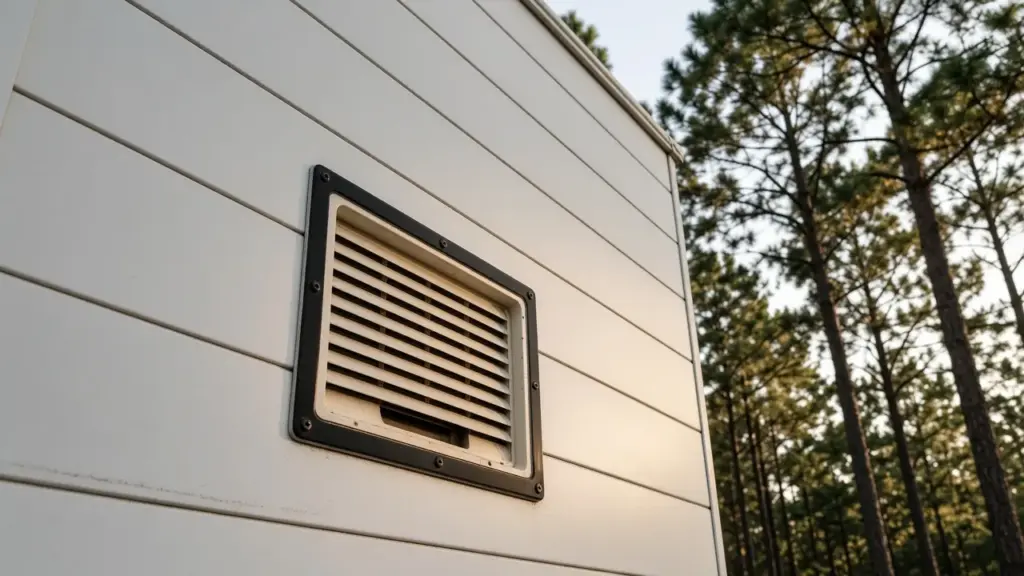
RV furnaces vent to the outside through an exterior panel. Over the summer, insects, spiders, wasps, and debris can build nests or block the vent. A blocked vent can cause poor performance and safety issues.
Inspect the vent area for:
- Insect or bird nests
- Spider webs
- Leaves or debris
- Damage to the vent cover
Remove debris carefully. If you find a nest deep inside or cannot clear it easily, contact a technician. Some residents install screens designed for RV furnace vents to keep insects out, but make sure any screen is approved for your furnace model and does not restrict airflow.
Clean Return Air and Ducts
The furnace pulls air from inside the RV through a return air vent, heats it, and pushes it out through ducts. Dust, pet hair, and debris can clog the return and reduce efficiency.
- Vacuum the return air grille and the area around it
- Remove and clean floor or wall register covers
- Make sure nothing blocks registers, such as rugs, furniture, or storage bins
- Check that ducts are connected and not crushed
Good airflow helps the furnace work efficiently and prevents overheating.
Check the Propane Supply
Make sure you have enough propane before cold weather arrives. Furnaces can use propane quickly on cold nights. Check your tank levels and plan refills so you do not run out during a cold snap.
Inspect propane tanks, hoses, and connections for damage, rust, or leaks. If you suspect a leak, stop using propane and have it inspected by a professional. Our post on propane basics covers more about propane safety.
Test the Thermostat and Blower
Set the thermostat to a temperature above the current indoor temperature and listen for the furnace to start. Typically, the blower runs first, then the burner ignites. Warm air should come from the registers within a few minutes.
Watch for problems such as:
- The blower runs but no heat comes out
- The furnace starts and stops repeatedly
- Unusual noises, like grinding, rattling, or loud clicking
- A strong burning or gas smell
If you notice any of these issues, turn off the furnace and call a qualified RV technician.
Check the Battery
Many RV furnaces rely on 12-volt power for the blower and control board, even when heating with propane. A weak battery or low voltage can prevent the furnace from running properly. Check your battery and electrical connections before winter.
Keep Rodents Out
As the weather cools, rodents look for warm places to nest, and RV furnaces and ducts can be attractive. Rodents can chew wires and create fire hazards. Our post on rodent prevention for parked RVs explains how to keep them out.
Have a Professional Inspection
Even if everything seems fine, a professional inspection every year or so is a good idea for full-time residents. A technician can check burners, igniters, gas pressure, and safety components that are not easy to inspect yourself. Solo residents in particular benefit from building a relationship with a trusted mobile RV technician; see our guide to full-time RV life for solo residents.
Remember that extensive mechanic work is not allowed at our park. Minor maintenance is fine, but plan major repairs with a professional.
Stay Warm Safely
In addition to a working furnace, keep your RV warm with insulated window coverings, vent insulators, and warm bedding. Seal drafts around doors and windows. Keep a fire extinguisher handy and know how to use it. Our post on fire extinguisher basics covers the essentials.
Never use a stove or oven to heat your RV. It is not designed for that purpose and can create carbon monoxide and fire hazards.
Furnace Checklist
- Test smoke, CO, and propane detectors
- Inspect and clear the exterior vent
- Clean the return air and registers
- Check propane levels and connections
- Test the thermostat and blower
- Check battery and electrical connections
- Look for signs of rodents
- Schedule a professional inspection if needed
Frequently Asked Questions
When should I check my RV furnace?
Early fall, before the first cold front. In the Magnolia area, that often means October or early November.
Are space heaters allowed at Magnolia’s Finest?
No. Space heaters are not allowed, so your RV’s built-in furnace and insulation are key.
What if I smell propane?
Turn off the propane supply, avoid sparks, leave the RV, and contact a qualified technician.
Why does my furnace smell when it first turns on?
A slight burning smell from dust is normal at first. If it persists or smells like gas, turn it off and have it inspected.
Stay Comfortable at Magnolia’s Finest
Magnolia’s Finest RV Park is a small, gated long-term community with covered sites on cement pads. Review our park rules, see our amenities, or check availability.
Check Availability or call or text (281) 205-1959
Magnolia’s Finest RV Park · 32020 Old Hempstead Rd, Magnolia, TX 77355 · Contact us