
Fire Extinguisher Basics for RV Residents
April 26, 2026 · By Magnolia RV Park
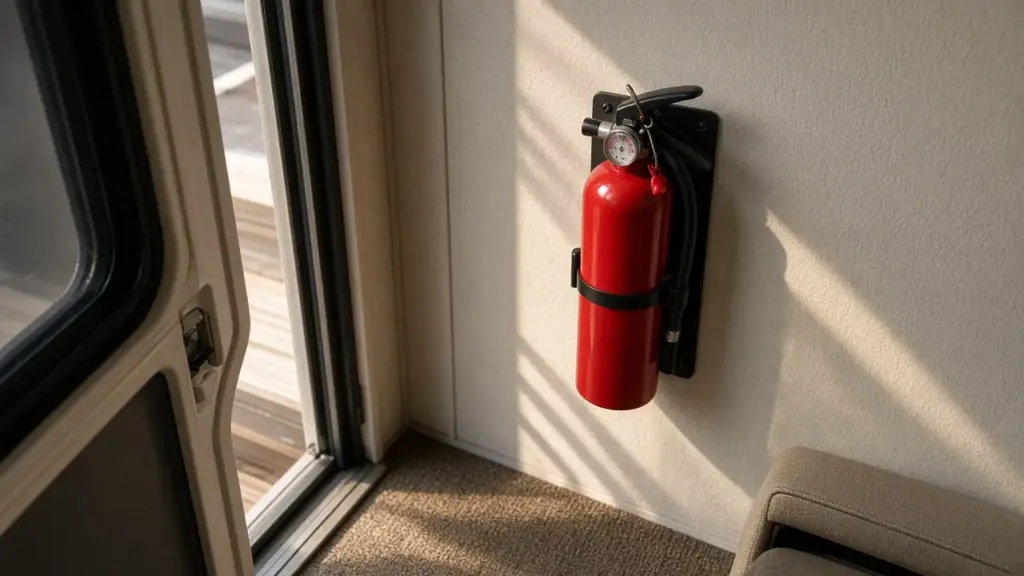
Fire can spread quickly in an RV. Living spaces are compact, materials can be flammable, and there are only a few exits. A working fire extinguisher, mounted where you can reach it and paired with the knowledge to use it, is one of the most important safety tools a full-time RV resident can own.
This guide covers fire extinguisher basics for RV residents: which types to choose, where to keep them, how to use them, and how to check them. It is part of our broader RV maintenance schedule for full-time residents, which explains how safety checks fit into your monthly routine.
Why Every RV Needs Fire Extinguishers
RVs combine several fire risks in a small space: cooking appliances, propane systems, electrical systems, batteries, and furnaces. A small kitchen fire or an electrical short can grow quickly if it is not stopped early.
A fire extinguisher gives you a chance to put out a small fire before it spreads, or to clear a path to escape. It is not a substitute for smoke and carbon monoxide detectors or an evacuation plan, but it is an essential part of a complete safety setup. Our post on testing smoke, CO, and propane detectors covers the detection side.
Understanding Fire Classes
Fire extinguishers are rated for different types of fires. The most common classes relevant to RVs are:
- Class A: Ordinary combustibles like wood, paper, cloth, and some plastics.
- Class B: Flammable liquids and gases, such as grease, gasoline, and propane.
- Class C: Energized electrical equipment.
- Class K: Cooking oils and fats, usually in commercial kitchens.
Using the wrong type can make a fire worse. For example, water on a grease fire can spread the flames, and water on an electrical fire can cause shock.
Choosing the Right Extinguisher
For most RV residents, a multipurpose ABC dry chemical extinguisher is a practical choice because it covers the most common fire types. Many RVs come with a small extinguisher from the factory, but those units are often minimal. Consider adding at least one larger unit.
When shopping, look for:
- An ABC rating on the label
- A size you can handle comfortably
- A pressure gauge that is easy to read
- A mounting bracket designed for vehicles
- A reputable brand with clear instructions
Some residents also keep a small extinguisher designed for kitchen fires near the galley. Read labels carefully and choose products appropriate for your space.
Where to Mount Extinguishers
Placement matters as much as having one. You want an extinguisher within reach in an emergency, not buried in a cabinet.
Good locations include:
- Near the main entry door. You can grab it on your way in or out.
- Near the kitchen, but not right next to the stove. A fire on the stove could block access to an extinguisher mounted too close.
- In the bedroom. A fire at night could block your path to the front of the RV.
- In your tow vehicle or truck. Vehicle fires happen, and a spare extinguisher helps.
Mount extinguishers securely with brackets so they do not roll around. Make sure everyone in your household knows where they are.
How to Use a Fire Extinguisher: PASS
The PASS method is easy to remember:
- Pull the pin.
- Aim low at the base of the fire, not at the flames.
- Squeeze the handle to release the agent.
- Sweep side to side across the base of the fire.
Stand a safe distance back and keep your exit behind you. Most small extinguishers empty within seconds, so act decisively.
Know When to Get Out
A fire extinguisher is for small, contained fires. If a fire is spreading, the room is filling with smoke, or you are not confident you can put it out, leave immediately and call 911. Your safety is more important than your belongings.
Every RV should have an escape plan. Know where your emergency exit window is, make sure it opens, and practice getting out. Once outside, move away from the RV and alert neighbors if needed. In a small park, quick communication helps protect everyone.
Monthly Extinguisher Checks
Extinguishers need regular attention. Add these checks to your monthly routine:
- Check the pressure gauge. The needle should be in the green zone.
- Inspect for damage. Look for dents, rust, cracks, or leaks.
- Check the pin and seal. The pin should be secure and the tamper seal intact.
- Shake dry chemical units. Some manufacturers recommend inverting and gently shaking to keep the powder from settling.
- Confirm the mounting is secure.
Replace or service extinguishers according to the manufacturer’s guidelines, and always replace or recharge one after any use, even a brief one.
Preventing Fires in the First Place
The best fire is the one that never starts. Prevention habits include:
- Never leave cooking unattended.
- Keep flammable items away from the stove and furnace.
- Do not overload electrical outlets or use damaged cords.
- Have propane systems inspected regularly.
- Keep lint and debris away from heat sources.
- Store flammable liquids safely, away from living areas.
Some rules at our park also support fire safety. Space heaters are not allowed, cords may not be run from other sites, and hookups cannot be tampered with. Fireworks are prohibited. These rules protect every resident in the park.
Fire Safety and Pests
Rodents can chew through electrical wiring, creating fire hazards. Keep food sealed and seal entry points. Our post on ant and roach prevention offers tips that also help deter other pests. If you notice chewed wires, have them inspected and repaired.
Keep Fire Safety Simple
You do not need to become a fire expert. Choose the right extinguisher, mount it where you can reach it, know how to use it, and check it monthly. Combine that with working detectors, an escape plan, and safe daily habits, and you will greatly reduce your risk.
Fire Safety Outside the RV
Fire safety extends beyond your RV’s walls. Vehicle fires can start from electrical faults, fuel leaks, or overheated components, which is one reason routine vehicle care matters. Keep your truck and RV exteriors clean and in good condition so you can spot leaks or damage early. Since on-site washing is not allowed at our park, our post on washing an RV when on-site washing isn’t allowed explains practical alternatives.
Keep the area around your RV clear. Our park does not allow items to be stored on or under the site, which also reduces clutter that could feed a fire or block an exit.
Communicating in an Emergency
In an emergency, your phone is your lifeline. Keep it charged and within reach at night. If cell signal is weak inside your RV, you may have trouble calling for help, so it is worth addressing ahead of time. Our post on boosting cell signal in an RV covers options. Save the park’s number, (281) 205-1959, along with emergency contacts, and know the park’s address, 32020 Old Hempstead Rd, Magnolia TX 77355, so you can give it to dispatchers quickly.
Frequently Asked Questions
What type of fire extinguisher is best for an RV?
A multipurpose ABC dry chemical extinguisher is a practical choice for most RV residents because it covers common fire types.
Where should I mount a fire extinguisher in my RV?
Near the main entry door, near but not beside the kitchen, in the bedroom, and in your tow vehicle.
How often should I check my extinguisher?
Check it monthly for pressure, damage, and a secure pin and seal. Replace or recharge it after any use.
Are space heaters allowed at Magnolia’s Finest?
No. Space heaters are not allowed at our park.
What should I do if a fire is spreading?
Get out immediately and call 911. Do not try to fight a large or spreading fire.
Live Safely at Magnolia’s Finest
Magnolia’s Finest RV Park is a small, gated long-term community built around safety and good neighbors. Review our park rules, see our amenities, or check availability.
Check Availability or call or text (281) 205-1959
Magnolia’s Finest RV Park · 32020 Old Hempstead Rd, Magnolia, TX 77355 · Contact us