
Fire Ant Season: Protecting Your RV Site
May 6, 2026 · By Magnolia RV Park
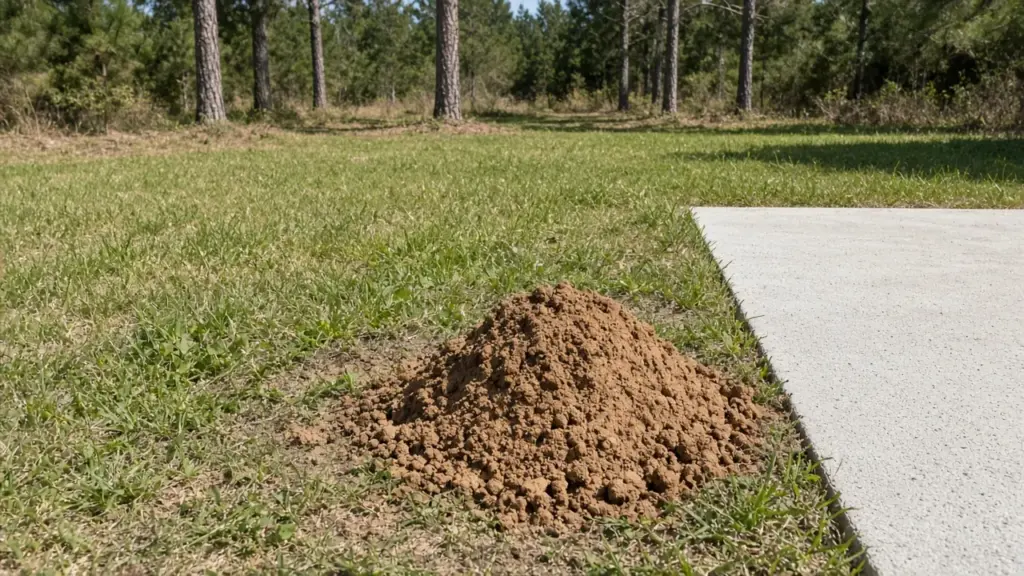
Anyone who has lived in Southeast Texas for a while knows about fire ants. These small, reddish ants build mounds in lawns and open areas, and they defend them aggressively. A single misstep onto a mound can result in dozens of painful stings. For RV residents who spend time outside, walk dogs, and connect hookups near the ground, fire ants are a real part of daily life for much of the year.
This guide covers how to protect yourself, your pets, and your RV during fire ant season. For a full-year view of the local climate and how it affects RV living, see our pillar, Texas Weather and Your RV: A Year-Round Guide for Montgomery County.
When Is Fire Ant Season?
Fire ants are active much of the year in the Houston area, but activity often picks up in spring and fall when temperatures are mild. After heavy rain, colonies may move or build new mounds on higher ground, so you might suddenly see mounds in places that were clear the day before.
During the hottest part of summer, ants may stay deeper underground during the day and come to the surface in the morning and evening. In winter, activity slows but does not always stop, especially during warm spells.
How to Recognize Fire Ant Mounds
Fire ant mounds are usually loose, fluffy piles of soil without a visible opening on top. They can appear in lawns, along edges of pads and drives, near utility connections, and around posts or fences. Mounds may be small at first and grow over time.
If you disturb a mound, ants swarm out quickly and climb onto anything touching it, including shoes, legs, and paws. They sting repeatedly, leaving itchy, painful bumps that can develop into small pustules.
Protecting Yourself Around Your Site
A few habits reduce your chances of getting stung:
- Look before you step. Check the ground before walking on grass, especially after rain.
- Wear closed shoes and socks. Sandals and bare feet increase your risk.
- Check around hookups. Look carefully before kneeling or reaching near water, sewer, and electrical connections.
- Avoid standing still on grass. Ants can climb up quickly if you stand on or near a mound.
- Inspect items before handling. Hoses and cords lying on the ground can attract ants.
Our park’s cement pads help reduce contact with the ground in your main living area, but the grass around sites still requires attention. Our post on sewer hose setup for a long-term site covers keeping hookup areas tidy.
Report Mounds on Park Grounds
At our park, lawn care is handled by the park. If you notice a fire ant mound near your site, around a walkway, or near shared areas, let management know. Ask before applying any treatment to park grounds yourself, since products used near septic systems, pets, and park animals need to be chosen carefully. Our park uses a septic system, so what goes into the ground matters.
You can report issues through the maintenance request form on the Residents page or by calling or texting (281) 205-1959. Text is preferred.
Keeping Fire Ants Out of Your RV
Fire ants sometimes find their way into RVs, especially during heavy rain when colonies look for higher, drier ground. They can travel up tires, jacks, stabilizers, hoses, and cords.
Prevention tips:
- Minimize ground contact points. Keep hoses and cords off the ground where possible and check them regularly.
- Seal entry points. Inspect around doors, windows, and utility openings.
- Keep food sealed. Store food in airtight containers and clean up crumbs promptly.
- Take out trash regularly. Do not leave trash bags sitting outside.
- Watch for trails. If you see ants on a tire or jack, act quickly before they reach the RV.
Items stored on or under the site are not allowed at our park, which also helps. Fewer items on the ground mean fewer places for ants to nest. Our post on what not to store under your RV explains why.
Protecting Pets
Dogs are especially vulnerable to fire ants because they sniff the ground and may step into mounds. Cats that live indoors are less exposed, but ants that enter the RV can still bother them.
Tips for pet owners:
- Keep dogs leashed and guide them away from mounds
- Walk on clear paths and drives when possible, and watch the grass for new mounds
- Check paws, legs, and belly after walks
- Keep food and water bowls inside
- Watch for signs of stings, such as licking, limping, swelling, or restlessness
At our park, dogs live primarily inside, are leashed outside, and are never left outside unattended, which also reduces fire ant encounters. If your pet is stung multiple times or shows signs of an allergic reaction, contact a veterinarian right away. Our post on exercising dogs in the Texas heat includes other outdoor safety tips.
What to Do If You Are Stung
If you are stung by fire ants:
- Move away from the mound quickly.
- Brush ants off rather than slapping them, which can trigger more stings.
- Wash the area with soap and water.
- Apply a cold compress to reduce swelling.
- Avoid scratching or popping the pustules, which can lead to infection.
Over-the-counter remedies may help with itching and pain. Seek emergency medical care immediately if you have signs of a severe allergic reaction, such as difficulty breathing, swelling of the face or throat, dizziness, or a rapid heartbeat. People with known allergies should talk to their doctor about carrying emergency medication.
This is general information, not medical advice.
Fire Ants and Flooding
During heavy rain and floods, fire ants can form floating rafts to survive. These clusters can drift and cling to anything they touch. If you see a floating mass of ants after a storm, stay away and avoid touching it. Our post on flash flooding around Houston covers storm preparation for RV residents.
Seasonal Checklist
- Check around your site and hookups regularly, especially after rain
- Wear closed shoes outside
- Keep hoses and cords off the ground where possible
- Keep food sealed and trash taken out
- Check pets after walks
- Report mounds near your site to management
Frequently Asked Questions
When are fire ants most active in the Houston area?
Fire ants are active much of the year, with activity often picking up in spring and fall. Mounds may appear suddenly after rain.
Should I treat fire ant mounds at my site myself?
At our park, report mounds to management and ask before applying any treatment to park grounds, since the park handles lawn care and uses a septic system.
How do I keep fire ants out of my RV?
Minimize ground contact points, seal entry points, keep food sealed, and check tires, jacks, and hoses for trails.
What should I do if my dog is stung?
Move your dog away from the mound, brush off ants, and contact a veterinarian if there are multiple stings or signs of an allergic reaction.
When should I seek medical help for stings?
Seek emergency care immediately for signs of a severe allergic reaction, such as trouble breathing or swelling of the face or throat.
Live Comfortably at Magnolia’s Finest
Magnolia’s Finest RV Park offers cement-pad sites, park-provided lawn care, and a gated entrance. Read our FAQ, see our amenities, or check availability.
Check Availability or call or text (281) 205-1959
Magnolia’s Finest RV Park · 32020 Old Hempstead Rd, Magnolia, TX 77355 · Contact us