Spring Storm Season Checklist for RV Residents
March 17, 2026 · By Magnolia RV Park
Spring in Southeast Texas is beautiful, but it also brings some of the year’s most active weather. Strong thunderstorms, heavy rain, hail, damaging winds, and occasional tornadoes are all possible. For RV residents, spring storms deserve respect and preparation. A clear checklist helps you get ready before the season peaks and respond calmly when storms arrive.
This guide offers a spring storm season checklist for RV residents. For a year-round weather overview, see our guide on Texas weather and your RV.
Why Spring Storms Matter for RVs
RVs are lighter and less sturdy than site-built homes. Strong winds, hail, and flying debris can damage roofs, awnings, windows, and slide-outs. During severe storms, especially tornado warnings, an RV is not a safe shelter. Planning ahead is essential.
Set Up Weather Alerts
Reliable alerts are your first line of defense:
- Enable emergency alerts on your phone
- Install a weather app with severe weather notifications
- Keep a battery-powered weather radio
- Know your county; Magnolia is in Montgomery County
Alerts that wake you at night are especially important.
Know the Difference Between Watches and Warnings
- Watch: Conditions are favorable for severe weather. Stay alert and review your plan.
- Warning: Severe weather is happening or imminent. Take action now.
Identify a Safe Shelter
Know where you will go if a tornado warning is issued or winds become dangerous. Options may include a sturdy nearby building. Talk with management about options and plan your route in advance. Do not wait until a warning to figure it out.
Secure Your RV
Before storm season and before each storm:
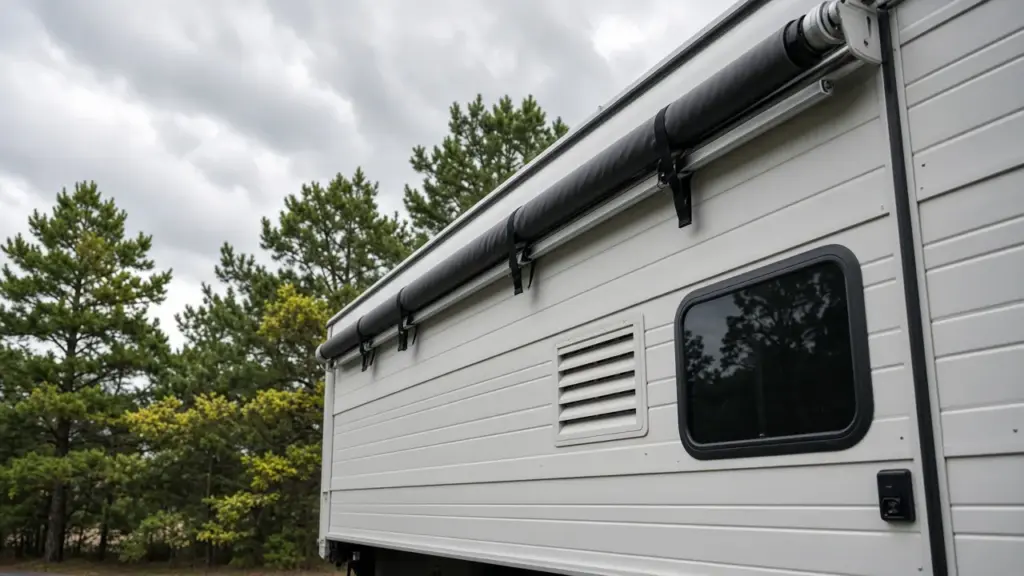
- Retract awnings
- Bring in slide-outs if high winds are forecast and your manufacturer recommends it
- Close and latch windows, roof vents, and compartments
- Make sure nothing is loose around your site
At Magnolia’s Finest, items on or under the site are not allowed, which reduces the risk of loose items blowing around.
Inspect Seals and Roof
Spring storms test your RV’s seals. Before the season:
- Inspect roof seams and sealant
- Check window and door seals
- Look for signs of past leaks
Fall is often the best time for major sealing projects; our post on fall in Southeast Texas as the best season for RV projects explains why. In spring, focus on inspections and quick fixes.
Build a Storm Kit
Keep a kit ready:
- Flashlights and extra batteries
- Weather radio
- Phone power banks
- First aid kit
- Water and non-perishable food
- Medications
- Copies of important documents
- Sturdy shoes
- Pet supplies
Plan for Pets
Pets need a plan too. Keep carriers and leashes ready. At our park, dogs live primarily inside the RV, so they will be with you when storms hit. Take pets to shelter with you during warnings.
Power Outages
Storms often cause outages. Charge devices before storms and keep your outage kit ready. Use a surge protector to protect electronics when power returns.
Heavy Rain and Flooding
Spring storms can drop heavy rain quickly. Never drive through flooded roads. Know low-lying routes near you. Cement pads, like those at every site in our park, help keep your RV setup out of mud.
Hail
Hail can damage roofs, skylights, vents, and vehicles. Covered sites help protect RVs from hail. At our park, 8 of our 10 sites are covered. Tarps and covers are not allowed, so rely on covered sites and insurance.
Insurance Check
Before storm season, review your RV insurance. At our park, RV insurance must include liability and property coverage at state minimums. Ask your agent about coverage for storm and hail damage.
Pollen and Storms
Spring storms often arrive during pollen season. Rain washes pollen from the air temporarily. Our post on pine pollen season covers keeping RV air clean.
After the Storm
When the storm passes:
- Check for injuries
- Inspect your RV for damage: roof, awnings, windows, slide-outs
- Look for leaks inside
- Report hazards like downed lines or damaged hookups to management immediately, and do not touch them
- Photograph damage for insurance
Cleaning Up After Storms
Storms leave debris and dirt on RVs. Clean within park rules; vehicle washing is not allowed at our park. Our post on washing an RV when on-site washing isn’t allowed covers waterless options.
Preparing for Winter vs. Spring
Freeze prep and storm prep use some of the same skills: inspecting seals, protecting hookups, and keeping supplies ready. Our post on heated hoses and skirting covers freeze protection.
Staying Informed During Storm Days
On days when severe weather is forecast, stay close to reliable information. Keep your phone charged, check updates from local officials and weather services, and avoid relying on social media rumors. If you work away from the park, know how you will get back or where you will shelter if a warning is issued while you are out. Communicate with anyone who shares your RV about where you will meet. A little extra attention on forecast days goes a long way toward keeping everyone safe.
Helping Neighbors
In a small park, neighbors look out for each other. Share alerts, check on older residents or those with medical needs, and offer help after storms. A strong community makes storm season less stressful for everyone.
A Spring Storm Checklist
- Weather alerts enabled
- Shelter plan known
- Storm kit ready
- Seals and roof inspected
- Awnings retracted before storms
- Pets’ supplies ready
- Insurance reviewed
- Devices charged
Protecting Your Vehicles
Your vehicles need protection too. Park them in designated spaces, never on the grass, and keep windows closed during storms. If hail is forecast and you have access to a covered parking area elsewhere, consider moving a vehicle temporarily. Keep fuel tanks at least half full during storm season in case you need to leave or roads are affected by outages that close fuel stations.
Documenting Your RV Before Storm Season
Take photos and video of your RV’s exterior and interior at the start of spring. Record the roof, awnings, windows, and slides. If a storm causes damage later, before-and-after images make insurance claims much easier. Store the files in cloud storage so they are safe even if your phone is damaged.
Reviewing Your Plan With Everyone
Walk through your storm plan with everyone in your RV at the start of the season. Make sure each person knows where the storm kit is, where to go during a warning, and how to reach each other if separated.
Staying Calm
Preparation is what lets you stay calm when storms roll in. With a plan in place, you can focus on acting quickly rather than worrying.
Frequently Asked Questions
Is an RV safe during a tornado warning?
No. An RV is not a safe shelter during a tornado warning. Know a sturdier shelter option ahead of time.
Can I cover my RV with a tarp to protect from hail?
No. Tarps and covers are not allowed. Covered sites help protect against hail.
What should I do after a storm?
Check for injuries, inspect for damage, report hazards to management, and photograph damage for insurance.
Are covered sites available?
Yes. Eight of our 10 sites are covered.
Weather the Season in Magnolia
Magnolia’s Finest RV Park offers covered cement-pad sites in a small, gated long-term community. Explore our amenities, read the FAQ, or check availability.
Check Availability or call or text (281) 205-1959
Magnolia’s Finest RV Park · 32020 Old Hempstead Rd, Magnolia, TX 77355 · Contact us